 English
 Türkçe

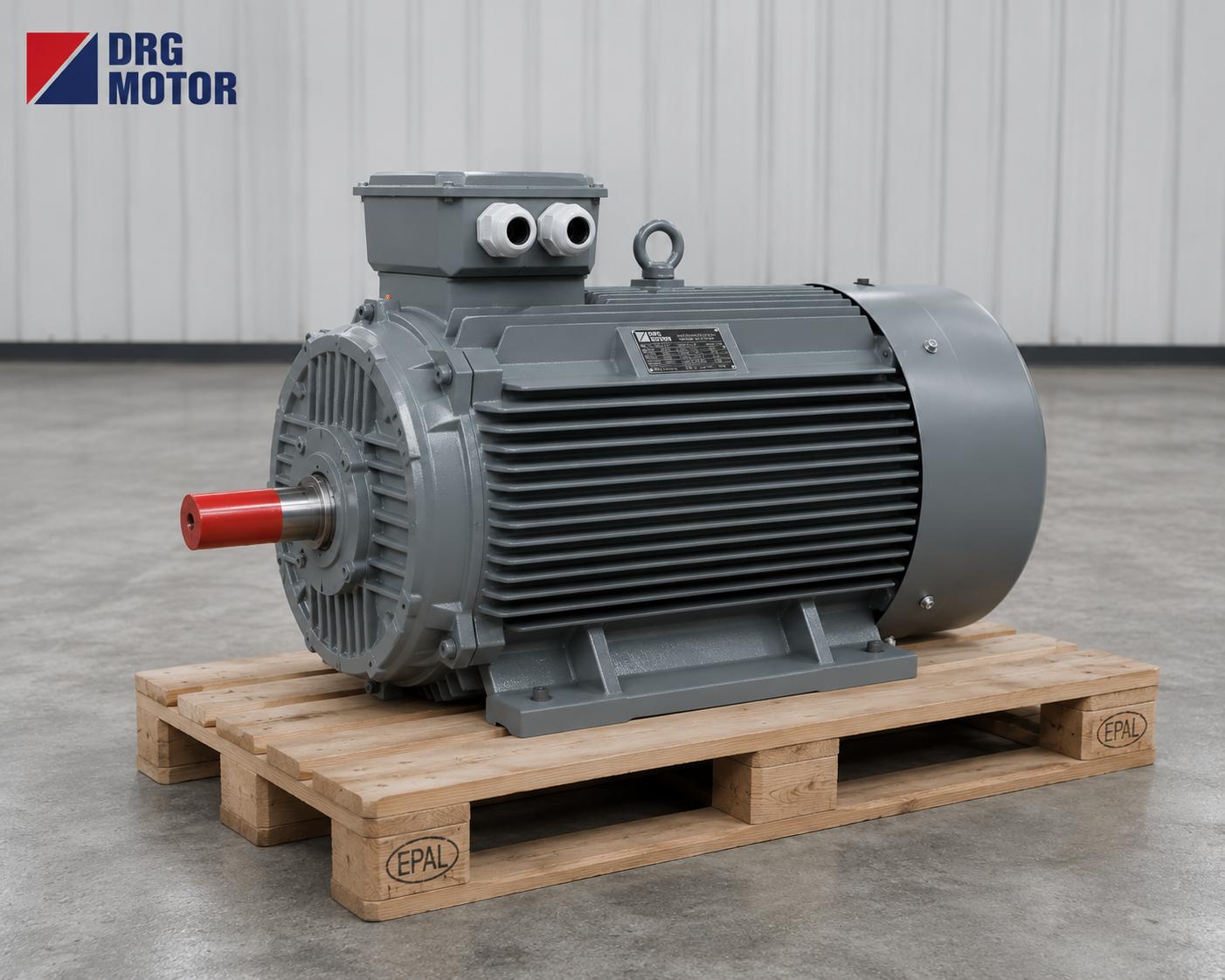

A motor that stops in the middle of a production line is, for most businesses, not merely a technical fault but a loss written straight onto the balance sheet. Every hour the line is down means delayed shipments, overtime pay and sometimes customer contracts with penalty clauses attached. The frustrating part is that most of these losses are preventable. A well-designed spare motor stock approach turns an unexpected breakdown from an hours-long nightmare into a planned changeover that takes minutes. In this article we set out concrete steps for identifying your critical motors, deciding which models make sense to keep on the shelf and managing that stock without inflating your costs. The goal is not to hoard motors; it is to build a measured, intelligent supply policy that insures the flow of your production.
Seeing the True Cost of Downtime
On a line that runs around the clock, fed by S1 continuous-duty motors that turn without pause from shift to shift, a stoppage is not an inconvenience but a rupture, because the line was engineered never to stop in the first place. The real mistake here is to set the spare motor's list price on one side of the scale and leave the other side empty. The honest scale is built only when you place on that other side the hours the line stays silent during a shift when the motor is not on the shelf. To calculate the cost of an hour of unplanned downtime you have to add up the lost output, the idle labour you still pay for, the energy and fixed overheads, the customer dissatisfaction created by a late shipment and any contractual penalties for delay. In many mid-sized plants a single day of downtime climbs to several times the price of a spare motor. Once you put this picture on paper, you see that a motor waiting on the shelf is not an expense at all but a risk premium. The spare motor stock decision is financial rather than emotional, and when it is defended with numbers it becomes far easier to convince management.
Which Motors Deserve a Spare
Stocking every motor is neither possible nor necessary. The real task is to classify the motors on your line by their level of criticality. To judge how critical a motor is, two questions have to be asked together: if this motor fails, does production stop, and how long would it take to find a replacement on the market? These two axes make clear which motors belong on the shelf.
- Motors that form a single-point bottleneck, have no backup and lock the whole line when they stop should be the first priority to keep in stock.
- Motors with long lead times, or that require a special frame, special speed or special flange, must be held on the shelf, because sourcing them after a failure can take days or even weeks.
- Motors that run continuously under heavy duty, high temperature, dust or humidity fail more often and are worth stocking.
- Standard motors used at the same power and speed across several machines are the most efficient stock item, since a single spare covers multiple risks at once.
This classification lets you steer a limited budget toward the highest-risk points. A properly done criticality analysis lowers needless stock cost while closing the gaps that actually threaten production.
Standardisation Shrinks the Stock
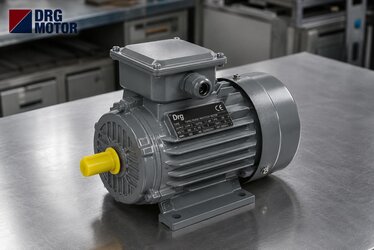
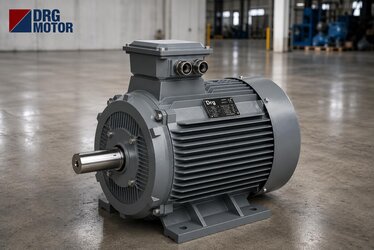
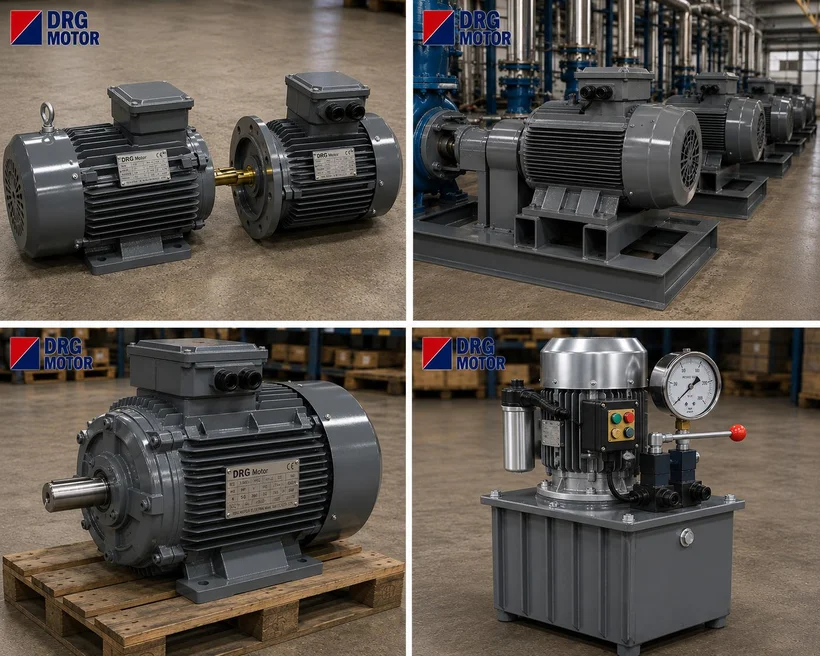
The more different motor types a plant runs, the more different spares it must keep, which raises both cost and management burden. Smart operations therefore standardise their motor fleet as far as possible. Choosing the same power, speed, frame and mounting type across similar applications lets you protect many machines with a single spare motor. On this logic, many lines are built around general-purpose industrial motors that cover a wide range of applications with one flexible family, so that pumps, conveyors, fans and mixers can all share the same spare pool. Standardisation does more than shrink the stock; it lets the maintenance team master a single motor type and shortens the changeover time as well.
The Logic Behind the Stock Quantity
When deciding how many spare motors to hold, the one-spare-per-motor rule is usually too cautious, while keeping ten spares for ten identical motors is wasteful. The right quantity follows from the motor's failure rate, its lead time and the number of identical units in the field. If the plant has many motors at the same power and speed, the chance of one failing rises, but the chance of all failing at once is low; in that case holding a sensible ratio of spares is enough. By contrast, a unique, single critical motor must have one full spare available. The soundest approach is to increase the stock as the lead time lengthens and reduce it as that time shrinks, because if you work with a reliable, fast supplier the number of motors you need to keep on the shelf naturally falls.
Storing the Stock Correctly Is Work Too
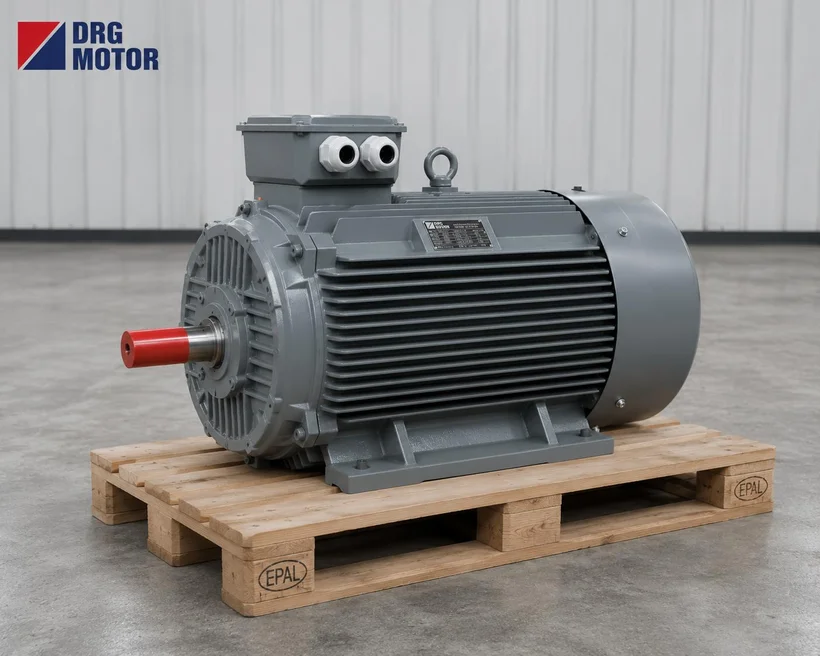
A motor waiting on the shelf may not run when you need it if it is stored poorly. In motors that sit idle for a long time, the bearing grease can pool at a single point under gravity, humidity can weaken the winding insulation and permanent marks can form in the shaft seat. For this reason spare motors should be kept in a dry place with little temperature fluctuation. Where possible the shafts should be turned by hand a few revolutions periodically, so the oil film inside the bearing is preserved. The nameplate details, the power, speed, frame and mounting type, should be recorded legibly, and it should be clear which machine each motor fits. A well-run spare motor stock system is backed by a simple record that can tell you within seconds where a motor sits, when it was bought and which line it is destined for.
Preparations That Speed Up the Changeover
Having the spare motor on the shelf is half the battle; the other half is bringing it online quickly when a failure strikes. For that, the matching coupling or pulley, the correct bolt set and the necessary wiring details should be ready alongside the motor. Writing the changeover steps down as a short instruction lets even an inexperienced technician on the night shift do the job correctly. For lines that fail often, this preparation usually has to extend to the root cause as well, because if the same motor keeps breaking down the problem may lie not in the motor but in the mounting or the selection. Here, motor titreşim önleme practices and motor arıza çözüm approaches help you eliminate the real problem rather than having to lean on the spare motor again and again. A solid spare stock reaches its true value only when it is paired with root-cause analysis.
The Supplier Relationship Is Part of the Stock
Even the best spare motor stock strategy is incomplete without a reliable supplier behind it. You cannot keep every motor on the shelf forever; for some items the right answer is to work with a source that delivers fast. A supplier who keeps your power and speed classes in stock and can ship within hours when needed acts as an extension of your physical inventory. This lets you rely on the supplier's stock for motors that rarely fail but are hard to find, rather than tying up shelf space yourself. A strong supply relationship offers original products that come with an invoice, warranty and test report, as well as the technical judgement to recommend the right motor at the right time, which lowers your stock cost while raising your security.
Start Insuring Your Production Today
Spare motor stock is the invisible insurance that keeps your production flowing; a measure that looks expensive but costs far more by its absence. Once you have identified and standardised your critical motors and secured a fast supplier behind you, an unexpected failure becomes a planned changeover rather than a crisis. At DRG Motor we listen to the power and speed classes on your line, plan with you which motors make sense to keep on the shelf and prepare quotes for the critical items with a clear delivery time. To build a spare motor stock plan that minimises your plant's downtime risk, send us your requirement and let us secure your production together.