 English
 Le français
 Türkçe

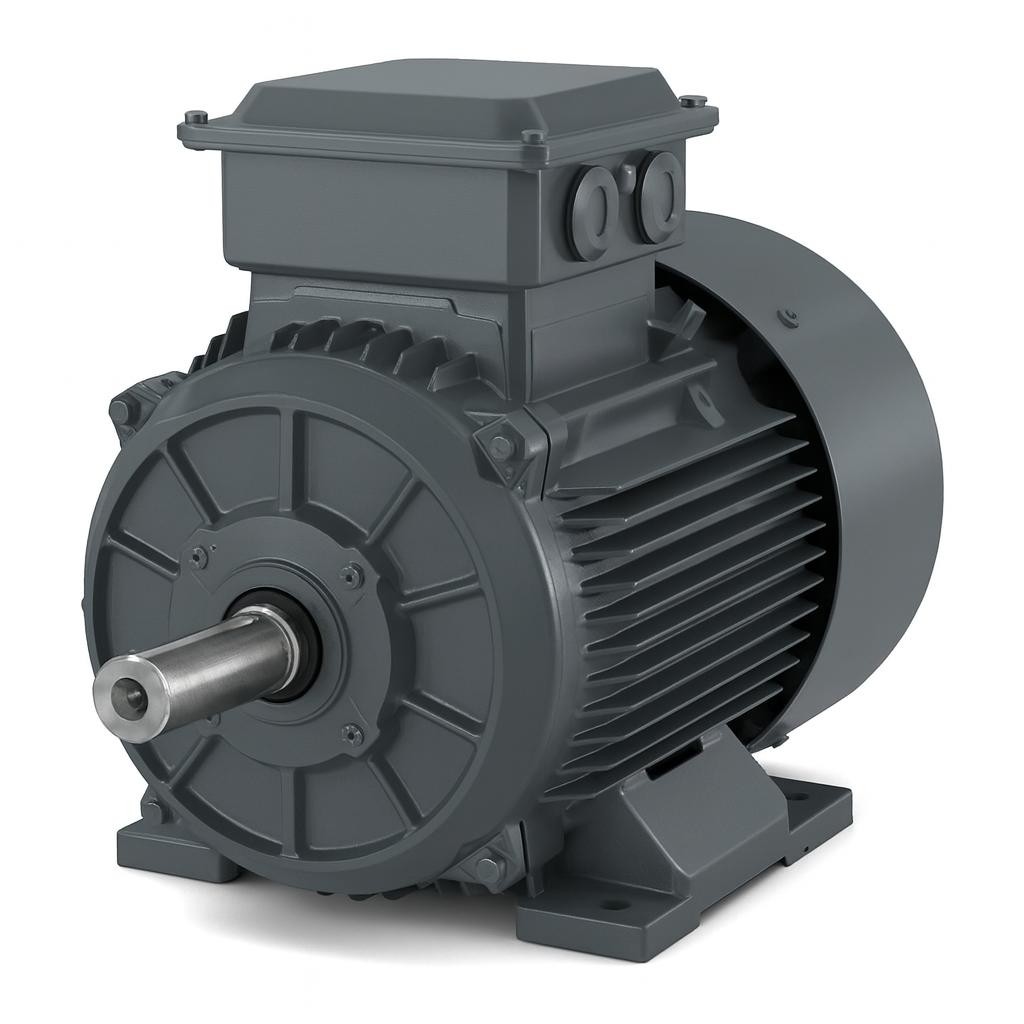

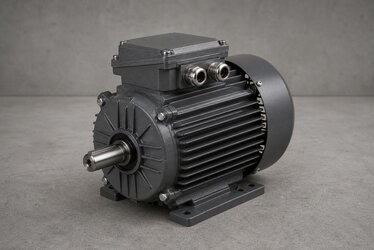
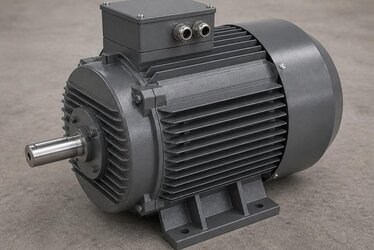
A three-phase electric motor runs on the rotating magnetic field created by three separate alternating currents that arrive 120 degrees apart. This arrangement produces smooth, vibration-free torque without needing a separate starting device, which is why three-phase is industry's standard drive solution. DRG Motor builds its three-phase range for 400 V / 50 Hz.
How the Rotating Field Forms
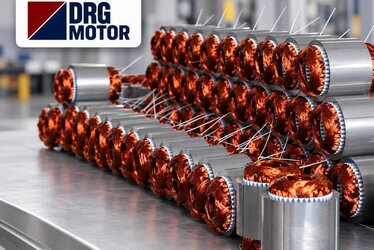
When three-phase current is applied to the three winding groups placed 120 degrees apart in the stator, the magnetic field rotates at a constant speed. The cage rotor follows this field and starts to turn. Unlike single-phase motors, no extra capacitor or auxiliary winding is needed, which keeps the design simple and low-maintenance.
Speed and Pole Count
On a 50 Hz supply the synchronous speed is set by pole count: 2 poles 3000 rpm, 4 poles 1500 rpm, 6 poles 1000 rpm. Higher speeds suit fans and pumps, while lower speeds are chosen for crushers and mixers that need high torque. Because of slip, the actual loaded speed sits slightly below these figures.
Choosing the Right Three-Phase Motor
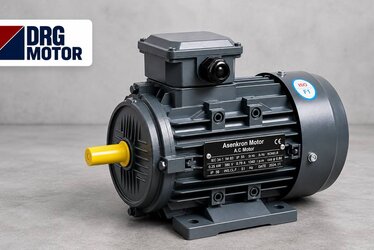
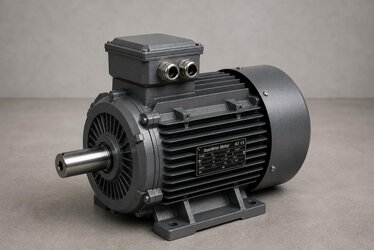
Selecting a three-phase motor means matching power, speed, mounting type (B3/B5/B14) and efficiency class to the application. DRG Motor offers IP55-rated, Class F insulated three-phase motors from 0.55 to 355 kW in IE3 and IE4 options, so both new installations and motor replacements can be done with confidence.
The Place of Three-Phase Motors in Industry
Compared with a single-phase supply, three phase yields a smaller, more efficient motor at the same rating, which is why almost all factory drives are three-phase. Smooth torque, low vibration and high starting torque let three-phase motors carry heavy industrial loads with confidence.