 English
 Le français
 Türkçe

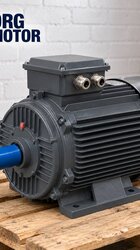
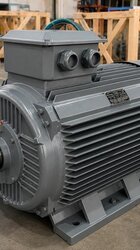
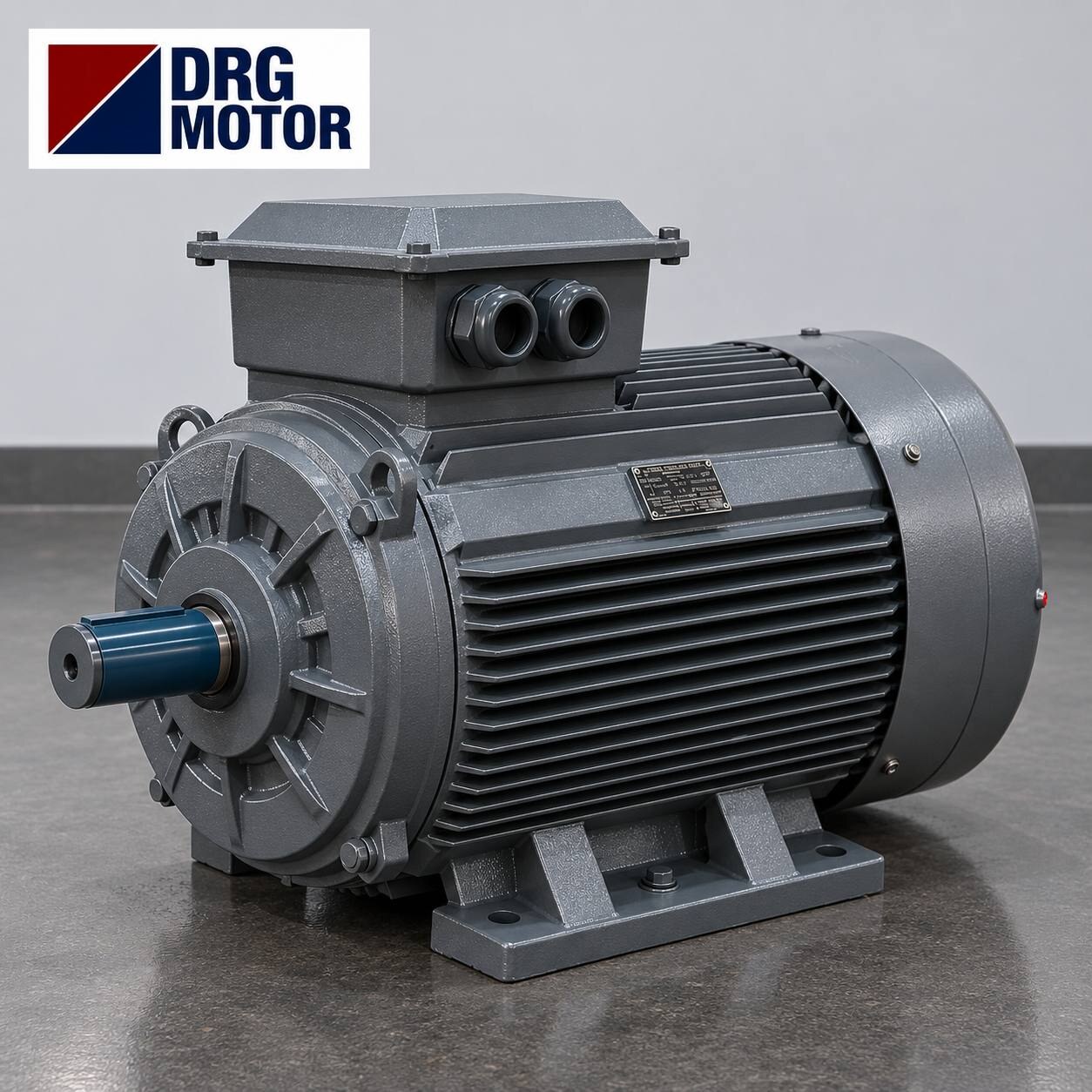

Specifying a three-phase motor comes down to five entries: power, speed, mounting, protection and efficiency class. This page works through those entries instead of the theory behind the rotating field.
Speed Comes From the Driven Machine
The machine sets the speed, not the motor. On a 400 V / 50 Hz supply the pole count fixes it: 2 poles turn at 3000 rpm, 4 poles at 1500 rpm, 6 poles at 1000 rpm. Compressors and pumps usually sit at the high end, while conveyors and mixers that need torque take the lower speeds.
Mounting Has to Match the Bracket
A B3 foot frame bolts onto a base plate, a B5 flange mounts straight onto a pump or gearbox housing, and a B14 face frame suits compact assemblies. The machine decides which one, so it is worth checking before the power is even settled.
Protection and Duty Follow the Room
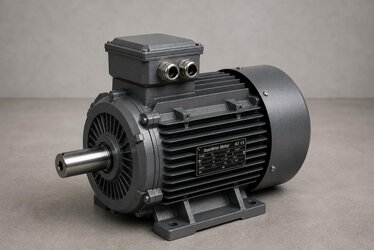
IP55 keeps dust and splashed water out of the windings, Class F insulation carries the winding temperature under S1 continuous duty, and a cast iron frame damps the shock of lines that vibrate. A motor specified without matching these to the room comes back as a warranty case.
Replacing a Motor Already in Service
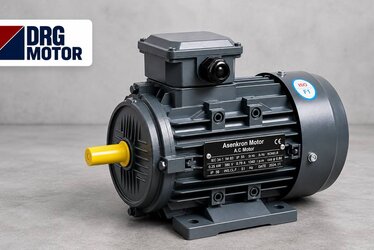
DRG Motor ships three-phase motors from 0.55 to 355 kW out of İzmir in IE3 Premium and higher classes. Bring the nameplate of the unit being replaced, or the speed and torque the machine needs, and the model follows from that.