 English
 Le français
 Türkçe

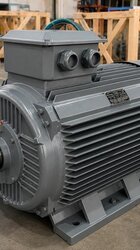
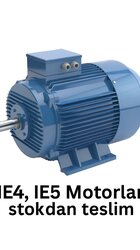
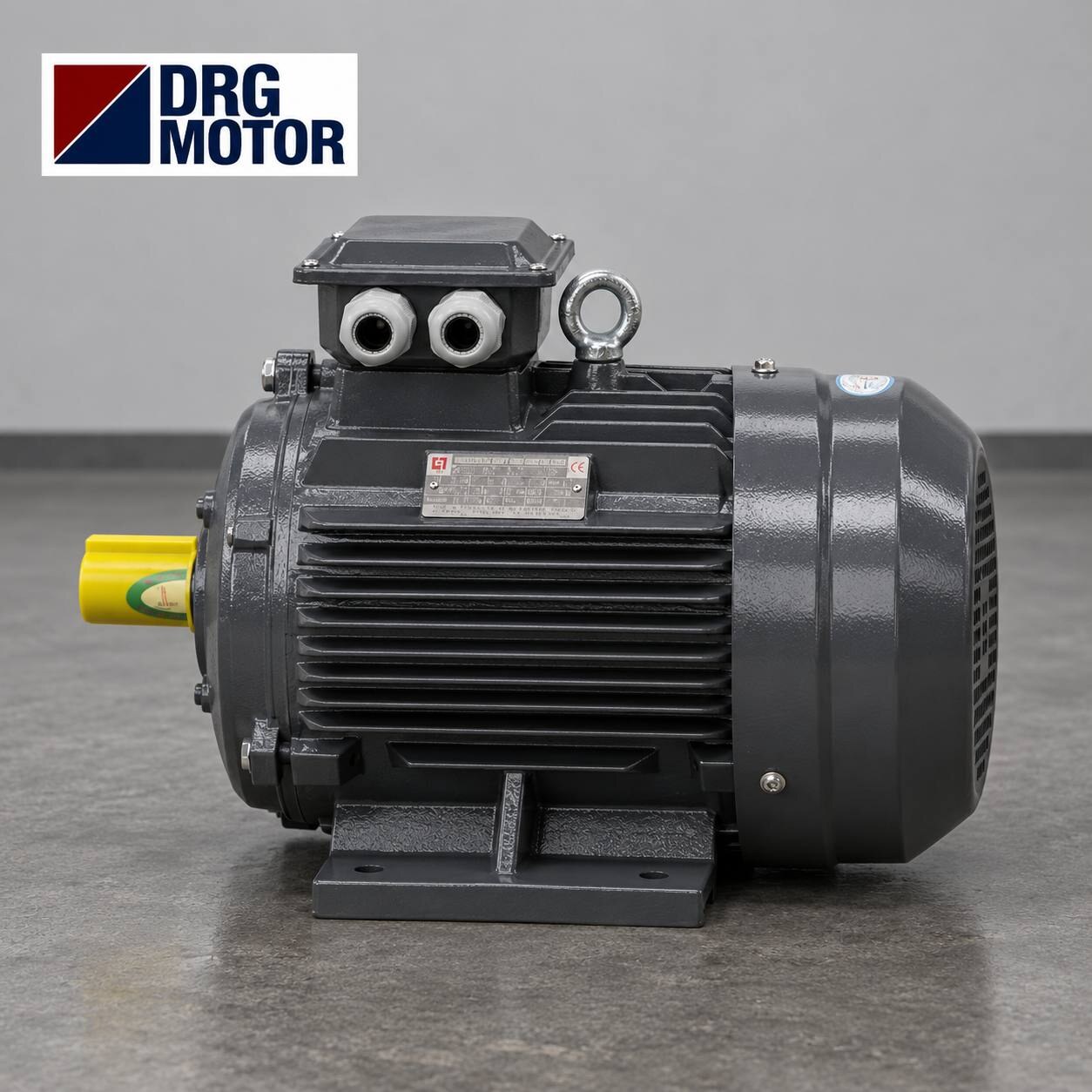

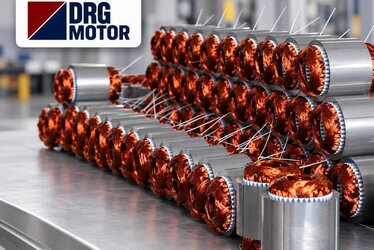
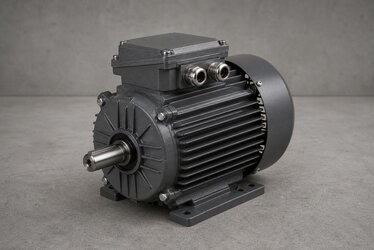
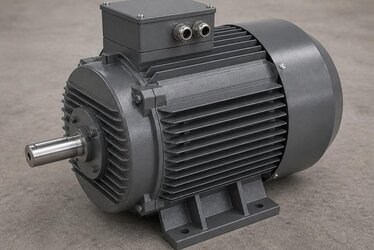
The three-phase asynchronous motor, with its squirrel-cage rotor and no external electrical connection to the rotor, is the most widely used drive machine in industry. The rotating magnetic field produced in the stator induces current in the rotor, generating torque; this is why it is also called an induction motor. As an Izmir-based supplier, DRG Motor builds these motors across a wide range from 0.55 kW up to 355 kW.
The Induction Principle and Slip
When 400 V / 50 Hz three-phase voltage is applied to the stator windings, the resulting rotating field induces voltage in the rotor bars. The rotor can never quite reach the field speed; this difference is called slip and is typically between 2 and 5 percent under load. Slip keeps current flowing in the rotor so that torque is continuously produced.
Pole Count and Speed
Synchronous speed depends on the number of poles: a 2-pole motor runs at about 3000 rpm, a 4-pole at 1500 rpm and a 6-pole at 1000 rpm. Pump and fan duties usually favour 4-pole 1500 rpm units, while 2-pole models suit high-speed centrifugal applications. The actual rotor speed sits below these values by the amount of slip.
Protection and Mounting Types
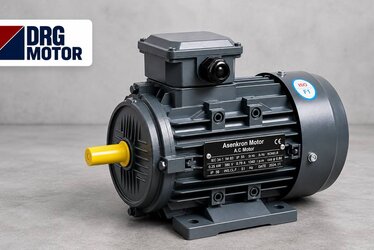
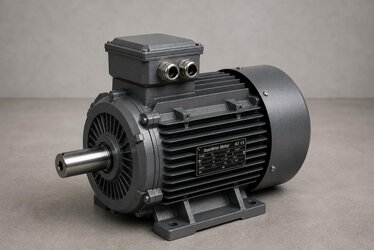
DRG induction motors are manufactured to IP55 protection, Class F insulation and S1 continuous duty. Depending on the installation, foot-mounted B3, flange-mounted B5 or face-mounted B14 frames are available. A cast iron frame provides vibration damping and mechanical strength for heavy industrial conditions, while an aluminium frame is an advantage in lighter applications.
Selecting the Right Induction Motor
The application's torque curve, duty cycle and target efficiency class drive the choice. For plants aiming to cut energy costs, IE3 Premium and IE4 Super Premium models are recommended. DRG Motor matches speed, power, frame type and efficiency class to your application and supplies from Izmir across Turkey.