 English
 Le français
 Türkçe

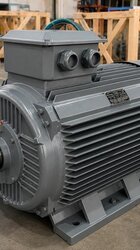
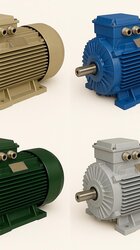
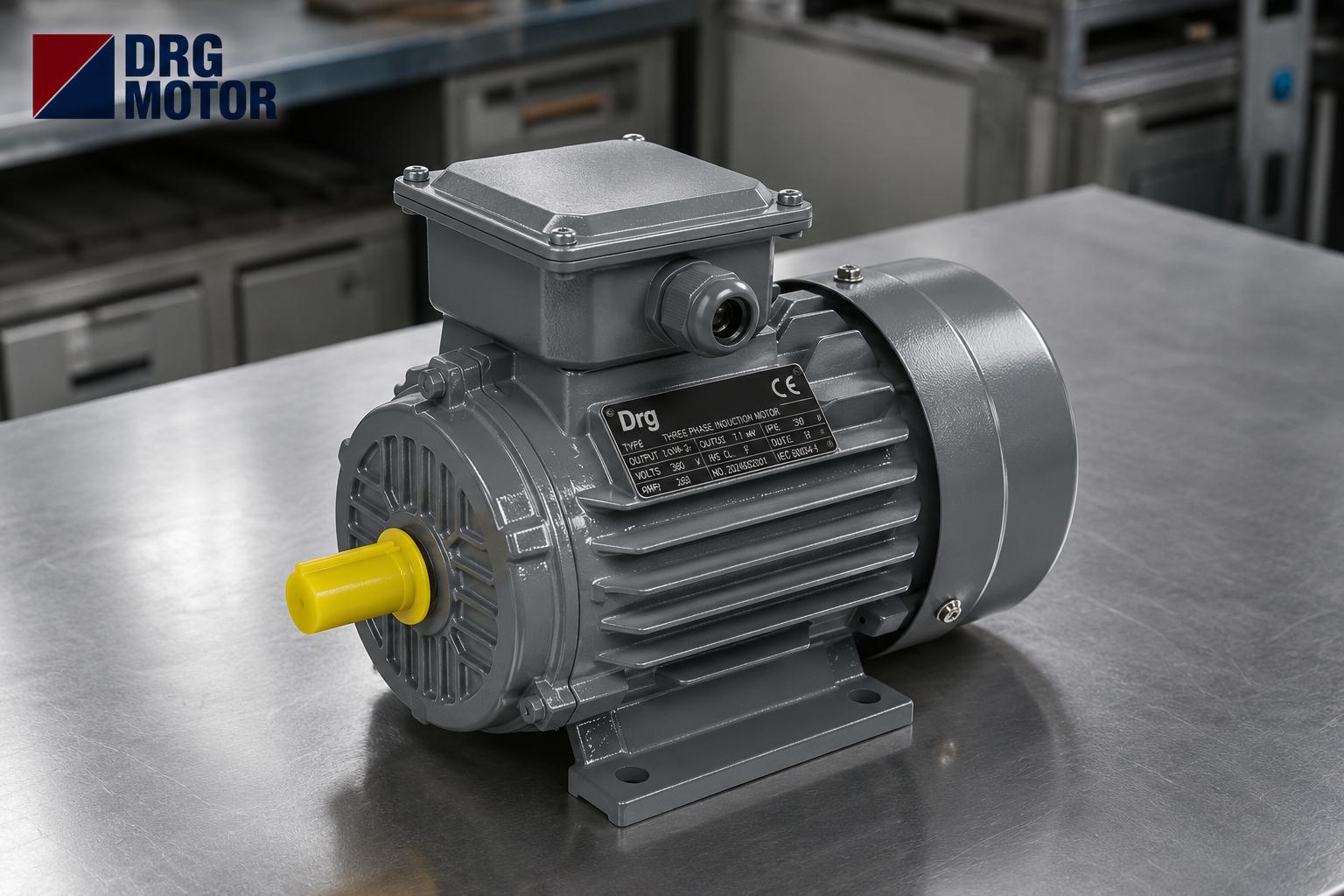

If your electric motors are failing far sooner than expected, the culprit is usually not the motor itself but the way it was mounted. A misaligned coupling, a loose bolt, or an uneven base quietly grinds away at bearings, windings, and shaft seats. The good news is that most of this damage is preventable. A disciplined installation routine is the foundation of any serious motor vibration prevention strategy and noticeably cuts down on unplanned downtime.
Why Vibration Signals Trouble Ahead
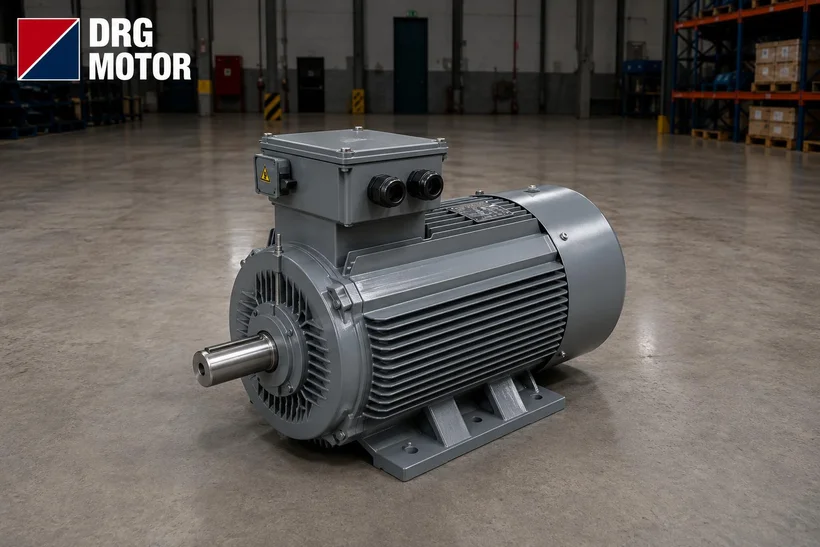
Vibration is the most honest feedback a motor can give you. A healthy drive train runs smoothly and stays balanced; when the vibration level climbs, something inside is going wrong. That energy has to dissipate somewhere, and the bearings are usually the first casualty. A bearing running under excessive vibration surrenders far below its rated life, sometimes in weeks rather than the months its catalogue promises.
The damage rarely stops at the bearing. Continuous vibration loosens terminal connections, opens micro-cracks in winding insulation, and starts fatigue damage between the shaft and the coupling. In other words, a single mounting mistake can cascade into a failure that touches several components at once. That is why vibration should be treated not as background noise you tolerate, but as a warning that demands action.
Base and Foundation: Everything Starts Here
The base the motor sits on is the foundation of the entire system. If that base is not flat or not rigid enough, tightening one foot will twist the frame slightly. This is called soft foot, and it is almost impossible to spot by eye in the field, yet it becomes a constant source of stress and vibration once the motor runs.
- Make sure the base surface is on the same plane across every foot contact point.
- Use calibrated shims to close gaps where needed; never improvise with random pieces of metal.
- On concrete bases, respect the full curing time; concrete loaded too early develops micro-cracks that amplify vibration.
- Tighten the hold-down bolts to the supplier's torque range in a cross pattern.
A solid base gives you an advantage that even the most expensive motor cannot make up for. Conversely, a poor foundation will wear out even the best motor before its time.
Misalignment: The Invisible, Expensive Problem
The coupling alignment between the motor and the driven equipment sits at the heart of most vibration problems. When two shafts are joined with even a fraction of a millimetre of offset, a cyclic load is placed on the bearings and shaft seats with every revolution. You cannot see this load, but it shortens bearing life dramatically.
Parallel misalignment (the shaft centres being offset) and angular misalignment (the shafts meeting at an angle) must each be checked separately. Rough alignment with a straightedge may be acceptable on small pumps, but on critical lines a laser alignment tool saves time and delivers a repeatable result. Do not align once and forget it: thermal expansion can shift alignment as the motor heats up, so hot alignment makes a real difference in demanding applications.
Choosing the Right Mounting Type from the Start
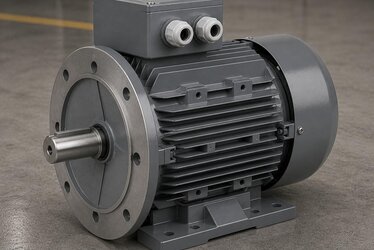
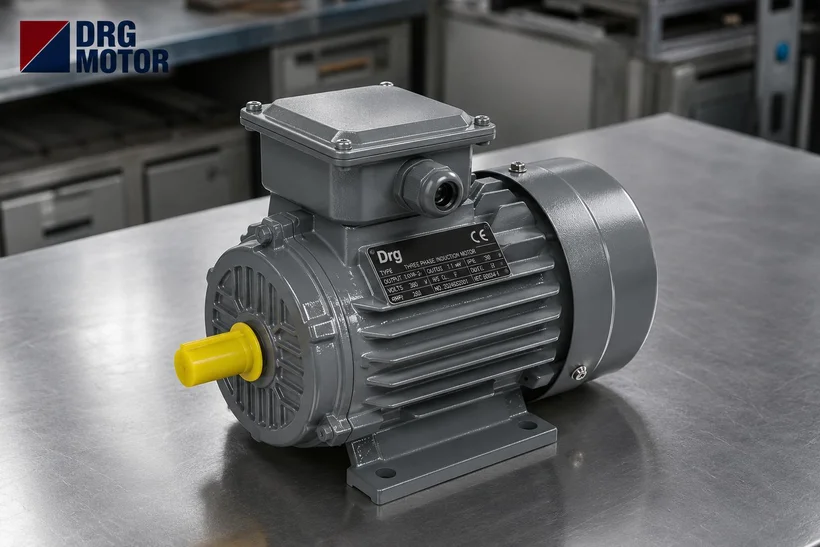
Part of preventing vibration begins before the motor ever reaches the site. The choice between foot-mounted (B3), flange-mounted (B5), or combined foot-and-flange (B35) directly affects how rigid the system is. A motor delivered in the wrong mounting type, then forced into place with strained connections, will inevitably produce stress and vibration. If you want a closer look at how mounting type drives cost and performance, our piece on the b3 b35 fark is a good place to start.
Specifying the correct mounting type up front saves you from needing expensive workarounds later, such as adapters, intermediate plates, or custom bases. That is why describing your application clearly at the quotation stage eliminates a large share of future vibration problems at the very moment you place the order.
Bolt Torque, Grounding, and Cable Connections
The details of an installation matter as much as the big picture. A loose hold-down bolt and an over-tightened foot both generate vibration. Every bolt should be tightened to its specified torque value in a cross sequence; the "just crank it down by hand" approach gives inconsistent results.
- Use a torque wrench and record the values so you can compare during maintenance.
- Do not skip the grounding connection; poor grounding creates both a safety risk and the danger of early bearing damage through electrical fluting.
- Connect the cables in the terminal box without strain, so the wiring never carries the weight of the motor.
- On belt-and-pulley drives, keep belt tension within the recommended range; an over-tight belt bends the shaft seat.
Resonance and the Operating Speed
Every mechanical structure has a natural frequency. When the motor's running speed, or a multiple of it, coincides with that natural frequency, resonance occurs and even a small, normally acceptable imbalance grows into a dangerous vibration level. This is especially common in systems driven by a variable frequency drive, where you may notice vibration suddenly spiking as the motor passes through a particular speed band.
The fix is to define the problem speed band as a "skip frequency" on the drive so the motor never runs continuously within it. Increasing the rigidity of the base or changing the motor's mass can also shift the natural frequency and eliminate the resonance. Unlike a mounting defect, resonance-driven vibration does not disappear with an alignment correction, so it is important to distinguish it during diagnosis. If you are planning a variable-speed application, evaluating the motor and the drive together helps you make the right call from the start.
Lubrication, Bearing Care, and Vibration
Even a perfectly mounted motor will start to vibrate over time if lubrication is neglected. Too much or too little grease creates an uneven film inside the bearing, which leads to surface pitting and a steadily rising vibration signature. Many plants assume a bearing failure is a sudden event, yet it almost always announces itself weeks in advance through a slow climb in vibration and temperature.
- Use the grease type and quantity the supplier recommends, and never mix different grease types.
- Adjust the lubrication intervals to the operating temperature and speed; at higher speeds the interval shortens.
- Where possible, monitor bearing condition with periodic vibration readings; early warning is the cheapest maintenance there is.
- Make sure the grease relief holes are open, because excess grease pressure strains the seals.
A predictive maintenance routine is a second safety net that protects your installation quality. A motor set up correctly on day one can drift back into the same vibration problems within months if it is never monitored.
Final Checks Before Commissioning
A few minutes of checks before the first start cost far less than days of fault-chasing in the field. Confirm the direction of rotation, run a short no-load test, and observe vibration and temperature. If you notice an abnormal noise, smell, or heat build-up, stop the motor and investigate; waiting for it to "settle on its own" only enlarges the damage.
If you measure higher-than-expected vibration on the first run, the problem usually lies not in the motor but in the alignment, the rigidity of the base, or the connected equipment. At this point, working through the causes systematically is always faster and cheaper than blindly swapping parts. For lines that suffer chronic failures, our approach to motor arıza çözüm helps you tackle the root cause with the right specification.
Starting with the Right Motor Makes the Job Half Done
Even the most careful installation delivers limited results if the motor does not suit the application. A motor chosen with the right power, the right speed, the right mounting type, and the right protection class makes the installation team's job easier and lowers the vibration risk from the outset. At DRG Motor we supply a broad range of products from stock with fast delivery, led by general-purpose industrial motors matched to your application.
If your line suffers from recurring vibration or early bearing failures, choosing the right motor is half the battle alongside correct mounting. Share your application details with us; our team will assess the suitable mounting type, power, and protection class together and come back with a clear quotation. The cost of early failure is always higher than the cost of supplying the right motor from the start, and requesting a quote lets you see that difference on your own line.