 English
 Le français
 Türkçe

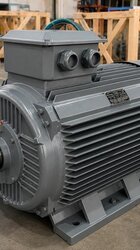
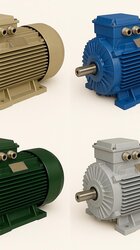
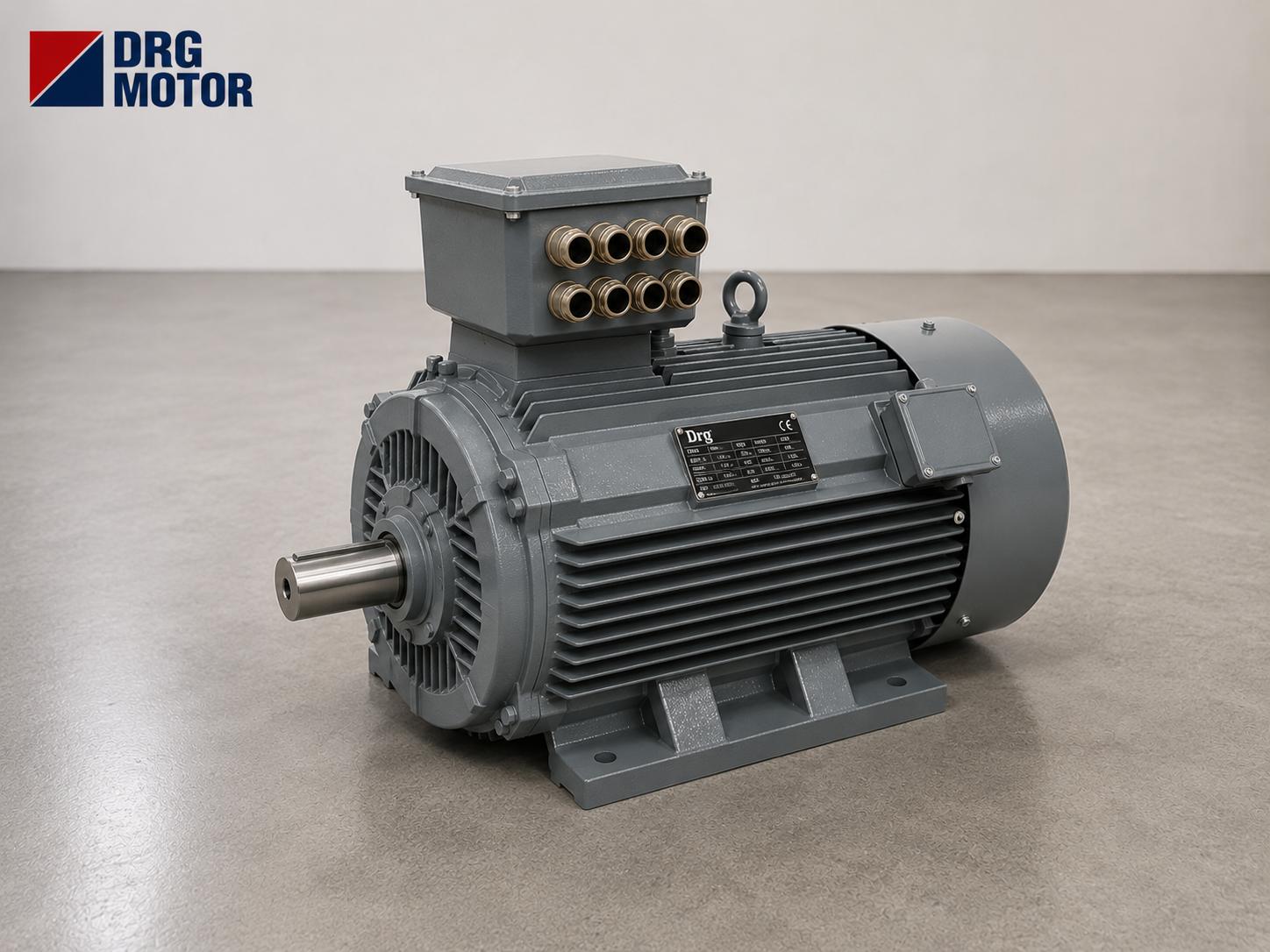

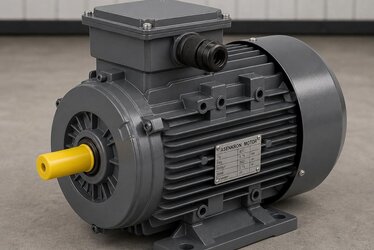
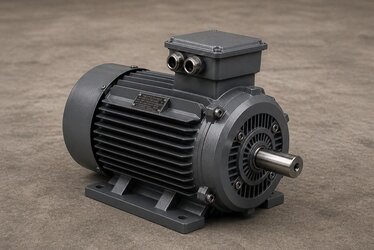
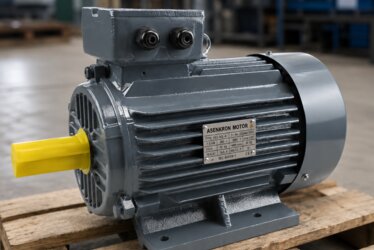
The vibration and noise a motor produces in the middle of a production line often turn into a hidden cost item: premature bearing failure, loosening bolts, drifting alignment and reduced operator comfort. Cast iron three-phase motors stand out precisely here; the high mass of the frame and its inherent damping capacity quietly absorb the energy coming from rotating masses. As DRG Motor, we offer this class of motors as a wholesale supplier, from stock and to order; during the quotation stage we help you choose the right cast iron frame for your line's load profile.
Why Cast Iron Mass Suppresses Vibration
The amplitude of vibration is roughly governed by the ratio of the exciting force to the system's mass and damping factor. Because a cast iron frame offers far higher density and inertia than aluminum, it responds with a smaller oscillation under the same magnetic and mechanical force. The heavy frame behaves almost like ballast; it spreads the energy from rotor unbalance, magnetic pull ripple or load impacts across a large mass and lowers the acceleration that reaches the surface.
In practical terms this means a lower measured vibration velocity (mm/s RMS). In applications such as precision machine tools, extrusion lines and printing machines, this difference is reflected directly in product quality. The stability a cast iron frame provides preserves repeatability in tight-tolerance work.
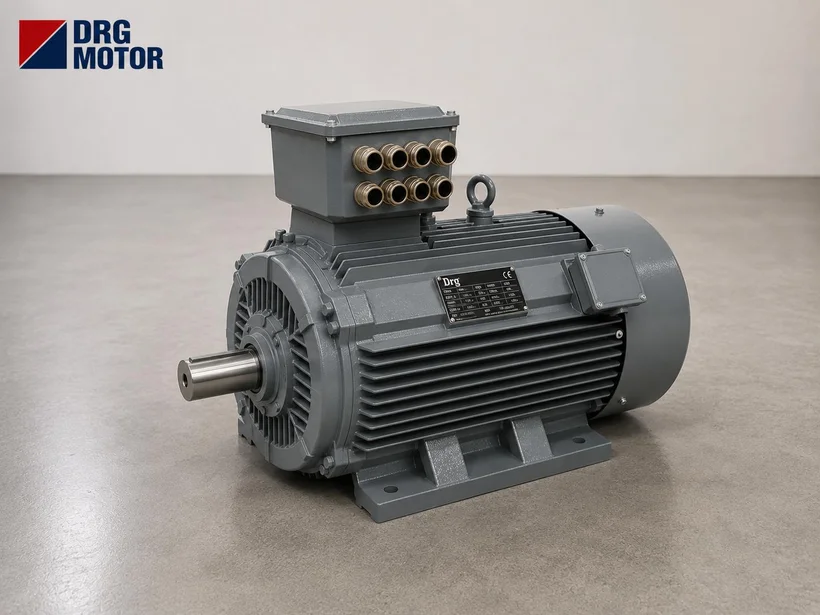
Inherent Damping: The Hidden Advantage of Gray Iron
Cast iron damps vibration by weight and by metallurgical structure. The flake graphite phase creates countless small discontinuities within the casting matrix; this structure breaks mechanical waves, converts energy into heat through micro-friction and reduces ringing. In engineering this property is called high inherent damping, and it is one of the most valuable qualities of gray iron.
Aluminum and steel do not offer this level of inherent damping; against an aluminum frame that rings for a long time when struck, cast iron gives a dull, short sound. When it comes to the motor frame, this difference means structural resonance decays faster and high-frequency hum is suppressed.
Where Noise Comes From, and Where the Cast Iron Frame Steps In
The sound signature of a three-phase motor is fed by three main sources: magnetic noise (vibration of the stator lamination stack from magnetostriction and radial forces), mechanical sources (bearings, unbalance, coupling) and aerodynamic noise (fan and airflow). The cast iron frame weakens especially the magnetic and mechanical components.
- Magnetic noise: The vibration of the lamination stack is gripped by the thick cast wall and radiated outward less.
- Mechanical noise: The stable structure of bearing housings integrated into the casting distributes bearing vibration across a large mass.
- Structural resonance: The high natural frequency of the cast frame makes it easier to stay away from dangerous resonances at operating speed.
These mechanisms explain why a cast iron frame offers a quiet and stable platform. If noise and vibration are critical on your line, it is wise to evaluate cast iron three-phase electric motor options.
The Direct Link Between Vibration and Bearing Life
Under continuous vibration, bearings are exposed to fatigue cracks and breakdown of the lubricant film. High-acceleration oscillation thins the lubricating layer between ball and race; metal-to-metal contact, noise and accelerated wear then begin. By lowering the vibration velocity, the cast iron frame breaks this chain at its very start.
Field experience shows that bearings running on a low-vibration platform deliver noticeably longer service intervals. Less frequent maintenance means tangible savings in spare parts and downtime cost. On managing bearing temperature and vibration trends, the approaches in our heat dissipation and cooling in cast iron frames article complete the picture.
Stability and Repeatability on Precision Lines
In applications such as CNC machine tools, filling-packaging machines, winding and printing lines, the motor's own vibration blends into the final product's tolerance. The heavy cast frame reduces this blending by transmitting a more damped force into the machine base. Less oscillation under constant load returns as dimensional stability and surface quality.
In systems driven by a variable frequency drive (VFD), the cast frame keeps its advantage as well. High-frequency force components from the drive may cause ringing in an aluminum frame, while they are damped faster in a cast iron frame. This means quieter operation across a wide speed range.
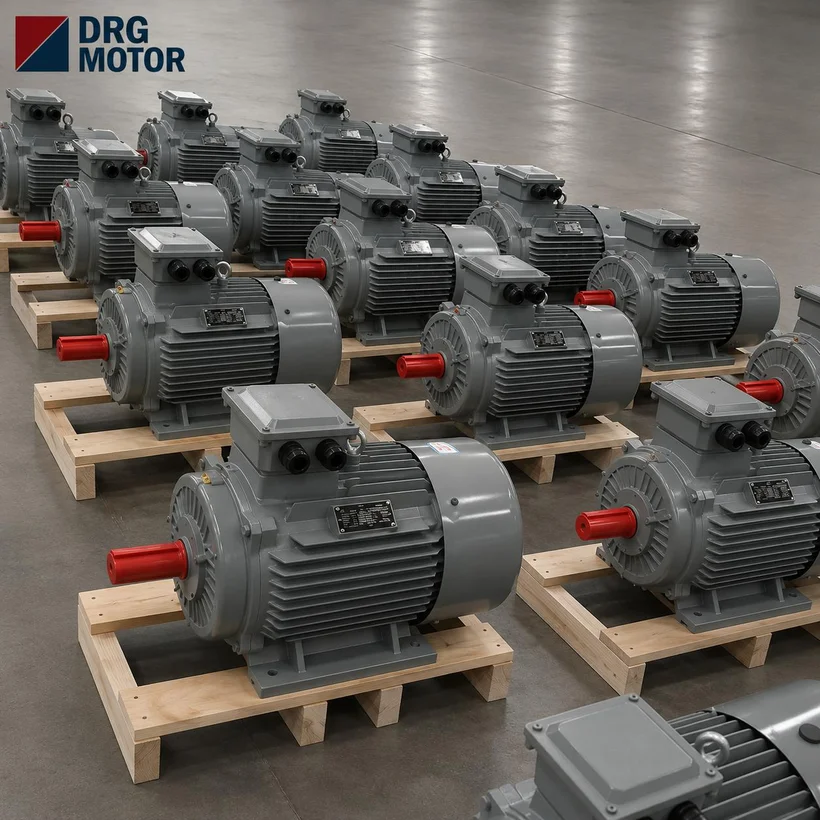
A Clear Comparison with Aluminum
Aluminum-framed motors look attractive with their light weight and low initial cost; they have their place in portable equipment and light-duty service. But on industrial lines where vibration and noise create cost, the picture changes.
- Mass and inertia: A cast frame is markedly heavier at the same power; this weight turns into an advantage that lowers vibration amplitude.
- Inherent damping: Gray iron offers damping far above aluminum; resonance decays faster.
- Structural rigidity: The thick cast wall limits flexing and the related amplification of vibration.
- Thermal stability: High mass softens temperature swings and supports dimensional stability.
In short, aluminum makes sense when light weight is required; if vibration, noise, continuity and long life are your priority, the cast iron frame clearly comes out ahead.
Mounting and Alignment: Half of Quiet Operation Is Won in the Field
Even the best cast frame loses its potential with poor mounting. For quiet, low-vibration operation, a few field principles are decisive:
- Solid and flat foundation: All foot surfaces of the frame must make full contact with no gaps; precision shims should be used when needed.
- Precise coupling alignment: Axial and angular misalignment is the most common cause of vibration; laser alignment is preferred.
- Balanced pulley/coupling: The balance of connected elements preserves the gain the frame provides.
- Correct tightening torque: Tightening the foot bolts evenly and to spec ensures the frame's rigidity is fully transferred.
In applications where impact and heavy loads combine with vibration, frame durability is a separate topic; we address this aspect in our cast iron frame durability under impact and harsh conditions article.
Where the Cast Iron Frame Makes a Difference
In some sectors quiet, low-vibration operation is not a luxury but a necessity:
- Mining and aggregate: In crushers and screens working under constant impact and dust, the damping of the cast frame is decisive; stone crushing plant motors are an example of this class.
- General industry: For long-lived and quiet solutions on fan, pump, compressor and conveyor lines, general-purpose industrial motors are preferred.
- Precision manufacturing: On machine tool, printing and packaging lines, keeping vibration out of the product is essential.
In most of these applications the backbone is formed by three-phase asynchronous motors; the cast iron frame is the platform that makes their quiet and stable operation possible.
Measuring Vibration: mm/s, Frequency and Trend Tracking
You should not just feel how quietly a motor runs, you should measure it. In field practice, vibration is measured on the frame in three axes (horizontal, vertical, axial) as vibration velocity in mm/s RMS. The widely accepted tendency is to keep this value as low as possible on small and medium-power industrial motors; as the value grows, the fatigue load on bearings and structural elements rises quickly.
The real information is hidden in the frequency distribution. Unbalance usually produces a peak at the rotation frequency (1x); misalignment shows up with a 2x component, and bearing defects reveal themselves at characteristic high frequencies. The high mass and damping of the cast frame keeps the spectrum clean by suppressing especially the mid-to-high frequency peaks that feed structural resonance. A vibration trend built from regular measurements warns of a fault months in advance and turns unplanned downtime into planned maintenance.
The Relationship Between Speed, Pole Count and Quietness
Within the same frame, as speed rises so do dynamic forces and aerodynamic noise. Low-speed motors (for example 6 and 8 pole) naturally run calmer, while in high-speed 2-pole motors fan noise and the effect of unbalance come to the fore. The value of the cast frame becomes even clearer here; it balances the rise in noise and vibration by spreading the increased forces at high speed across a large mass.
Choosing the right pole count for the application is a cheap and effective path to quietness. Instead of slowing a motor that runs faster than needed with a pulley ratio, selecting a cast iron motor at the right speed from the start pays off both in energy and noise. During the quotation stage we determine the quietest combination together based on the load torque and the desired output speed.
Stator Press Fit and the Role of Frame Rigidity
A large part of magnetic noise is related to how tightly and stably the stator lamination stack sits inside the frame. The thick-walled cast iron frame grips the lamination stack firmly and limits the radial vibration created by magnetic forces. The more rigid and massive the frame, the more the breathing motion of the lamination stack is suppressed and the less the hum radiated outward.
In thin-walled or flexible frames, the same magnetic force causes greater vibration, which means both noise and fatigue. The natural rigidity of the cast frame preserves the mechanical integrity between the lamination stack and the bearing housings, keeping the motor stable and quiet throughout its life. This structural integrity is especially valuable under heavy and variable loads.
Environmental Conditions: How Temperature, Dust and Humidity Affect Quietness
Vibration and noise performance follows the motor's internal design and the environment in which it works. High temperature can raise bearing noise by lowering lubricant viscosity; dust and abrasive particles increase vibration by enlarging bearing clearance; humidity and corrosion intensify sound by degrading surface roughness.
Thanks to its high thermal mass, the cast iron frame softens temperature swings and, with its solid structure and the right protection class, withstands harsh environments. Choosing the correct protection class (IP) and insulation class preserves the cast frame's quietness advantage against adverse environmental effects. When you share your application's dust, humidity and temperature profile, we recommend a cast iron motor configuration that runs stably under these conditions.
What Quietness Returns in Total Cost of Ownership
Low vibration is not only comfort but a direct financial gain. Less-fatigued bearings and bolts mean rarer maintenance; more stable operation means less scrap; damped forces mean a longer machine life. Even if aluminum looks cheaper at purchase, on a line where vibration and noise create cost, the total cost of ownership of a cast iron frame is often lower.
The way to clarify this calculation is to look not at the initial price but at the annual cost of downtime, maintenance and scrap. On the supply side, choosing the right power, speed, mounting type and protection class is decisive for preserving the cast frame's advantage.
The Resonance Trap and Managing Natural Frequency
Every mechanical structure has its own natural frequencies; when the frequency of the exciting force approaches one of these values, vibration grows rapidly. This is called resonance, and it lies at the root of the most destructive vibration problems in the field. A thin, light frame is at high risk of resonating because it has low natural frequencies within the operating speed range.
The high rigidity and mass combination of a cast iron frame pushes its natural frequency upward and generally keeps it away from the operating speed. This lets the motor avoid resonance amplification within its normal operating band. In systems running on a variable frequency drive, configuring the drive to skip certain speeds, combined with the cast frame's natural stability, achieves trouble-free vibration behavior across a wide speed range. When you share the speed band in your application, we recommend a cast iron configuration that avoids resonance.
Soft Starting and Reducing the Vibration Load
In direct-on-line starting, the motor and the connected system are exposed to a sudden torque and current surge at the moment of start; this surge creates both an electrical and a mechanical vibration wave. On high-inertia loads such as conveyors, crushers and large fans, this surge creates a noticeable fatigue load on the coupling and gears. When the start is ramped with a soft starter or variable frequency drive, this surge is smoothed.
With its high mass, the cast frame also damps these transient forces at the moment of start, giving the system a more controlled launch. On lines that start and stop frequently, this advantage reflects directly on coupling and bearing life. Evaluating the right starting strategy together with motor selection is an integral part of quiet and long-lived operation.
Preserving Quietness in Maintenance: Practical Tips
The low-vibration advantage a cast frame provides is preserved for years with the right maintenance. To sustain quietness in the field, a few simple but effective practices stand out:
- Periodic vibration measurement: Track trends with regular mm/s measurements; catch sudden increases early.
- Correct lubrication: The right grease type, quantity and interval for bearings is the greatest enemy of noise; avoid over- or under-lubrication.
- Bolt checks: Periodically inspect the torque of foot and coupling bolts; a loosened bolt amplifies vibration in a short time.
- Re-alignment: Recheck alignment in the first weeks after thermal expansion and settling.
- Clean cooling: Keeping the fan cover and fins free of dust prevents aerodynamic noise and temperature rise.
This simple discipline keeps the cast frame's natural quietness alive throughout the motor's entire service life and largely prevents unplanned downtime.
Coupling Choice and the Effect of Flexible Connection on Vibration
The coupling that connects the motor to the driven system is the often-overlooked link in the vibration chain. A rigid coupling transmits even the smallest alignment error directly to the bearing and the frame; a flexible coupling, by contrast, softens small misalignments and transient impacts, reducing the vibration load. The right coupling choice is a critical decision that complements the damping advantage the cast frame provides.
A flexible coupling matched to the application's torque, speed and alignment tolerance both extends bearing life and contributes to quiet operation by absorbing start-up impacts. In belt-pulley transmission, balanced pulleys at the correct tension are necessary to preserve the stability the frame provides. When you share your transmission components, we evaluate together the quietest connection solution compatible with a cast iron motor.
The Replacement Decision: Swapping an Existing Motor for a Cast Iron Frame
If you are already running a noisy or frequently failing aluminum-framed motor, the replacement decision often pays for itself in a short time. Rising maintenance cost, repeated bearing changes and vibration-induced scrap are the hidden bill of the current solution. Switching to a cast iron motor at equivalent power and speed can in most cases be done while preserving the existing mounting dimensions.
In this switch, power and speed have to match, and so do mounting type, shaft size and protection class. When you share your existing motor's nameplate data and the vibration/noise problem you experience, we clarify the directly replaceable cast iron alternative and the expected gain.
Balancing Grade and the Importance of Rotor Balance
The single most common cause of vibration is rotor unbalance. When the center of gravity of the rotating mass deviates from the geometric axis, centrifugal force loads the bearings on every turn and creates a vibration peak at the rotation frequency. In a quality motor, the rotor is dynamically balanced after manufacturing; the more precise the balancing, the lower the residual vibration.
The cast frame is the ideal platform that preserves the low vibration of a balanced rotor, because the frame's mass also suppresses the surface effect of remaining small unbalances. The connected pulley, gear or coupling must be balanced as well to complete this chain. In high-speed and precision applications you can request a tighter balancing grade; during the quotation stage we clarify the appropriate balancing expectation according to your application's vibration sensitivity.
A Supplier Approach to Stock, Delivery and Technical Support
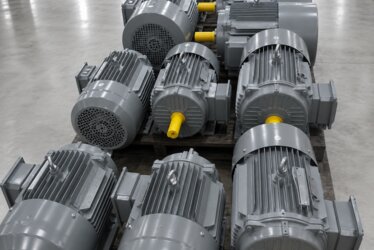
Choosing the right motor is as important as supplying it on time and with the right configuration. As DRG Motor, we offer cast iron three-phase motors from stock across common power and speed ranges, and we manage requests requiring special mounting types or protection classes to order. When a line is down, fast supply is often more valuable than a price difference.
With our wholesale supplier identity we provide the product plus technical guidance for the right choice: we determine together the quietest and longest-lived solution according to load profile, speed, mounting and environmental conditions. This approach reduces post-purchase surprises and makes the total cost of ownership predictable.
Structural Design: Fins, Wall Thickness and Mass Distribution
The quietness performance of a cast frame follows its total weight and the way the mass is distributed. In a well-designed cast iron frame, the cooling fins also act as structural ribs, stiffening the wall and lowering vibration amplitude. The dense casting mass around the bearing housings grips the force from the bearing directly and limits the spread of bearing vibration into the frame.
The thick, wide contact surface in the foot area lets the motor sit stably on the foundation and transfer vibration energy to the ground in a damped manner. These details explain why two motors of the same power can behave differently in the field. During the supply process, taking your mounting type (foot-mounted, flange-mounted or combined) and foundation conditions into account, we recommend the structurally most stable cast iron frame option.
The Invisible Effect of Quietness on Operators and the Plant
When the cast iron frame damps vibration and chokes off noise at its source, the benefit reaches the shop floor not just as a longer-lived motor but as a more bearable acoustic environment for the people who spend their shift inside it. High noise levels increase operator fatigue, hinder communication and pose a long-term occupational safety risk. In many facilities the noise levels workers are exposed to require management against legal limits; quiet-running motors relieve this burden at its source.
A line built with a cast iron motor provides lower background noise in enclosed production areas, which is a tangible gain in both comfort and compliance. A quiet motor fleet also makes it easier to notice a possible fault early through sound, because constant high noise masks a newly emerging anomaly. In this sense, quietness is an indirect early-warning system.
Let Us Choose the Right Cast Iron Frame Together
Vibration and noise are an invisible cost that quietly drags down your line's efficiency; the cast iron frame reduces this cost at its source. As DRG Motor, with our wholesale supplier identity, we determine together the cast iron three-phase motor suited to your application's load profile, speed range and mounting conditions. Net pricing takes shape during the quotation stage according to the power-speed-mounting combination and quantity. For a quiet, stable and long-lived solution, send your application to our cast iron three-phase motor supplier team; we will quickly share the models that deliver the vibration performance you need along with delivery terms.