 English
 Le français
 Türkçe

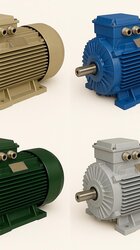
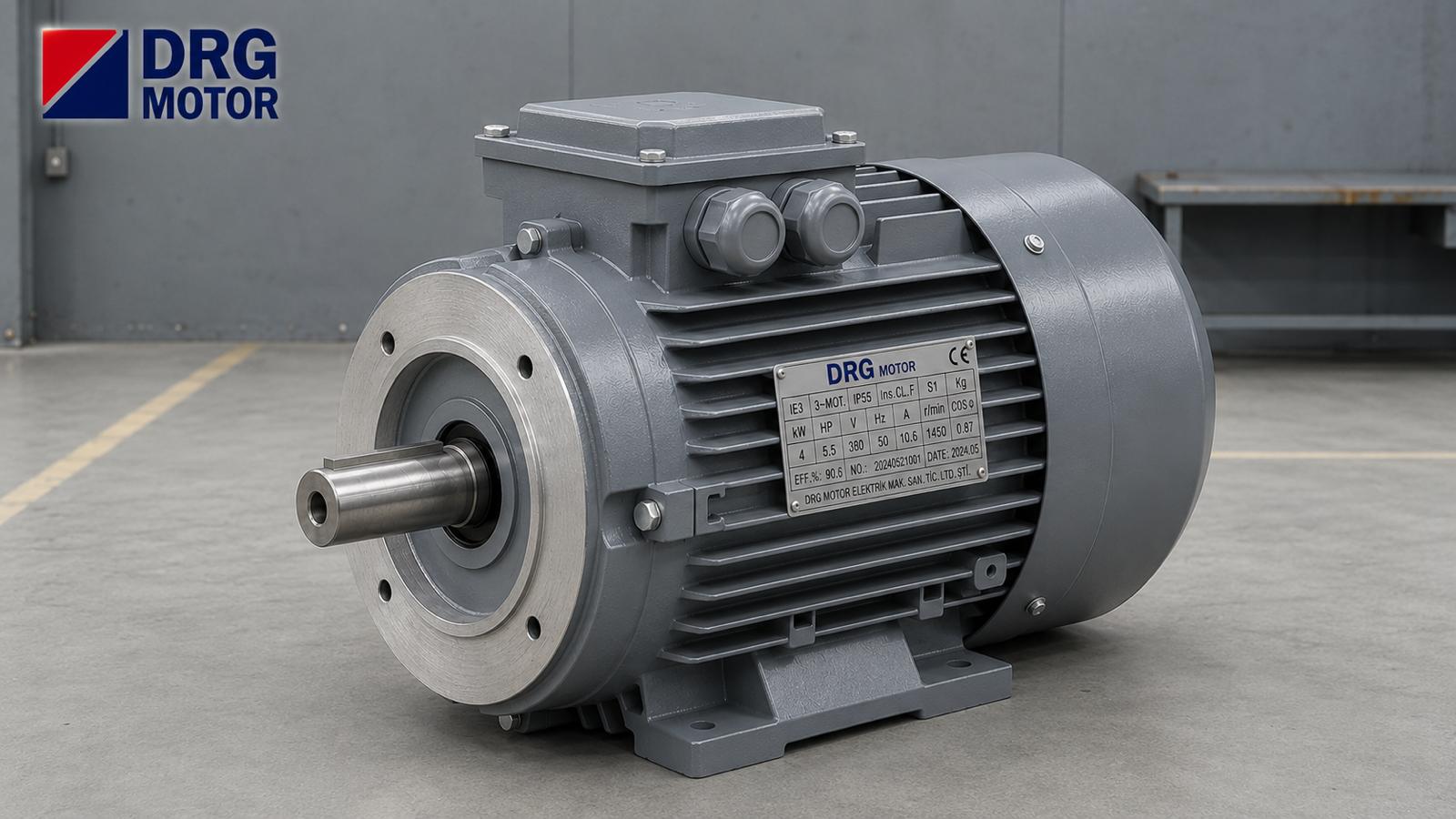

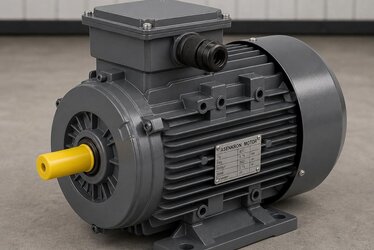
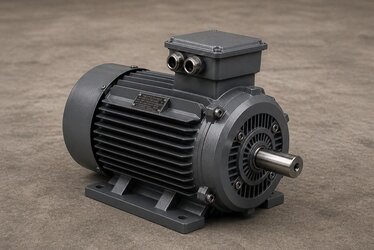
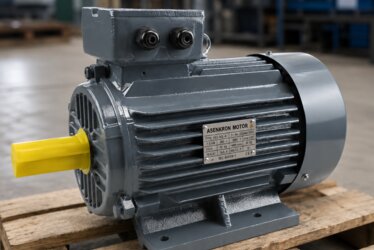
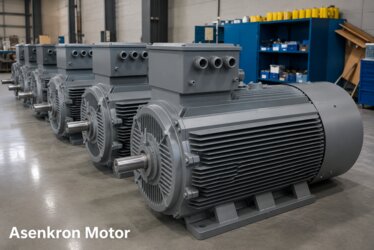
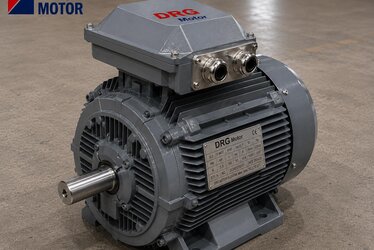
On a line that runs around the clock, the quietest threat to a motor is heat. Winding insulation ages slowly, bearing grease thins out, and efficiency drifts down with every extra ten degrees. This is exactly where the frame material, often squeezed into a single catalog line, turns out to be the factor that decides field performance. A cast iron frame stands apart from its aluminium counterparts in how it absorbs the heat it generates and carries it outward, and as a supplier we have watched the failure curve flatten many times once a buyer is steered toward the right frame.
Where the Heat Inside a Motor Comes From
In a three-phase asynchronous motor, losses gather under four headings: copper losses in the winding, iron (core) losses, friction and windage losses, and stray load losses. Every one of these turns into heat, and that heat has only one way out: through the frame into the surrounding air. No matter how efficient the motor is, somewhere between 8 and 12 percent of the rated power is released as heat. On a 30 kW motor that means several kilowatts of thermal load that must be shed continuously. If the frame cannot carry that load, winding temperature climbs.
The Thermal Mass Advantage of Cast Iron
The density and heat-storage capacity of grey cast iron give it a markedly higher thermal mass than the same volume of aluminium. In practice this means the motor heats up slowly during sudden load surges or short overloads. Aluminium warms faster and cools faster; in light, low-power duties that can be an advantage, but on industrial lines that see continuous and variable load, the thermal inertia of cast iron shields the winding from sharp temperature spikes. When load peaks, the cast iron frame behaves almost like a heat buffer, spreading the temperature over time and pulling down the highest instantaneous value the insulation ever sees.
Fin Geometry and the Work the Outer Surface Does
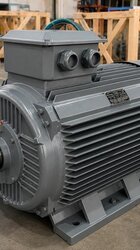
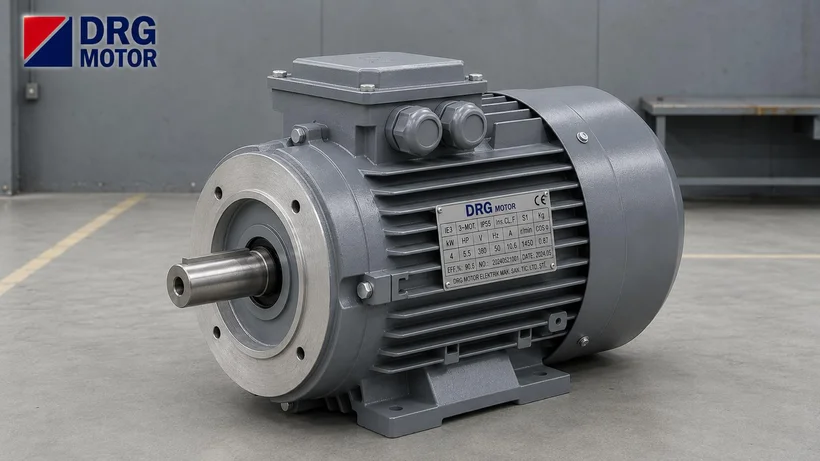
It is not enough for heat to reach the frame; it has to pass from there into the air. The casting process allows the outer cooling fins to be formed thick-rooted, dense and continuous. These fins do more than enlarge the surface area; they create an uninterrupted metal path from the frame down to their tips, conducting heat outward and then handing it to the fan air. A well-designed cast fin array offers a larger effective heat-transfer area than a thin-walled frame of the same shaft height. As the fan pushes air between the fins, the thick metal section conducts heat efficiently all the way to the fin tip and maximises the surface in contact with the air.
- A thick fin root carries heat to the tips with low resistance.
- The continuous cast structure creates no thermal bottleneck at the fin-to-frame junction.
- The large effective surface lets more heat escape with the same fan flow.
- Even when the surface collects dust and dirt, the bulk thermal capacity acts as a buffer.
Lower Winding Temperature Under Continuous Load
What governs a motor's life is not rated power alone, but the average temperature the winding sees all day. A class F motor has a defined permissible temperature rise, yet the further the real field temperature stays below that limit, the longer the insulation lives. Because the cast iron frame sheds heat more effectively, it keeps the winding a few degrees cooler at the same load and the same ambient temperature. Those few degrees look small on paper, but insulation life depends exponentially on temperature. Roughly every 10 degrees Celsius of reduction in winding temperature can about double insulation life. The coolness a cast iron frame provides therefore translates directly into calendar years of service.
The Difference in Thermal Behaviour Between Aluminium and Cast Iron
Aluminium-framed motors are light, easy to handle and can be a sensible choice for low-power, intermittent duties. But their thermal behaviour is fundamentally different. Although aluminium has high thermal conductivity, its low mass gives it low thermal inertia; temperature swings up and down quickly as load fluctuates. In a hot foundry, on a dusty crusher line or at a concrete plant baking in the sun, where the ambient temperature is already high, an aluminium frame is also more exposed to gaining heat from the environment. Cast iron, by contrast, behaves more steadily against incoming external heat and manages internally generated heat by spreading it over time. At high ambient temperatures and on long shifts, this difference decides the reliability of a line that never stops.
Field Advantage on Hot, Non-Stop Lines
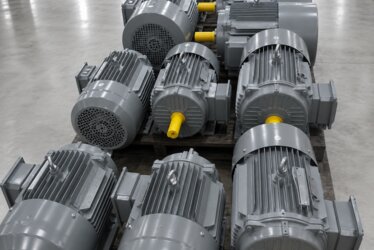
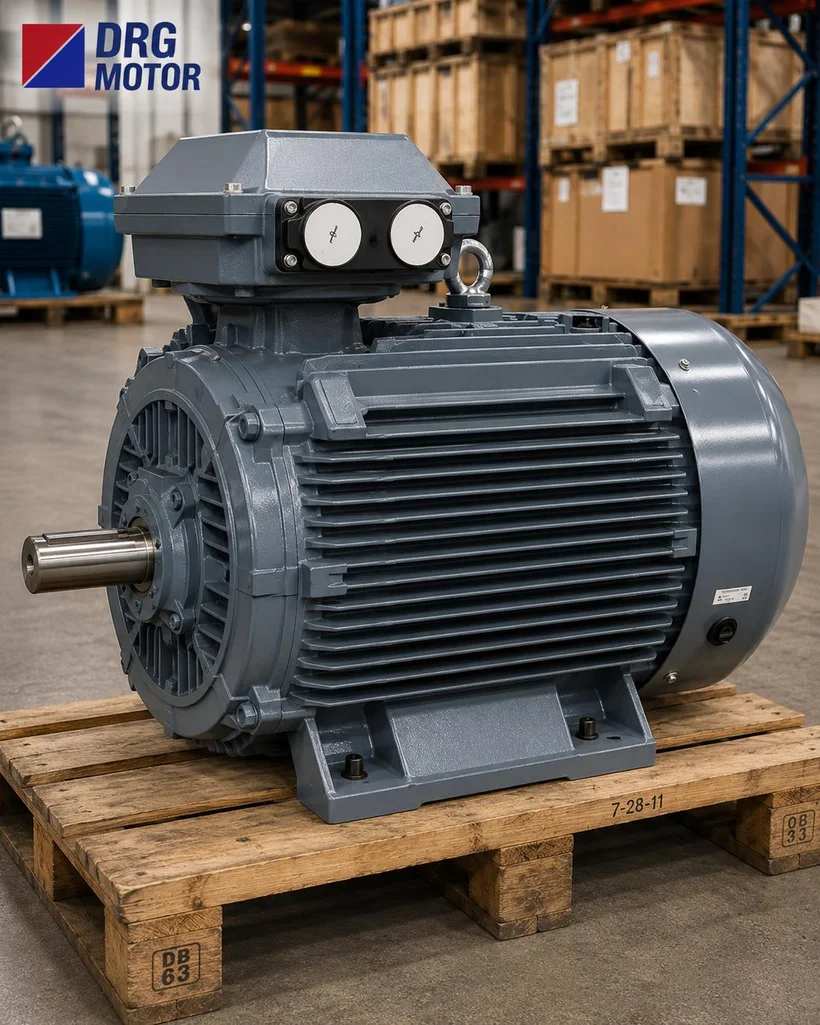
In crusher and stone-crushing plants, in compressor sets, and on continuously rotating mills and conveyors, the motor usually turns for months without stopping in the S1 continuous-duty regime. On such lines even the smallest temperature margin adds up over time. For these heavy-duty applications, the cast iron framed solutions we offer in our stone crushing plant motors range are selected to shed heat steadily under high ambient temperature and dust. For general industrial lines, matching the right shaft height and cooling class from our general-purpose industrial motors keeps the motor cool all day at its rated load.
Cooling Class (IC) and the Role of the Frame
A standard three-phase motor mostly uses a cooling arrangement in which a fan on the shaft end blows air over the frame. In this arrangement, however much air the fan pushes, the point where heat passes into the air is the frame surface. The frame material and fin design therefore directly affect how well the cooling class works in practice. A cast iron frame turns the fan's airflow into heat removal most efficiently; with a thin-walled alternative the same fan cannot achieve comparable cooling because of less effective surface and lower thermal mass. On motors run at low speed through a frequency inverter, fan flow drops, so the frame's own capacity to radiate heat becomes even more critical.
Heat Management at Low Speed and on Inverter Supply
On motors driven by a variable-speed drive, two extra heat sources come into play: the harmonics produced by the inverter create additional winding losses, and at low speed the shaft fan cannot push enough air. Under these conditions the frame's passive heat-radiating ability becomes the first line of defence for the winding. The high thermal mass of a cast iron frame slows the temperature rise in low-speed regions, and where needed the solution is reinforced by adding a separately powered (forced) cooling fan. In an application that must run across a wide speed range, the choice of frame is as decisive as the choice of drive.
How Thermal Design Affects Failure and Maintenance Cost
Most motor failures can be traced directly or indirectly to heat: a burnt winding, dried-out bearing grease, deformed insulation. When the frame manages heat well, every link in that chain loosens. A cooler bearing holds its lubrication longer, a cooler winding sees less moisture and partial discharge, and a more stable temperature creates fewer thermal expansion-contraction cycles. The result is less unplanned downtime, less need for a spare motor and a lower total cost of ownership. Choosing the right frame from the start is many times more economical than the recurring failures and lost production that a cheap-looking alternative brings.
Iron Loss, Core Temperature and Preserving Efficiency
The silicon steel lamination stack in the motor's stator heats up because the magnetic field constantly reverses direction; this is called iron loss, and the heat forms directly in the core. The heat the core produces can only be managed to the extent it can be shed through the frame. The cast iron frame takes heat from its inner surface in contact with the lamination stack and carries it to the fins; the lower the resistance of this conduction path, the cooler the core stays. A cooler core preserves its magnetic properties better and efficiency does not fall under continuous load. On a high-efficiency motor (IE3 and above) whose losses are already reduced, shedding those losses effectively lets you actually see the nameplate efficiency in the field. A frame that cannot shed heat slowly turns a motor that looks efficient on paper into a less efficient one in practice, because the rising resistance of a hot winding magnifies the loss.
Dusty, Humid and Corrosive Environments and Thermal Safety
In sectors such as stone crushing, cement, mining and fertiliser, a motor battles heat, dust, humidity and corrosion. An IP55 or higher protection class blocks the ingress of water and dust, while the mass of the cast iron frame acts as a buffer against externally driven temperature swings. Together with suitable anti-corrosion paint and special coatings where needed, the cast iron frame both sheds heat and keeps its structural integrity for a long time in a harsh environment. In these environments the thermal and mechanical endurance of the motor must be assessed together; at the supply stage we ask about your environment's contamination and humidity level and match the protection class and frame features accordingly.
Bearing Temperature and Lubrication Life
The second major factor in a motor's life is the bearing, and the bearing's greatest enemy is also heat. Grease performs best within a defined temperature band; above that band the oil thins, oxidises and the protective film weakens. Every ten-degree rise in temperature roughly halves the effective life of the grease. Because the cast iron frame keeps much of the generated heat away from the bearing housings and sheds it outward, it holds the bearing region relatively cool. That means a longer lubrication interval, lower grease consumption and a reduced frequency of bearing replacement. On a continuously rotating conveyor or mill motor, this gain in bearing life feeds straight into the maintenance schedule and the spare-parts budget. Choosing the right frame indirectly protects even the component that fails most often.
Shaft Height and Frame Size Selection
The same power can be produced in more than one frame size; a larger frame means a larger body surface and better cooling. Selecting a motor that will run in a hot environment or under continuous load one frame size up provides extra thermal margin and keeps the winding cooler. In cast iron framed ranges the frame sizes are standardised by shaft height, and matching the right size to the application solves half of the cooling performance from the start. At the supply stage we assess your line's load and ambient conditions and decide together on the frame size that suits both the mechanical mounting and the heat load; that way neither is an undersized motor strained, nor is extra budget spent on an unnecessarily large one.
Duty Cycle (S1–S8) and Thermal Equilibrium
The duty cycle is the context that decides whether the thermal mass of grey cast iron actually earns its keep. Under S1 the shaft turns without pause, so the balance point is set by the steady flow of heat leaving the frame for the air; here the thick metal section running from the fin roots out to their tips empties the generated heat minute by minute. In broken cycles such as S3 the picture flips: the motor loads briefly, stops and catches its breath. In these half-warmings what matters is no longer flow but storage capacity; the high specific heat of cast iron soaks up the energy banked during short bursts without letting winding temperature jump. On benches that start intermittently or swing large flywheel-effect loads, every start lands a brief but hard current pulse on the winding. The thick-walled cast section flattens the peak of those pulses, smearing the heat into a gentle curve instead of instantaneous spikes and reining in the cumulative winding temperature. Pinning down which S class your line works in is therefore the starting point for selecting a frame that gets the balance between fin geometry and thermal mass right.
How Insulation Class Relates to Temperature Reserve
The insulation class printed on a motor's nameplate defines the highest continuous temperature the winding can withstand; the operating temperature rise shows how far below that limit the motor actually runs. A motor that uses class F material but operates at a class B temperature rise has left itself a serious temperature reserve. That reserve absorbs the higher ambient temperatures of summer, a clogged filter, or an unexpected overload. Because the cast iron frame sheds heat more efficiently, it keeps this reserve wider at the same load. In practice it means the winding does not enter the danger zone even on the days the motor is pushed hard. The critical question for a buyer is this: is your motor running at nominal conditions, or right at the bottom of its thermal limit? A cast iron choice puts a safe margin between you and that limit and reduces unplanned trips.
Ambient Temperature and Altitude Corrections
Motor ratings are typically given for a 40 degree Celsius ambient temperature and an altitude near sea level. When the ambient temperature exceeds that value or the motor runs at high altitude, the cooling capacity of the air drops, so the power the motor can draw falls as well; this is called derating. In a hot environment an aluminium-framed motor hits its derating limit sooner. The larger effective surface and higher thermal mass of a cast iron frame mean less power loss under the same ambient conditions, which means you can actually use a larger share of the nameplate power in the field. In hot environments such as a foundry, a glass works or a boiler room, this difference lets you select the right motor one frame size smaller, lowering both capital and running cost.
Thermal Protection, PTC and Temperature Monitoring
A protection device is only as trustworthy as the behaviour of the temperature it watches, so sensor choice cannot be separated from the frame's thermal character. A PTC thermistor or a PT100 probe buried in the winding opens the circuit before the critical threshold is crossed, but exactly when it does so depends on how fast the temperature is climbing. The broad thermal mass of grey cast iron, combined with the heat the fins shed, turns the temperature curve from a steep jump into a measured rise; the sensor then takes a clean, noise-free reading along that slow curve. As a result, the nuisance trips that a thin-walled frame so often suffers from sudden thermal flutter become rare, while a genuine overload is still caught in time. On critical lines we recommend making winding temperature monitoring standard equipment: when the thermal inertia of cast iron and the protection strategy are designed at the same table, the motor is both protected and not dropped from the line for nothing. We settle together, at the quotation stage, which protection tier fits your load and environment.
The Effect of Surface, Paint and Fouling on Heat Removal
Cooling is not the metal's job alone; the condition of the frame's outer surface also affects heat removal. The dust, swarf and oil film that build up between the fins act like an insulator that slows the passage of heat into the air. On dusty crushing lines this build-up is fast and raises temperature over time. The high thermal mass of a cast iron frame delays a sudden temperature jump even when such fouling occurs, leaving you margin within the maintenance interval. Even so, regular cleaning and keeping the spaces between the fins clear is the cheapest way to preserve heat removal, whatever the frame. Keeping paint thickness reasonable also supports heat transfer from the fin surface; an excessively thick paint layer adds a thin thermal resistance.
The Share of Heat in Total Cost of Ownership
Most of the money a motor spends over its life is not the purchase price but the energy it consumes. Temperature acts in two ways here: the resistance of a hot copper winding rises, which increases losses and energy use; at the same time heat-driven failures create lost production and repair cost. A cooler-running cast iron framed motor keeps winding resistance relatively low and preserves efficiency, while also thinning out failure-driven downtime and pulling total cost down. That is why choosing a slightly heavier, sturdier frame at first purchase pays for itself within a few years in most continuous-duty applications. When deciding, we recommend looking not just at the nameplate price but at the motor's combined five-year energy and maintenance total.
Working With Us to Choose the Right Frame
Which frame suits your line depends on ambient temperature, duty cycle, power range, speed range and how critical the line is. We cover the material and design decisions behind heat-dissipation performance in depth on our cast iron three-phase electric motor hub. If you are curious about the mechanical side of the same frame, our articles on vibration damping in a cast iron frame and impact and harsh-condition durability complete the picture. For standard three-phase needs, our three-phase asynchronous motors category offers a wide spread of power ratings and frame sizes.
Let Us Specify the Cool-Running Motor Your Line Needs
A firm price is shaped by the motor's power, cooling class, frame size, protection class and delivery terms; instead of a single number, a quotation calculated for your load is more reliable. Share your line's ambient temperature, shift pattern and target power with us, and we will select the right cast iron framed motor to carry the heat load and prepare your offer. For a motor that runs cool and lasts, draw on our experience as a cast iron three-phase motor supplier; tell us what you need and we will steer you to the right frame.