 English
 Le français
 Türkçe

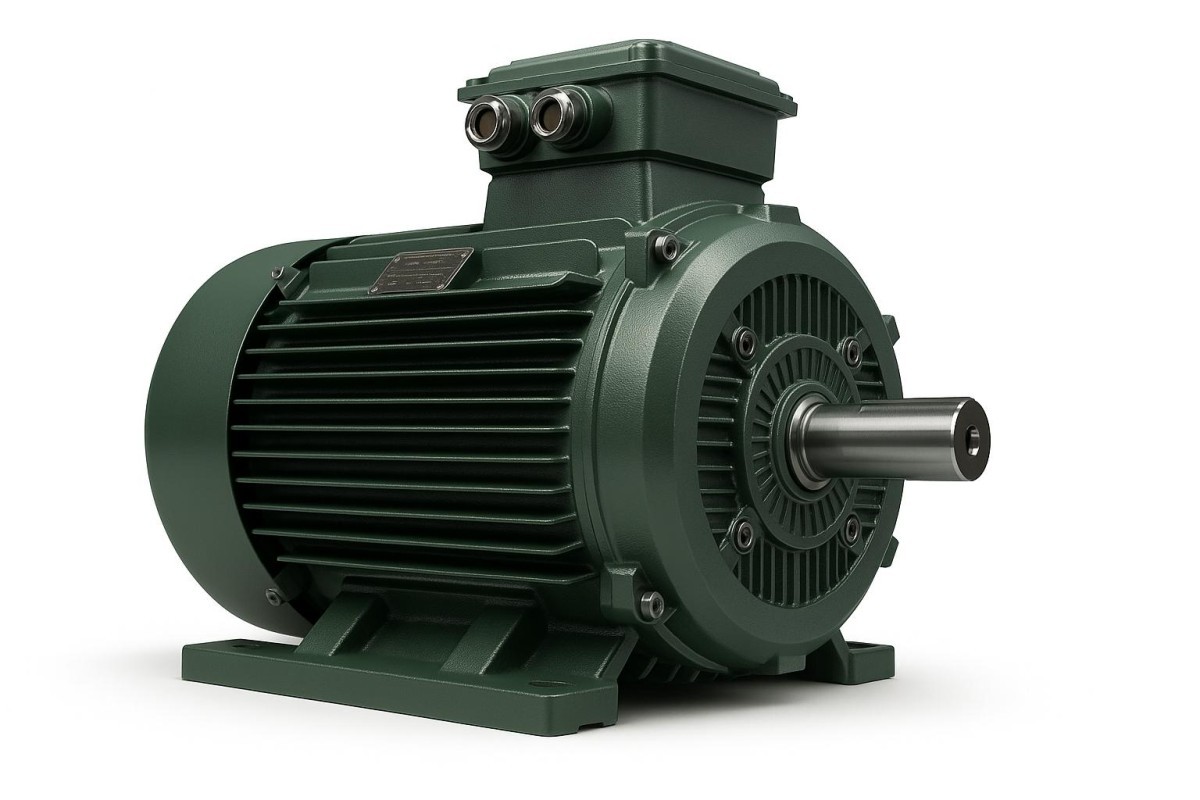

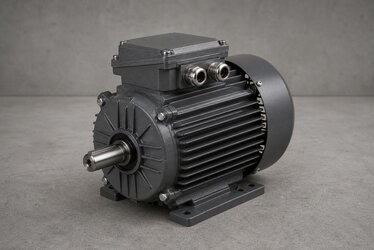
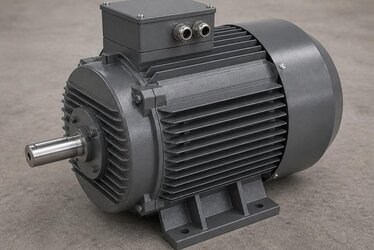
An asynchronous AC motor produces rotation when the rotating magnetic field created by alternating current in the stator induces a current in the rotor. It takes its name from the fact that the rotor turns slightly slower than the field, a difference known as slip, and this rugged design makes it the most widely used motor in industry.
Operating Principle and Slip
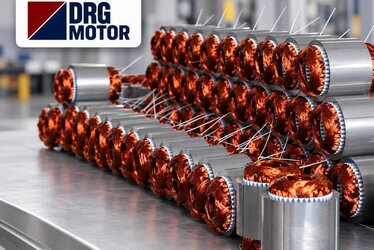
When three-phase voltage is applied to the stator windings, a magnetic field rotates at a fixed speed on a 50 Hz supply. This field induces voltage in the rotor bars, and the resulting current creates its own field that drags the rotor along. Because the rotor never quite reaches synchronous speed, the gap appears as slip, which grows slightly as load increases.
Squirrel-Cage Rotor
Most asynchronous motors use a squirrel-cage rotor, in which the rotor bars are short-circuited by end rings. With no brushes or commutator, maintenance demands are low. This simple mechanical layout gives the motor excellent durability and a long service life.
Speed and Pole Count
Synchronous speed depends on the pole count: a 2-pole motor runs at 3000 rpm, a 4-pole at 1500 rpm and a 6-pole at 1000 rpm. Pumps, fans, conveyors and gearbox drives typically use 4-pole 1500 rpm motors, with the actual speed sitting just below this figure due to slip.
DRG Asynchronous Motor Solutions
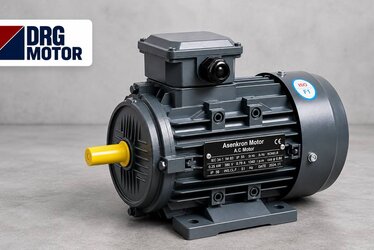
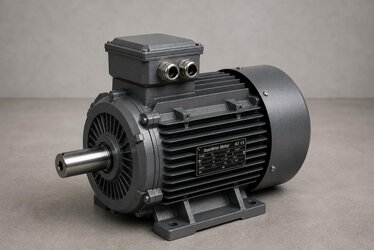
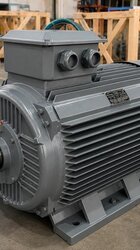
As an Izmir-based supplier, DRG Motor stocks three-phase asynchronous motors from 0.55 to 355 kW. Built with IP55 protection, Class F insulation and S1 continuous duty, they are available in B3 foot-mounted, B5 flange-mounted and B14 face-mounted versions to suit your application.