 English
 Le français
 Türkçe

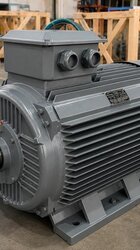
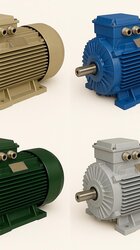
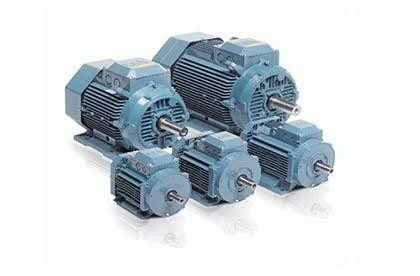

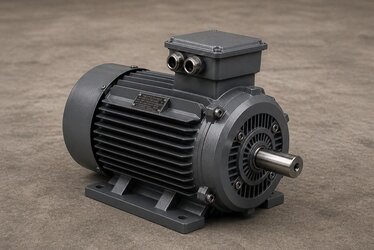
AC electric motors run on alternating current and work on the principle of a rotating magnetic field. The vast majority of motors used in industry are AC induction types, because they have no wearing parts such as brushes or commutators and run maintenance-free straight from the mains.
How AC Motors Work
Alternating current applied to the stator windings makes the magnetic field rotate at synchronous speed on a 50 Hz supply. This field induces current in the rotor, which turns slightly behind it. The difference between synchronous speed and rotor speed is called slip, and it is what allows the motor to produce torque.
Synchronous and Asynchronous Types
In asynchronous (induction) motors the rotor lags behind the magnetic field, and this is the most common industrial type. In synchronous motors the rotor turns exactly at synchronous speed and is used where precise speed control and high efficiency are needed. Most pumps, fans and conveyors are driven by induction motors.
Speed, Poles and Efficiency
On a 50 Hz supply a two-pole motor runs at 3000 rpm, a four-pole at 1500 rpm and a six-pole at 1000 rpm. Efficiency is classified from IE1 to IE5 under IEC 60034-30-1; the IE3 Premium and IE4 Super Premium classes noticeably cut energy consumption.
DRG Motor AC Motor Solutions
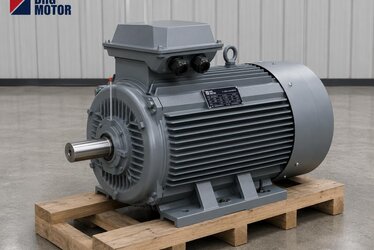
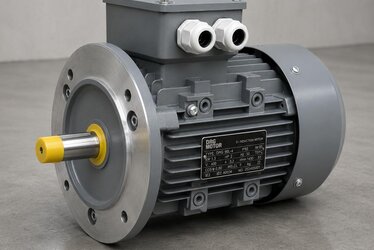
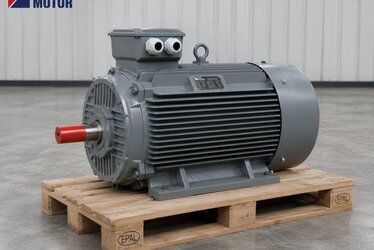
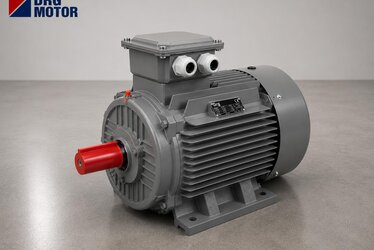
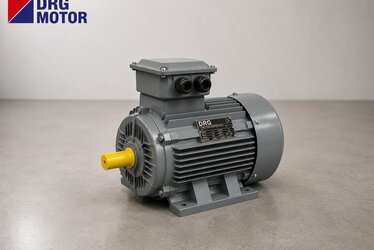
DRG Motor builds AC induction motors from 0.55 to 355 kW with IP55 protection and Class F insulation at its plant in Izmir. With cast iron or aluminium frames, B3/B5/B14 mounting and IE2 to IE4 efficiency options, it supplies the motor that fits your application.