 English
 Le français
 Türkçe

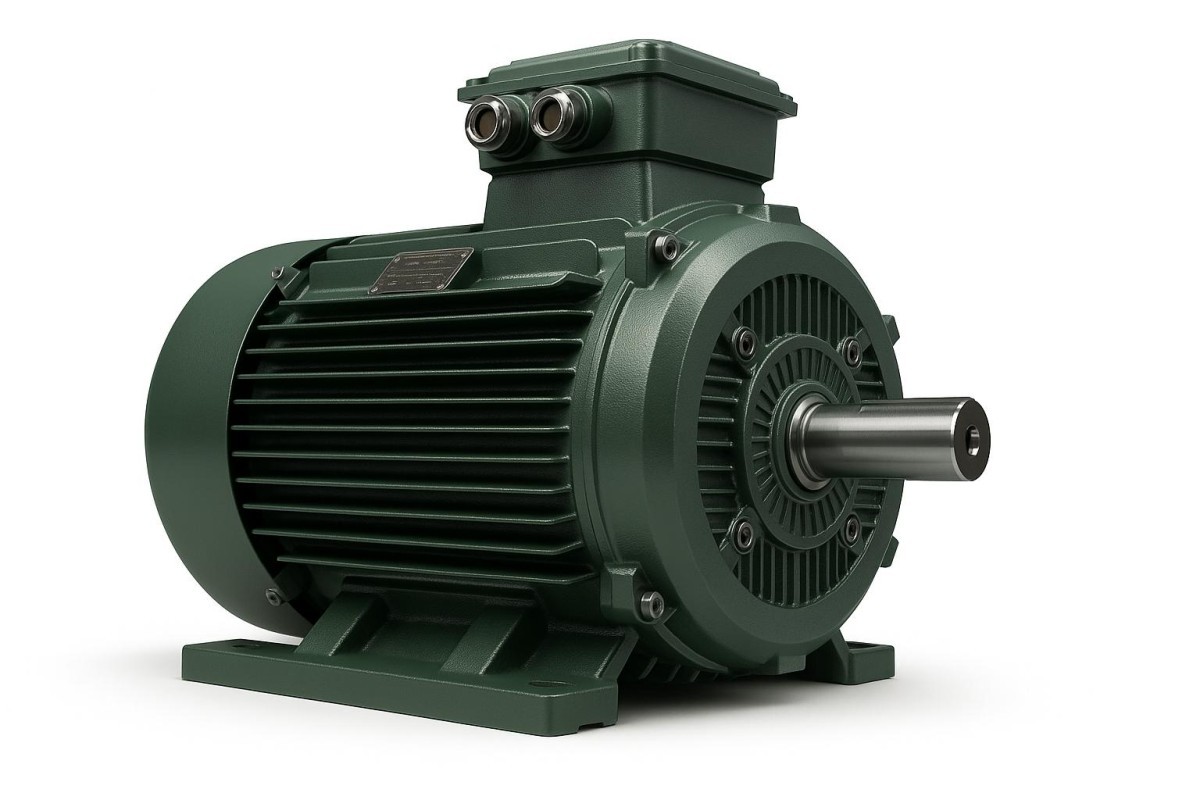

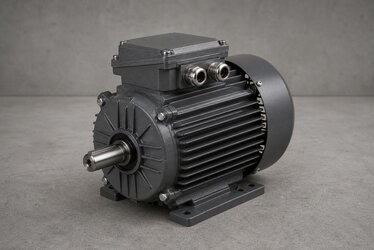
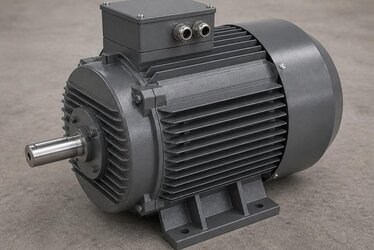
Three-phase electric motors run on the rotating magnetic field created by alternating current from three separate phases, and they are the most widely used motor type in industry. Unlike single-phase motors, they start on their own without an auxiliary winding and produce a smooth, balanced torque.
Working Principle and Construction
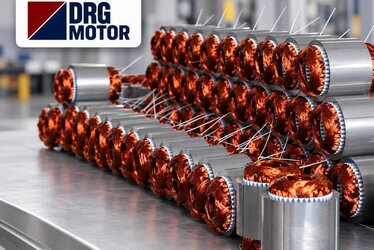
Three winding groups placed 120 degrees apart in the stator create a rotating magnetic field when fed from a 400 V / 50 Hz supply. This field induces current in the squirrel-cage rotor and sets it turning. Because the design is simple, there are no brushes or commutator, which reduces maintenance.
Speed, Pole Count and Power
On a 50 Hz supply the synchronous speed depends on the pole count: 2-pole runs at 3000 rpm, 4-pole at 1500 rpm and 6-pole at 1000 rpm. The actual speed drops by a small slip under load. The power range spans from 0.55 kW up to 355 kW and is selected to suit the application.
Protection, Insulation and Mounting
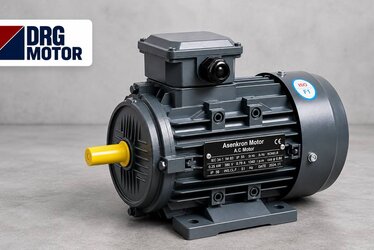
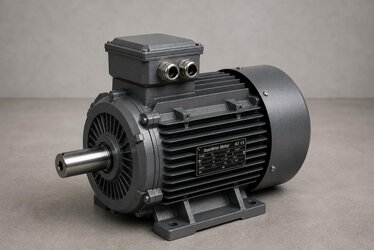
Industrial three-phase motors are usually built with IP55 protection and Class F insulation and are rated for S1 continuous duty. Depending on the installation, a B3 foot-mounted, B5 flange-mounted or B14 face-mounted frame can be chosen. These features make the motor adaptable to loads as varied as pumps, fans, conveyors and compressors.
Choosing the Right Three-Phase Motor
The correct choice means matching power, speed, efficiency class and mounting type to the application. As an Izmir-based supplier, we keep three-phase motors in IE2, IE3 and IE4 efficiency classes across the 0.55–355 kW range to help you settle on the right configuration.