 English
 Le français
 Türkçe

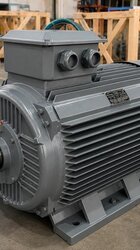
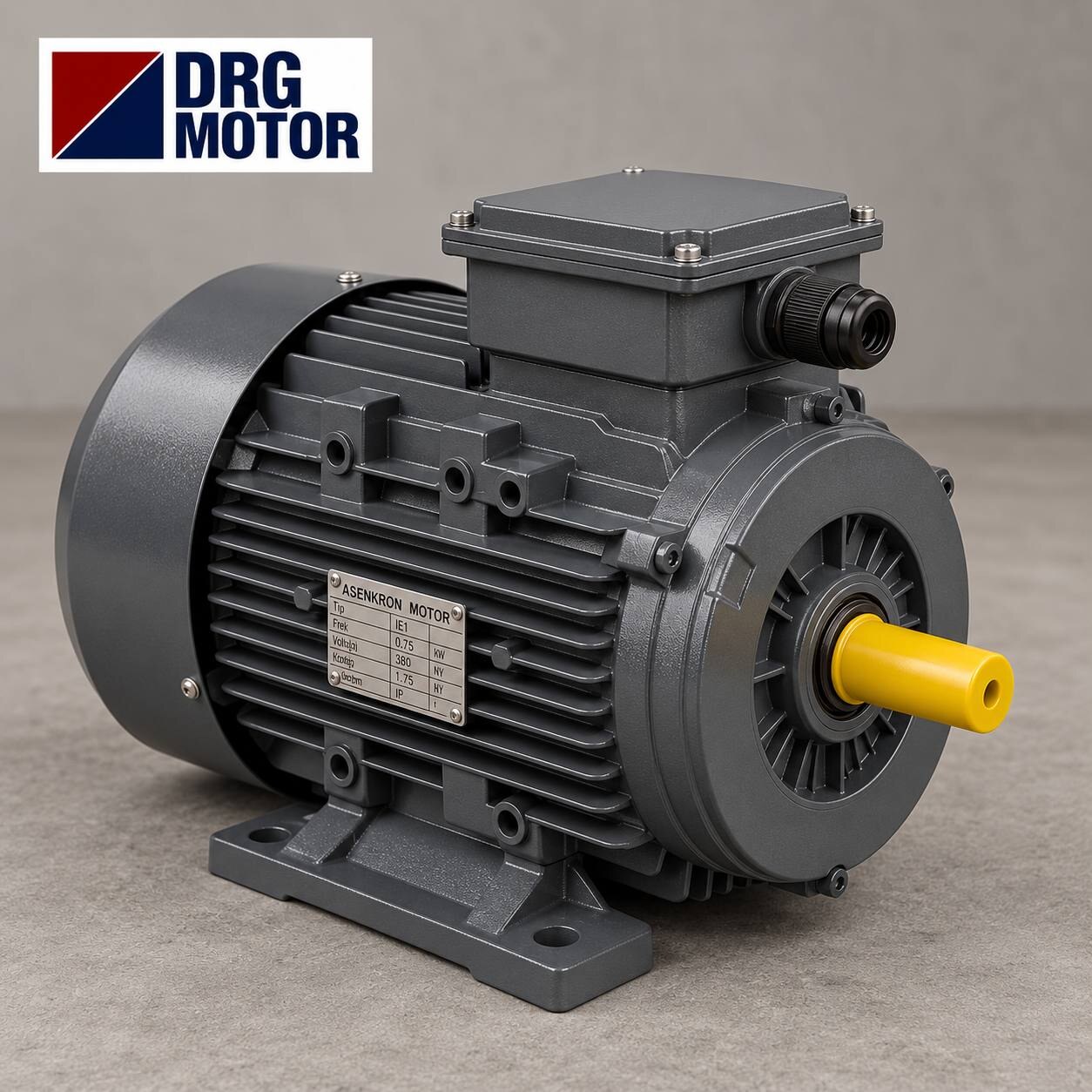

The single-phase asynchronous motor is the basic solution for low-power applications where a three-phase supply is not available, running on one phase and neutral. Because a single phase cannot create a rotating field on its own, these motors use an auxiliary winding and a capacitor for starting; this arrangement directly defines their types and behaviour.
How Is Starting Achieved?
The single-phase winding produces a fixed pulsating field, which is not enough to turn the motor by itself. A capacitor placed between the auxiliary and main windings creates a second, phase-shifted field and gets rotation going. Start-capacitor, run-capacitor or combined types are chosen according to the starting torque required.
Typical Power and Speed Range
Single-phase asynchronous motors are usually built in low powers, mostly up to a few kW. At 50 Hz the synchronous speeds are 3000 rpm for 2 poles and 1500 rpm for 4 poles, with the motor running slightly below this due to slip. At higher powers a three-phase motor is almost always a more efficient and simpler solution.
Where Are They Used?
Small pumps, fans, compressors, workshop machines and household equipment are typical uses for single-phase asynchronous motors. They offer a practical answer in small workplaces and agricultural irrigation where three-phase supply cannot be drawn. With IP55 protection and Class F insulation, the design endures dusty and humid settings.
When Choosing a Single-Phase Motor
Starting torque and continuity expectations are decisive: a frequently started compressor and a continuously running fan call for different capacitor arrangements. If a three-phase supply exists, a three-phase motor of the same power is usually more advantageous. DRG Motor advises on the right configuration in single- or three-phase form to suit the application.