 English
 Le français
 Türkçe

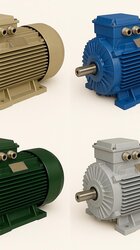
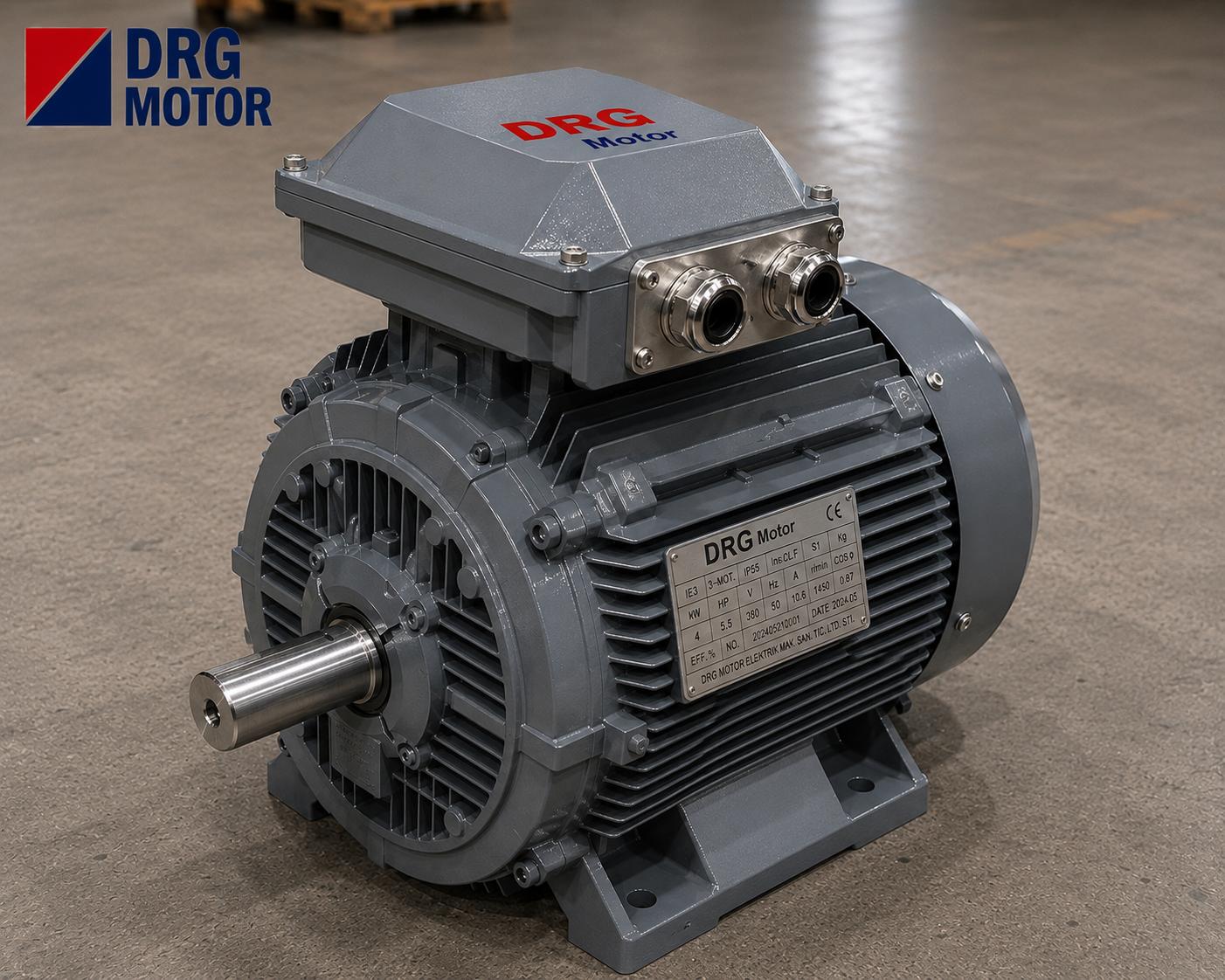

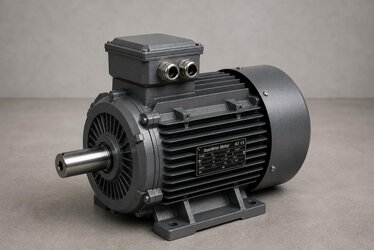
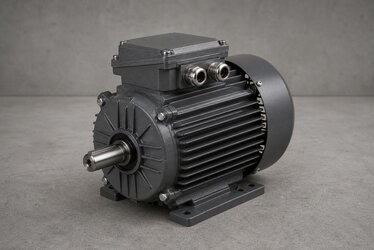
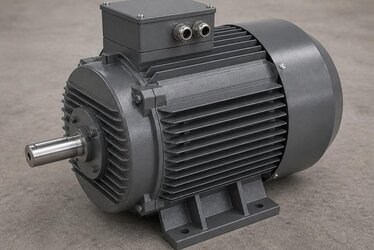
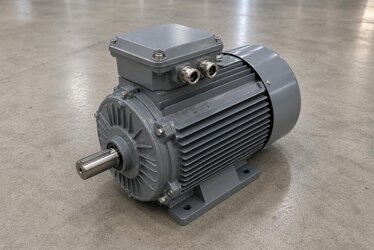
In heavy industry, the 37 kW electric motor sits at the heart of countless critical drives, from crushing and screening lines to large fan and pump groups, conveyor systems and compressor units. This power class forms the backbone of mid-to-upper segment applications because it is strong enough to meet high torque demand yet manageable enough not to overload the plant's electrical infrastructure. At DRG Motor we supply this segment quickly from stock based on real field requirements, defining the correct frame and mounting type together with you to shorten the commissioning process.
Why the 37 kW Class Is a Heavy Industry Favourite
At roughly 50 horsepower, this power level is an ideal balance point for production lines running around the clock. Much smaller motors overheat and lose efficiency under heavy load, while oversized motors raise both the initial investment and the idle consumption. Positioned correctly to operate in the 75-90 percent band of nominal load, a 37 kW electric motor delivers its highest efficiency and longest bearing life. That is why evaluating the load profile together at the project stage pays off as low operating costs for years to come.
In heavy industry, motor selection is never made on nameplate value alone; real operating data such as starting torque, moment of inertia, starts per hour and duty cycle all come into play. A crusher started dozens of times an hour, for instance, places a completely different starting current and thermal load on the motor than a continuously running fan. So for a class like 37 kW you have to define the power and the operating regime correctly. Before quoting, DRG Motor clarifies this data with you and recommends the configuration that guarantees the motor truly delivers its expected service life in the field.
Typical Application Areas
This power class finds its place in the hardest-working equipment on the floor. A 37 kW motor with a robust mechanical structure and well-designed cooling performs with a low fault rate even in multi-shift operation.
- Drive units in crushing, screening and mineral preparation lines
- High-flow centrifugal and submersible pump groups
- Industrial exhaust, stack fan and air curtain systems
- Heavy-duty belt and chain conveyors
- Screw and piston compressor drives
- Extruder and mixer mechanisms in plastics, rubber and food sectors
What these applications share is the need for a drive that withstands sudden load changes and long periods of continuous running. The three-phase asynchronous motors we supply are offered with proven IE2 and IE3 efficiency classes for exactly these demanding conditions.
Frame, Mounting and Speed Options
37 kW is generally produced in 200L or 225 frame sizes and supplied with different pole counts according to the application. Two-pole versions (around 2900 rpm) suit high-speed pumps and compressors, four-pole versions (around 1450 rpm) excel in high-torque applications such as conveyors and fans, while six-pole versions (around 970 rpm) are preferred for crushers with heavy starting loads.
Mounting options include foot-mounted (B3), flange-mounted (B5) and combined foot-flange (B35). A flange frame eases commissioning on systems coupled directly to a gearbox, while a foot frame is practical for belt-and-pulley drives. Clarifying the correct frame-mounting match from the outset prevents unexpected adaptation costs in the field.
Shaft diameter, keyway and terminal box orientation are details that are often overlooked yet directly affect installation. If you are replacing an existing motor, sharing the old motor's nameplate and shaft data makes it easy for us to offer a perfectly compatible equivalent. If you are building a new line, defining the coupling, gearbox and pulley dimensions from the start lets us match the motor's mechanical interface flawlessly. This approach ensures the line runs smoothly on the first attempt and shortens the commissioning time.
Efficiency Class and Energy Saving
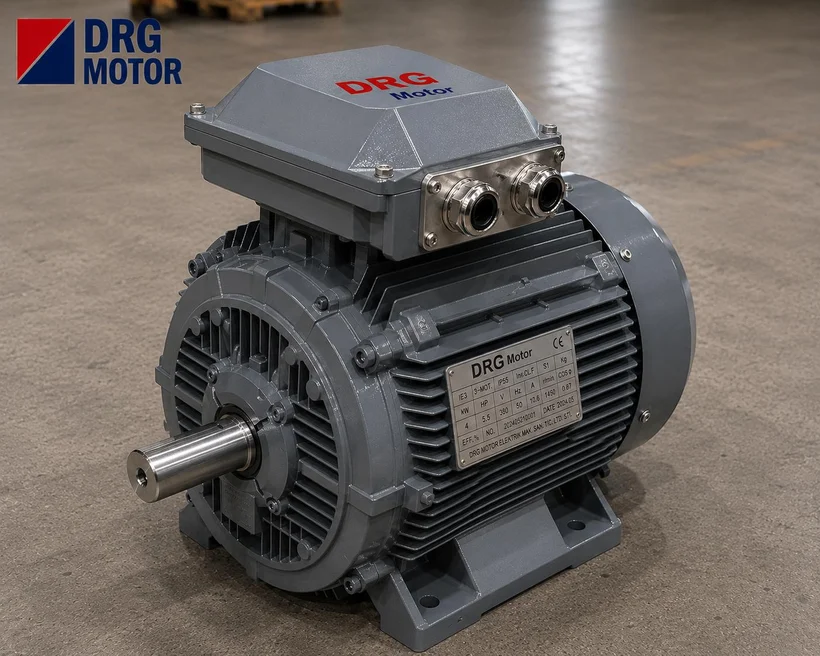
On a continuously running 37 kW motor, a few percentage points of difference between efficiency classes turn into significant figures on the annual energy bill. An IE3 motor noticeably reduces losses compared with IE2 and usually pays back its extra investment within a few years. High-efficiency motors generate less heat, which extends bearing and winding life. When making the investment decision, we recommend adding the electricity the motor will consume over its economic life to the purchase price; this total cost of ownership approach points to the right choice over the long term.
In practice, on a continuously loaded motor such as 37 kW, the energy cost far exceeds the purchase price of the motor. For a drive running 16 hours a day, 300 days a year, the monetary value of the electricity consumed over its lifetime is many times the initial investment. In this picture, raising the efficiency class is not a luxury but a decision that flows directly into profit. By sharing the efficiency curves and part-load behaviour of the motors we supply, we calculate together which class delivers the fastest payback for your specific operating profile.
Protection Class and Environmental Conditions
Heavy industrial environments are demanding in terms of dust, moisture and vibration. We therefore recommend the standard IP55 protection class; in dusty mining or cement plants, IP56 or additional sealing packages may come into play. Where special conditions such as high ambient temperature, altitude or chemical vapour exist, the motor specification must be adjusted accordingly. Options like thermistor (PTC) protected windings, space heaters and reinforced bearings are frequently requested to prevent unexpected stops on critical lines.
In crushing and screening applications where vibration is intense, using reinforced or extended-grease-life bearings instead of standard ones significantly lengthens the motor's maintenance interval. In wet or outdoor applications, drain plugs, stainless fasteners and special paint systems provide extra protection against corrosion. We evaluate all these details together when selecting the motor, determine the equipment the application genuinely needs, and build the solution best suited to field conditions without adding unnecessary cost.
Compatibility with Frequency Converters
Most 37 kW motors today run with a variable frequency drive. Providing soft starting, precise speed control and energy savings, this method has become standard especially in pump and fan applications. For inverter-fed motors, details such as reinforced insulation, a separate forced-cooling fan and insulated bearings gain importance. If you are planning a move from a 22 kW class drive to 37 kW on an existing line, the drive compatibility notes in our earlier 22 kw elektrik motoru guide will make the transition decision easier. When the cable run between the drive and a 37 kW motor is long, voltage spikes at the terminals can stress the winding insulation, so we either specify inverter-duty windings or recommend an output dU/dt filter sized to your installation. We also match the motor to your existing or planned drive brand and power rating beforehand, confirming the current and overload margins so the pairing is verified rather than assumed before it reaches your site.
The Importance of Correct Speed Selection
The speed the application demands is one of the most critical parameters in motor selection. The wrong pole count means either unnecessary gearbox cost or insufficient torque. For a similar comparison at a smaller power, the speed-torque relationship explained in our 7.5 kw 1500 devir motor content helps you grasp the same logic for a 37 kW choice. When we address speed, torque and gear ratio together, it becomes possible to derive the most economical drive combination for your line.
Supply, Stock and Quotation Process
At DRG Motor we keep common frame and pole combinations in the 37 kW electric motor segment in stock, and for special requests we supply within a short lead time. Pricing is shaped by factors such as efficiency class, mounting type, protection degree, drive compatibility and optional equipment. That is why, instead of a fixed list price, we prefer to offer a net quotation tailored to your application. When you share the plant's load profile, operating regime and existing infrastructure with us, our technical team identifies the most suitable motor the same day and shares price and delivery information.
In heavy industry, a motor stopping means the whole line stopping. Working with the right supplier therefore means not just a good price but the right product, fast stock and commissioning support. Share your technical requirements for your 37 kW project with us, and we will respond as quickly as possible with an efficient, sustainable drive solution suited to your field.