 English
 Le français
 Türkçe

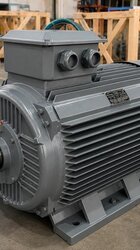
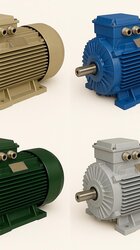
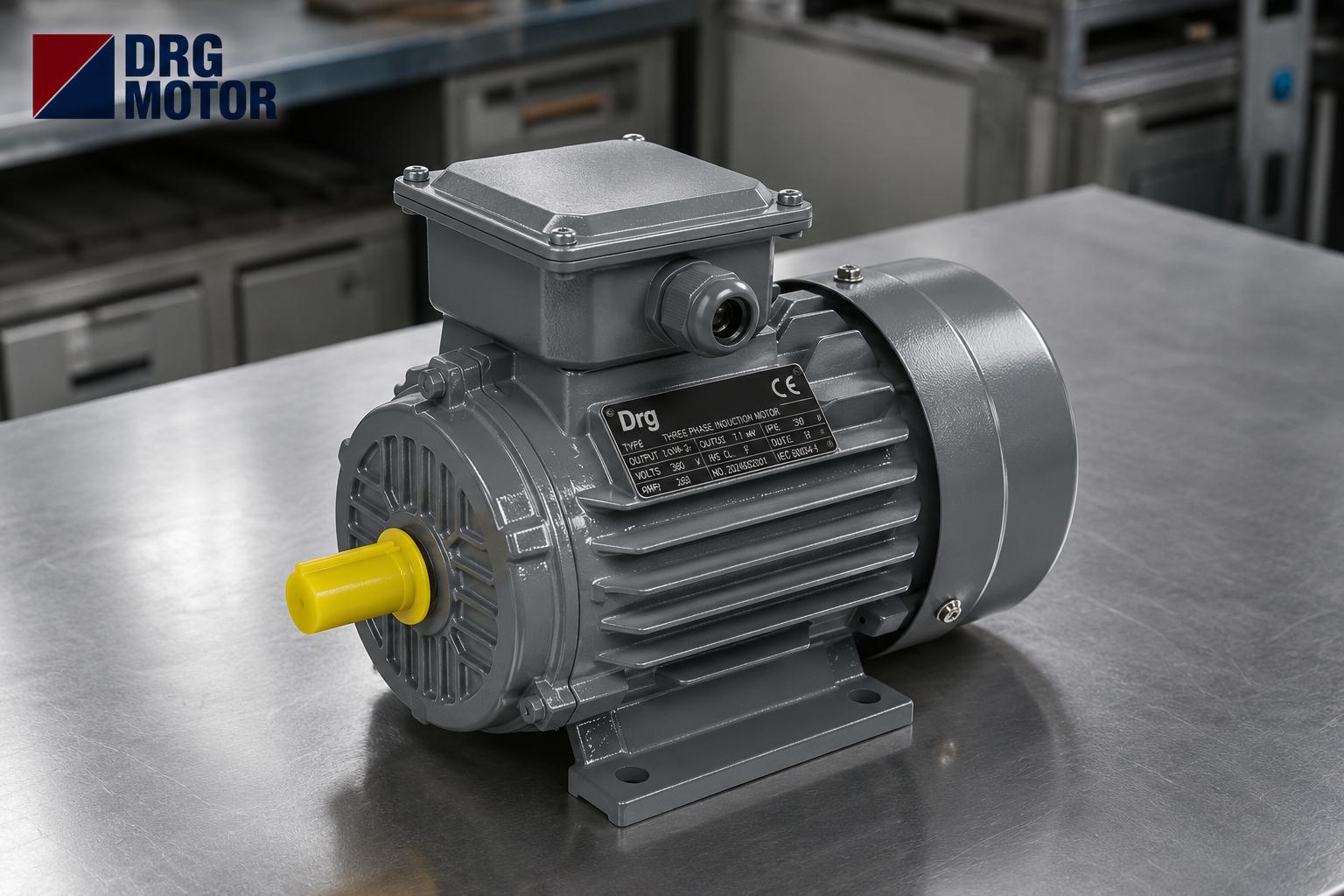

Selecting the right vibration motor takes far more than ticking the nearest frame size in a catalogue. In screening, feeding, compaction and discharge applications, performance is not driven by raw power but by the centrifugal force produced and the amplitude of the vibration. As a supplier serving plants across Turkey and abroad, DRG Motor sizes every project around these two parameters, turning your numbers into a clear quotation and the correct frame the first time.
A poorly chosen vibration motor either fails to move the line enough, dragging down throughput, or applies excessive force that fatigues the frame, bearings and welded joints far too early. Starting the supply process from material flow rate, equipment mass and target amplitude is what keeps both energy and maintenance costs under control over the life of the machine.
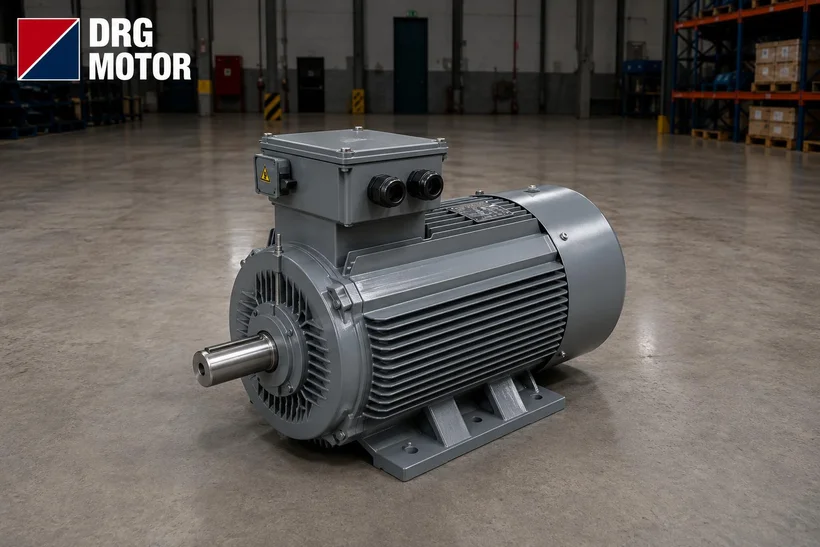
Why centrifugal force drives the choice
A vibration motor generates centrifugal force through adjustable unbalanced weights spinning at each shaft end. This force is expressed in kilonewtons and is directly proportional to the total mass the application must move. A practical rule is that the generated force should be a defined multiple of the total vibrating mass, and that multiple changes depending on whether you are screening, conveying or compacting. At the quotation stage all we need is the approximate weight of the line and the type of application; we run the force calculation and recommend the matching frame.
Choosing force only from the upper limit is just as mistaken. An over-powered frame fitted to a small screen makes the material bounce rather than travel, which both spoils separation quality and needlessly fatigues the frame. Conversely, a motor chosen short on force loses speed under heavy load and brings the line to a standstill. Correct supply means matching force to the real demand of the application; we narrow that range using your data and place the frame right in the middle of it.
Amplitude: how the material actually behaves
While centrifugal force shows potential, amplitude determines how far the material genuinely travels along the line. Amplitude is measured in millimetres and is fine-tuned by changing the angle of the unbalanced weights. Coarse and damp materials demand high amplitude, whereas fine powders flow more steadily on a low-amplitude, high-frequency combination. The correct amplitude prevents clogging, keeps material advancing without bouncing, and holds noise to a reasonable level.
The practical advantage of amplitude is the flexibility it gives you on site. On a frame of the same force class you can decrease or increase amplitude by up to a hundred per cent simply by changing the angle of the weight discs. This lets you retune the line for season, material moisture or particle size without buying new equipment. On the vibration motors we supply we state this adjustment range up front and provide a technical note showing which amplitude is achieved at each setting.
Pole count and the frequency balance
In vibration motors the number of poles sets the vibrations per minute, in other words the frequency. Two-pole models offer a high-frequency, low-amplitude character suited to compaction and fine screening. Four, six and eight-pole models lower the frequency while allowing higher amplitude, which is preferred for moving coarse material and heavy screening. Your plant's material profile makes it clear which pole class you should stay within.
The frequency you pick affects throughput as well as the noise and vibration signature of the equipment. High-frequency solutions are usually quieter and more controlled, but they struggle to advance coarse material. Low-frequency, high-amplitude solutions provide powerful conveying yet demand a frame stiff enough to carry that load. When selecting the right pole class we weigh the material and the mechanical strength of the line together.
- 2 pole: high frequency, fine screening and compaction
- 4 pole: balanced profile, versatile feeding and conveying
- 6 pole: high amplitude, coarse and sticky material
- 8 pole: highest amplitude, heavy discharge and crusher feeding
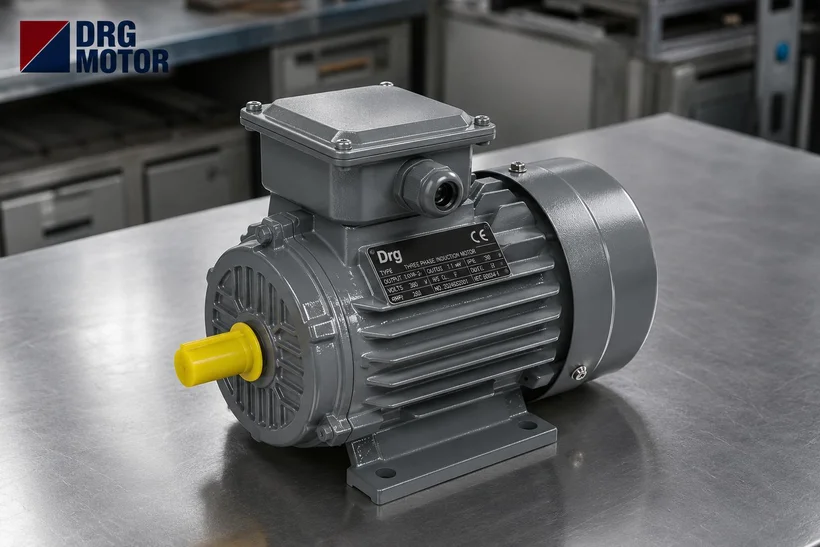
Twin-motor installation and synchronisation
Many screening and feeding lines run on two counter-rotating motors to achieve linear vibration. In this layout the motors must be matched in mass, force and speed; otherwise the direction of vibration drifts and the frame is overstressed. For twin-motor projects DRG Motor supplies frames in pairs within the same force class, guaranteeing synchronised operation from the outset. When the two motors are mechanically connected correctly they self-synchronise and produce a clean linear force, which is why supplying the pair from the same batch and the same calibration directly affects how well they cooperate on site.
Commissioning and first-run checks
The performance of a correctly chosen vibration motor is locked in by a few simple checks during the first run. You need to confirm that the unbalanced weights are set to the same angle at both ends, that the connection bolts hold their torque values, and that the motor seats fully against the frame. Re-checking bolt torque in the first hours of operation prevents vibration-induced loosening and extends bearing life. With every frame we supply we share a short commissioning note covering these steps, so your team locks in the correct setting on site without wasting time.
Protection class and ambient conditions
Vibration motors typically operate in dusty, damp and abrasive environments, so the choice of protection class is as critical as performance. For mining, quarry and recycling plants we recommend a high IP rating, reinforced bearings and a cast housing. On food and chemical lines surface coating and sealing come to the fore. Simply describing your operating environment is enough for us to build the right protection level into the quotation.
Mounting orientation and load transfer
How much of the force a vibration motor delivers reaches the material, and how much is wasted, depends on mounting orientation. Motors are usually fitted horizontally, vertically or at an incline, and the mounting angle sets the direction of vibration. A motor bolted at the wrong angle cannot advance material in the intended direction even if it produces its rated force. Learning the mounting plane and the slope of the line at the supply stage lets us recommend the right frame and connection type, heading off the time lost to on-site removal and refitting.
Bearing life and total cost of ownership
The most critical wear point in a vibration motor is the bearings, because they work under constant dynamic load. A motor chosen in the correct force class with amplitude tuned to the application markedly extends bearing life. A frame chosen too small purely because of a lower initial price fails quickly at the bearing, and the downtime cost soon outweighs any purchase saving. That is why we encourage you to base the supply decision on expected service life rather than unit price alone.
When assessing total cost of ownership you also have to account for spare-part availability and delivery times. A vibration motor selected from a common, stocked frame class can be swapped quickly in the event of a fault, so the line does not stay down for long. DRG Motor keeps frequently requested force classes in stock and, for critical applications, considers spare-frame planning as part of the quotation. That way your purchase decision stays economical not just on day one but across the entire life of the equipment.
How it fits with other drive solutions
Vibration drive is only one part of a plant's fluid and material handling. The same site may need a pompa elektrik motoru for liquid transfer, and a dedicated yangın pompası motoru for the fire safety line. DRG Motor supplies all of these items through a single procurement window with compatible technical specifications, simplifying project management considerably.
What to send us for a quotation
A few details are enough for fast, accurate pricing: the type of application (screening, feeding, compaction, discharge), the approximate weight of the vibrating equipment, the desired amplitude or material type, the operating environment, and the voltage and frequency values. With this data we confirm the centrifugal force and pole class and tie a suitable frame from our stock to a quotation in the shortest possible time.
Our aim in supplying a vibration motor is not merely to sell you a product but to make sure the line runs with the correct amplitude and force from day one. Send us your project data and our technical team will confirm the right vibration motor option, together with the delivery time, the same day and prepare your quotation.