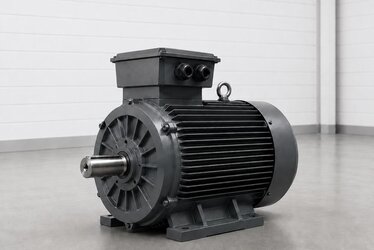
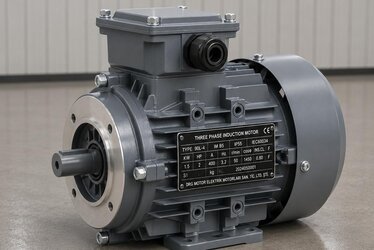
 English
 Le français
 Türkçe

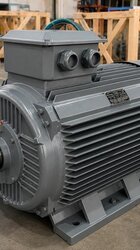
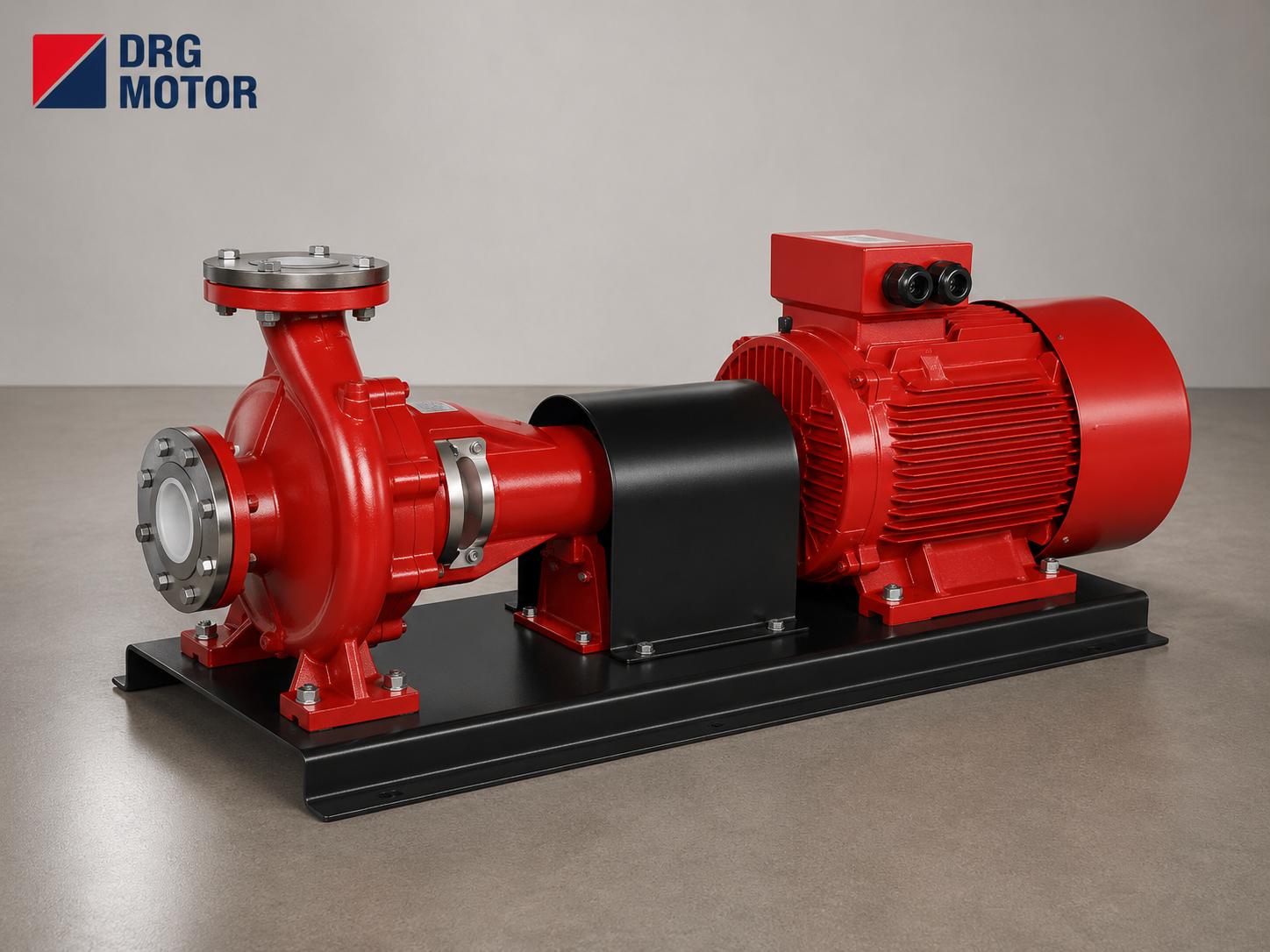

A fire suppression system must perform flawlessly the moment it is called upon, and at the heart of that system sits the electric pump motor responsible for holding pressure for minutes and sometimes for hours without interruption. For this reason, selecting a motor for a fire pump is never about comfort criteria; it is about a level of reliability that will not fail even in the harshest scenario. Choosing the right power, the right speed and the right protection class is a decision that directly affects the safety of people and property.
Why S1 Continuous Duty Is Essential
The S1 duty rating means the motor can run at its rated load indefinitely, reaching thermal equilibrium and continuing to operate safely beyond that point. In a fire scenario, no one can predict how long the pump will need to stay active, which is exactly why a motor designed for short-time (S2) or intermittent (S3) operation is unsuitable for this task. An S1 rated unit holds its performance once the winding temperature settles at a stable level and keeps working without putting itself at thermal risk. The first question to ask when sourcing a fire pump electric motor is whether the unit is genuinely sized for true S1 continuous duty.
Continuous duty capability is more than a label on the nameplate. It is the combined result of cooling fin design, fan geometry, winding insulation class and bearing selection. A fire pump electric motor must run at full load without hesitation the instant it is energised, giving up neither speed nor torque as it heats up. An undersized motor may appear flawless in the first few minutes, but over hours of operation its winding temperature climbs toward the critical threshold and it risks dropping out at the exact moment it is needed most. The motors we recommend at DRG are chosen so that the temperature rise during prolonged operation stays well within safe limits, matched to the real duty profile rather than to a best-case assumption.
What IP55 Protection Really Means
Fire pumps are usually installed in basement pump rooms, around water tanks or in technical spaces where dust and humidity are common. In these environments, an enclosure that resists dust ingress and withstands water jets from any direction is critical to the motor's lifespan. The IP55 protection class addresses both of these threats: a largely dust-tight construction and resistance to low-pressure water jets.
A motor with a lower protection class may deliver the same power on paper, yet over time it becomes vulnerable to winding and bearing failures caused by accumulated moisture and dust. Worse still, these failures often go unnoticed for a long time, and the motor may fail to start at the precise moment it is supposed to run. In an application as trust-critical as fire safety, that risk is unacceptable. This is why IP55 should be treated as the minimum benchmark when choosing a fire pump electric motor, with higher protection classes considered for harsher locations such as coastal sites, chemical vapour zones or spaces with heavy condensation.
Beyond the protection class itself, the sealing of the terminal box, the quality of the gaskets and the suitability of the cable glands should not be overlooked. Even if a motor frame is rated IP55, water or moisture entering through the connection points can threaten the internal connections and the winding. At DRG we take these details into account as well, recommending a solution that genuinely suits the environment where the motor will operate.
The Importance of Power and Speed Matching
A pump can deliver the required flow and pressure only when the motor's power and speed values match the pump curve. An underpowered motor cannot bring the pump to its operating point and is constantly overloaded, while an oversized motor raises cost and creates an inefficient drive. Fire pump applications typically use 2-pole motors (around 2900 rpm) or 4-pole motors (around 1450 rpm); the correct pole count is determined by the operating point provided by the pump manufacturer.
- Required flow and pressure of the pump
- Pump shaft power and service factor needs
- Pole count selection for speed matching
- Supply voltage and phase data (usually 380-400 V three-phase)
- Starting method (direct, star-delta, soft starter)
When these items are gathered correctly, the motor drives the pump effortlessly and serves reliably for many years. The service factor in particular should never be neglected in fire pump applications, because the pump's operating point may have shifted over time or the system resistance may differ from the original calculation. Leaving a sensible safety margin keeps the motor stable throughout its service life. At DRG, our team clarifies these parameters together with you during the quotation stage, building a match between pump and motor that is neither short nor excessive but exactly right.
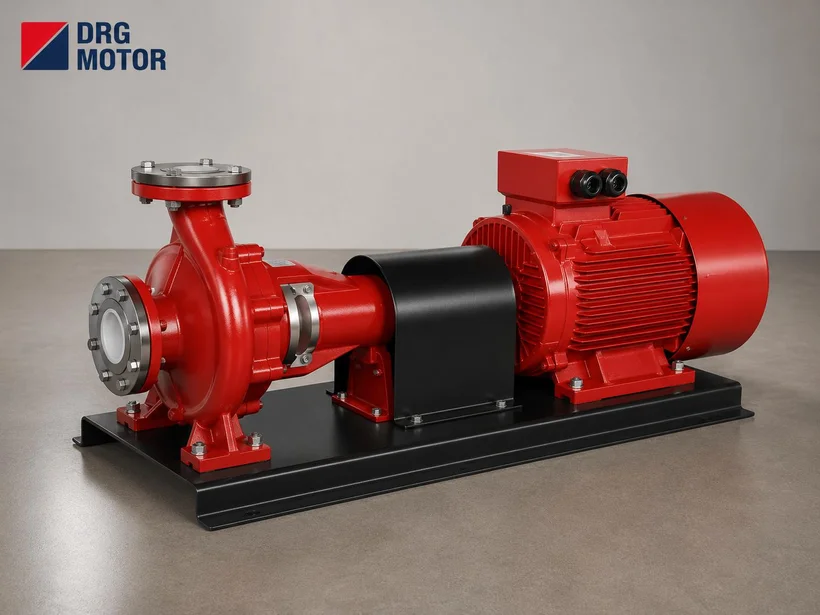
Reliability and Certification Expectations
Fire systems are subject to inspection, and the equipment used is expected to be documented. Technical documents showing the motor's efficiency class, protection class, insulation class and compliance with relevant standards matter both for project approval and for long-term confidence. When purchasing a fire pump electric motor, you should look beyond price to the technical documentation behind it and the information the supplier provides.
As a wholesale electric motor supplier, DRG shares the technical specifications and conformity documents of the products we recommend in a transparent manner. This allows the project manager to easily demonstrate that the selected motor meets the expected requirements and to avoid any hesitation during the inspection process. A properly documented motor is a choice that both protects the investment and secures legal responsibility.
Alongside the documents, the supplier's field experience and the clarity of its technical answers are also part of reliability. For a critical item such as a fire pump electric motor, a contact who asks the right questions before the sale and offers alternatives when needed has a direct effect on the healthy progress of the project.
Cooling and Thermal Protection Details
In a motor that runs continuously, removing heat is as critical for safety as it is for sustained performance. A well-designed fan-cooling system keeps the winding temperature below the insulation class limit and extends the motor's life. In addition, protection elements such as a thermal overload relay or an embedded thermistor (PTC) should be planned so that the motor is safely taken offline in the event of unexpected overheating.
In fire pump applications, the set values of protection devices must be selected with enough precision to distinguish between critical moments when the motor must not stop and genuine fault conditions that would damage it. This balance is established together with the right motor and the right panel design.
Mounting Type and Pump Coupling
The way the motor connects to the pump varies according to foot-mounted (B3), flange-mounted (B5/B35) or special connection geometries. Choosing the wrong mounting type creates field mismatches and delays. For this reason, the pump's connection dimensions, shaft diameter and frame geometry are clarified before quoting. The correct flange and foot configuration speeds up installation and prevents failures caused by vibration.
You can review our options and technical details on the pump motors page and determine the right coupling type for your project together with us.
The Advantage of Fast Supply from Stock
Time is often tight in fire safety projects; whether it is a new facility or the replacement of a failed motor in an existing system, every day of waiting is a cost. DRG offers fast supply across common power and speed values from a broad three-phase motor stock. For non-standard requirements, we plan the most suitable solution in a short time.
For your fire pump electric motor needs, simply share your pump curve, the required flow-pressure values and the mounting details with us. Our team will quickly recommend the most suitable motor in terms of power, speed and protection class. In emergencies, when a failed motor must be replaced as soon as possible, our stock advantage saves valuable time; for planned projects, we clarify the delivery schedule from the outset so that your site programme proceeds without disruption. Because power, protection class, mounting type and quantity all shape the final figure, the most accurate price emerges in a quotation tailored to your needs.
Stay Protected with the Right Motor
A fire pump electric motor is an investment that should be judged by its reliability rather than its price. A motor that is rated for S1 continuous duty, protected to IP55 and perfectly matched to your pump in power and speed guarantees that the system will run at the very moment it is needed. At DRG, we stand by you with our technical support so that you choose the right product. Share the details of your project, and we will prepare a tailored quotation quickly and put your fire safety on a solid foundation.