English
 Le français
 Türkçe

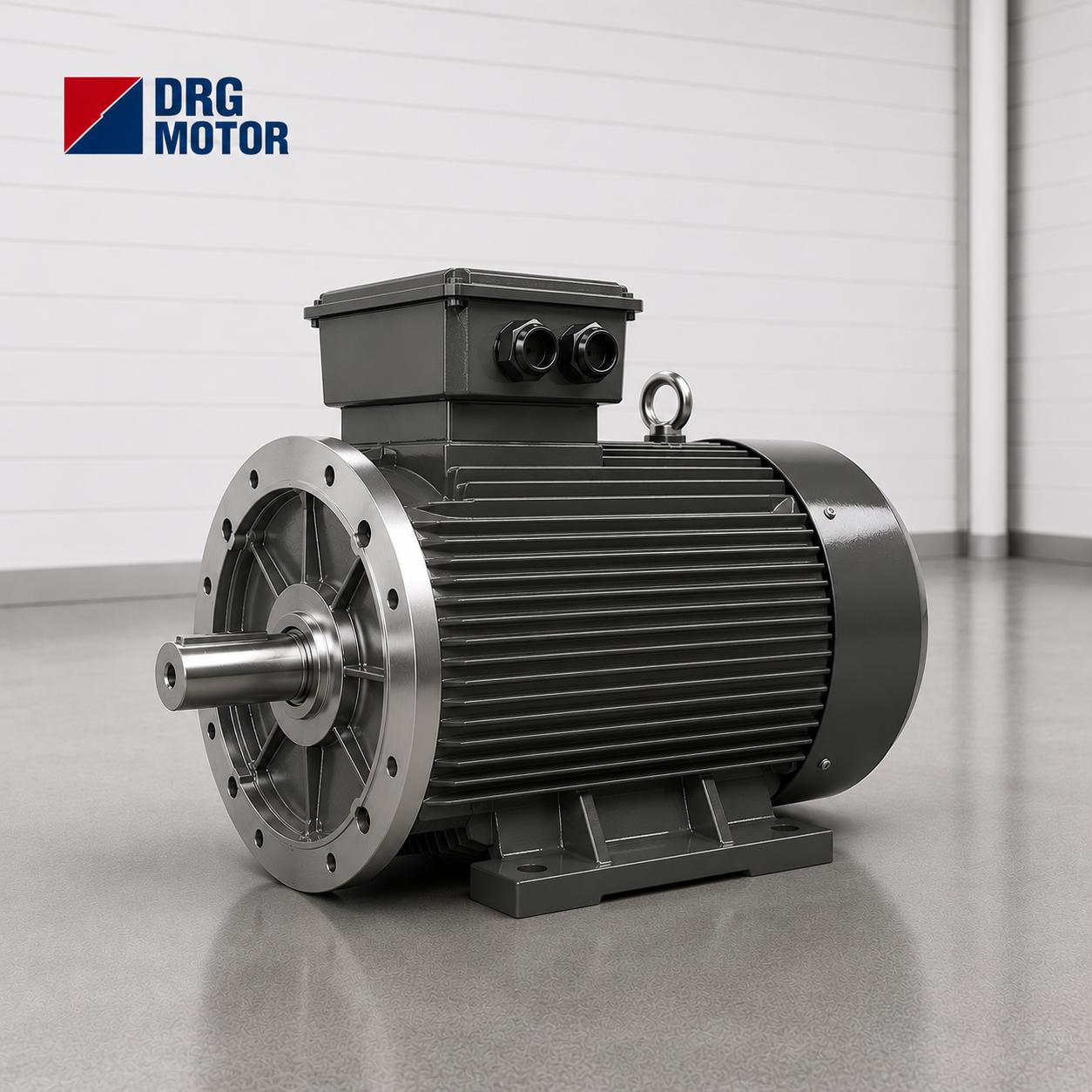

The marine environment puts an electric motor under stresses it would never meet on land; when salt-laden air, constant humidity, condensation and vibration come together, an ordinary motor fails far earlier than expected. In shipyard and marine applications, motor selection is therefore not just a calculation of power and speed but a sourcing decision built around resistance to corrosion, moisture and vibration. At DRG Motor we supply motors suited to these demanding conditions from a single source, without disrupting your project's certification or delivery calendar.
How Salt Air Wears a Motor Down
The chloride ions in sea air turn even the smallest scratch in a motor's paint into a starting point for corrosion. Salt that builds up between the cooling fins reduces heat dissipation, raises the operating temperature and shortens winding life. Moisture that creeps into the terminal box increases the risk of short circuits and insulation loss. When selecting a shipyard motor you need a configuration that manages all three threats at once -corrosion, overheating and moisture- because a high protection rating on its own is not enough.
That is why at the quotation stage we ask exactly where your application will run: an open area on deck, an enclosed but humid space such as an engine room, or a point directly exposed to water spray? A motor working on deck and a relatively sheltered pump motor call for different protection levels, and choosing the right level balances both safety and cost.
Protection Class and Surface Coating Are Considered Together
In marine applications IP55 is often not regarded as sufficient; points with heavy water spray need IP56 or IP66, and locations with a submersion risk call for higher protection still. But a high IP class alone does not solve corrosion. The casting quality of the frame, the salt-spray performance of the paint system, and stainless selection of metal accessories such as bolts and glands must all be evaluated as a whole. In our quotation we state the protection class and the surface protection system separately, and explain clearly which layer works against which threat.
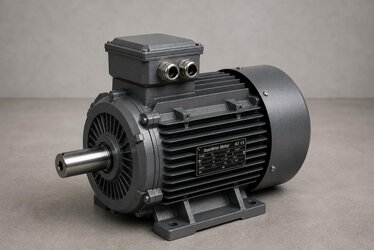
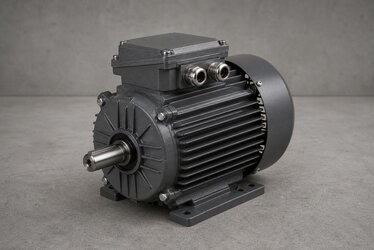
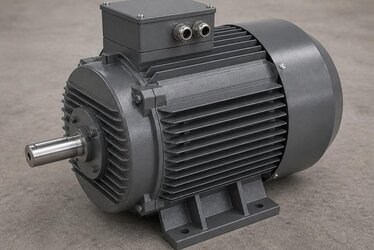
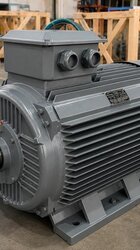
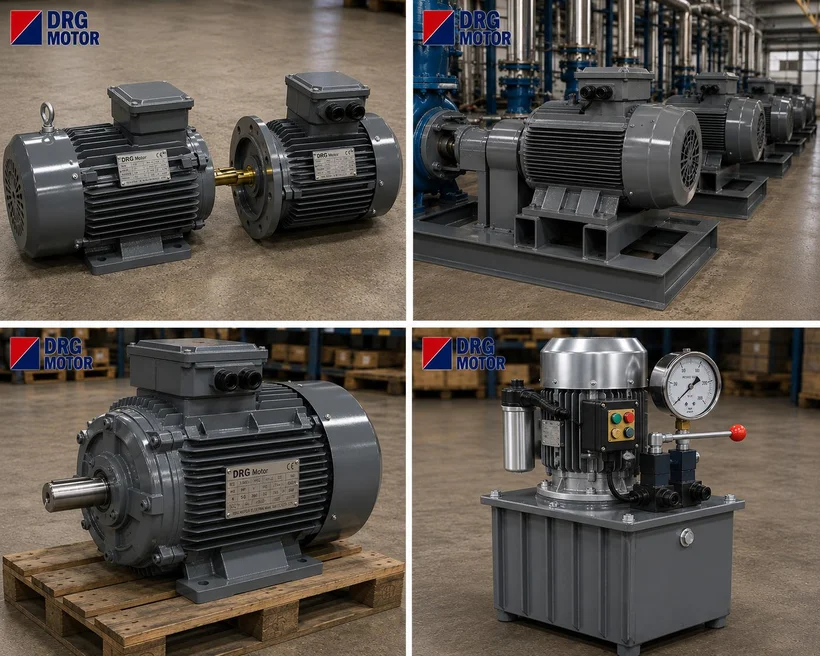
For a standard industrial need our range of three-phase asynchronous motors covers a wide power band, while for the marine environment we supply variants of the same frames with corrosion packages, reinforced paint and suitable terminal seals. This way you obtain a familiar, serviceable platform adapted to marine conditions, without hunting for an exotic product from scratch.
A Wide Field From Shipyard Cranes to Pump Systems
A shipyard's motor needs are far from uniform. Lifting cranes used in shipbuilding, slipway and dock equipment, ballast and bilge pumps, fire pumps, ventilation fans and the bench motors in repair workshops all carry different load profiles. A crane motor starts and stops frequently and demands high starting torque; a pump motor runs continuously at steady load; a fan motor is relatively light but works under sustained load for long periods. Corrosion resistance is a shared requirement, yet the electrical character of each differs.
- High starting-torque motors for lifting and slipway cranes
- Continuous-duty motors for ballast, bilge and fire pumps
- Fan motors for engine-room and hold ventilation
- General-purpose motors for the benches on the repair line
Gathering this variety with a single supplier removes the burden of separate correspondence and separate quality acceptance for each item.
Certification and Classification Expectations
Equipment on ships and offshore structures is often subject to approval by classification societies. Clarifying from the outset which class requirements and which vibration and temperature standards your project must meet prevents the time and cost lost to equipment rejected later. We keep the technical documents, conformity papers and test data of the motors we supply in order, and on request share the documentation that will enter your project's approval process. That keeps the classification survey free of surprises.
Vibration and Continuity: Failure at Sea Is Expensive
When a motor fails on land a spare can be obtained within hours; but on a vessel under way, or at a shipyard berth far from supply, the same failure becomes a disruption lasting days. That is why in marine applications bearing selection, balancing quality and vibration tolerance are critical. On motors exposed to the natural movement of hulls and platforms, vibration-resistant connections and adequate bearing life greatly reduce unexpected stoppages. We position the motors we supply to these expectations and bring a spare-holding strategy for critical equipment to the table as part of the offer.
Spare Stock and Field Continuity
In the marine sector, preparedness for unplanned failure matters as much as planned maintenance. We work with you to identify which motors on a vessel or floating unit are critical, and build a sensible spare-stock strategy for those items. We apply the same approach to a shipyard's fixed equipment, because when a dock crane or main pump stops, the entire workflow is affected. Positioning the spare in advance removes the loss caused by weeks of supply waiting in an emergency.
This logic is really an advantage of a continuous supply relationship rather than a one-off purchase. Our proje motor tedarik approach, which we have covered before, shows concretely how gathering many items under a single plan and slicing deliveries by project phase works in marine projects.
Experience Carried From Other Sectors
Supplying motors under corrosion and hygiene pressure is not unique to shipyards; food processing plants face similar challenges. The protection approaches developed for equipment working under high humidity, wash-down water and aggressive cleaning chemicals overlap substantially with marine applications. Our earlier gıda sektörü motoru supply experience shows the knowledge we have built up on stainless accessories, reinforced coatings and sealing; that know-how carries directly into shipyard and marine projects.
What Single-Source Supply Gives a Shipyard
In a shipyard project dozens of different motors come into play, each with its own delivery date and certification need. Buying these from scattered suppliers means a separate price negotiation, separate document tracking and, when a problem arises, contacts who point at one another. Consolidating the whole motor requirement with one supplier reduces the purchasing burden, simplifies invoicing and provides a single point of contact for any technical issue. With its broad range, DRG Motor aims to manage the motor side of a marine project from one hand.
We Position Price Correctly Instead of Quoting a Flat Figure
Giving a fixed list price for marine motors is not realistic, because price moves with the required protection class, the scope of the corrosion package, the certification requirement, the quantity and the delivery calendar. Rather than a flat number we listen to the exact conditions of your application and prepare a tailored quotation. We determine together which protection level is genuinely required at which point and keep you from paying for more protection than you need. This way your budget is spent on the right points according to the real threats of the sea.
Describe the real conditions aboard your vessel or in your yard in a few lines: where each motor will sit (deck, engine room, hold), the class approval you anticipate, the quantities item by item, and the ship's launch or dry-docking schedule. Once these inputs reach us we price the protection level and corrosion package for each location separately and lay a sea-ready supply scheme in front of you, figures and all.
The Right Start for Projects That Work With the Sea
In shipyard and marine applications, motor supply is an engineering decision that manages the risk of salt air and constant moisture correctly from the start. A sound shipyard motor supply brings together the right protection class, durable surface protection, certification compliance and a spare strategy that secures continuity, all in one flow. At DRG Motor we exist to set up that flow according to your project calendar and budget. Share your motor list, the conditions of your operating environment and your delivery expectation, and we will quickly prepare a supply offer that is sea-resistant, certification-ready and fits your budget. Simply get in touch with us and our team will return with a tailored quotation shortly after receiving your technical summary.