 English
 Le français
 Türkçe

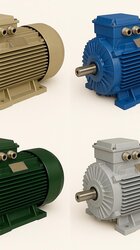
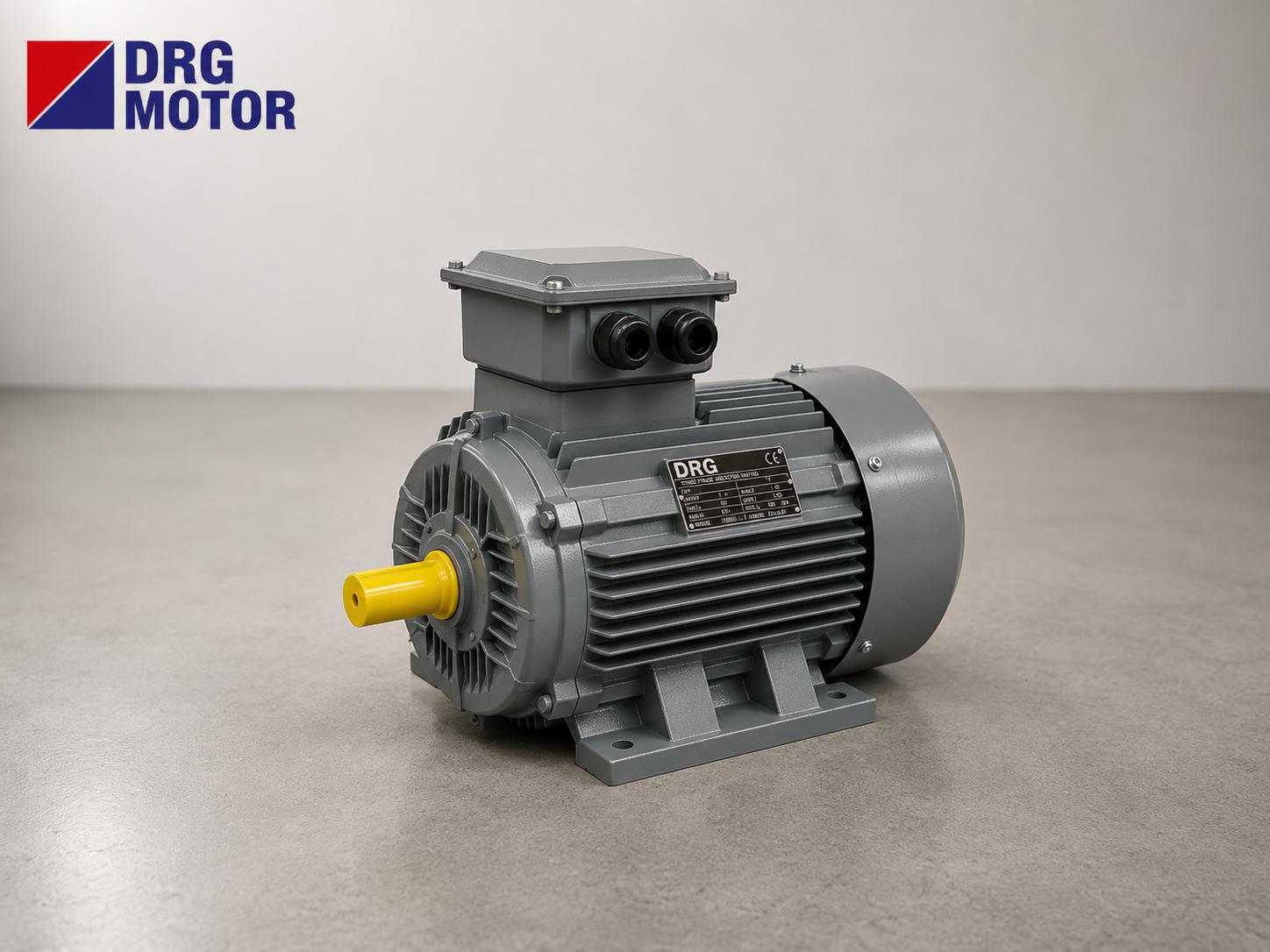

Packaging and wrapping machines are the quiet but decisive performers of any modern production line. No matter how well a product is made, the whole line stops the moment wrapping, sealing, labelling or closing steps falter. At the heart of these machines sit the electric motors that provide precise drive. A correctly specified packaging machine motor directly shapes line speed, repeatability and scrap rates. At DRG Motor we supply a broad range of motors for packaging and wrapping applications, backed by stock availability and fast delivery; our goal is to get the exact torque, speed and control compatibility your machine needs onto the floor as quickly as possible.
Drive requirements on packaging lines are anything but uniform. Horizontal and vertical form-fill-seal machines, shrink and stretch wrapping units, cartoning and grouping stations, conveyor feeding systems and labelling groups each demand very different motor characteristics. Some applications expect high starting torque and resistance to frequent start-stop cycling, while others prioritise low vibration and millimetre-level positioning accuracy. As a supplier, our job is to read these differences correctly and put the right options in front of the machine builder or maintenance team.
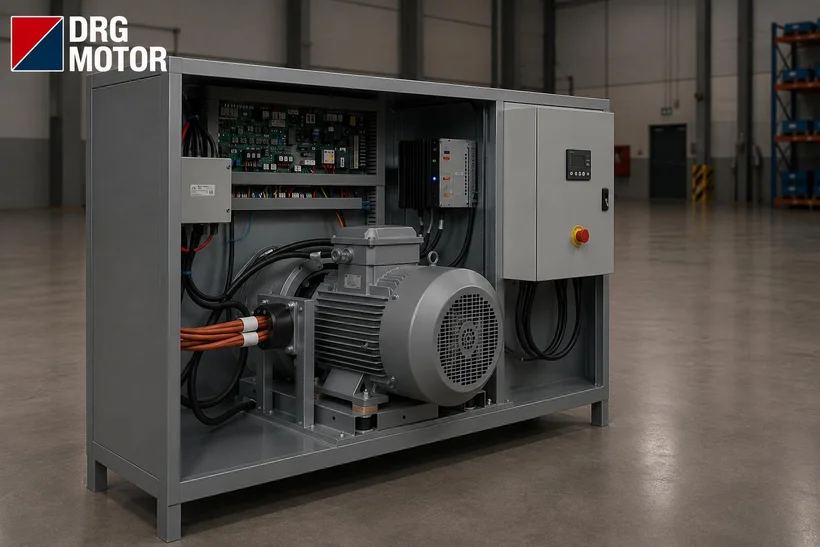
Why drive precision matters on packaging lines
Most packaging machines run in cycles that repeat within seconds. Film pulling, sealing jaw movement, product pushing and cutting all advance on tightly interlocked timing. Here the motor is expected to hold speed, avoid dropping rpm under sudden load changes and reach a clean position at standstill. The smallest inconsistency in the drive shows up on the line as a shifted seal seam, a skewed label or a poorly wrapped product. When you consider that high-speed lines turn out hundreds of packs per minute, even a tiny drive deviation translates into significant scrap and rework every hour. The motor on a packaging machine is also usually coupled to the load through a cam mechanism, a belt and pulley or a gearbox; how cleanly the motor delivers torque across this transmission chain determines both the lifespan and the quiet running of the whole assembly. That is why choosing the right packaging machine motor is not a cost item but an investment in quality and throughput. A pattern we often see on the floor is this: an undersized motor looks fine in the first months, but during hot summer days or once the line speed is raised it trips on thermal protection and causes unexpected stops. Sound up-front assessment removes that risk from the start.
The motor types we supply
Because packaging applications are so varied, we never rely on a single motor type. Depending on the required drive character, we can offer different solutions:
- Asynchronous AC motors: an economical, durable foundation for conveyors, feeding and general drive groups when paired with an inverter.
- Brake motors: fast, safe stopping for closing and cutting stations that need frequent halts and clean positioning.
- Geared drive units: a compact answer for wrapping and rotating units that need low speed with high torque.
- Servo and precision positioning motors: the choice for form-fill-seal and labelling groups that demand millimetre repeatability.
A large part of this scope is drawn from our general-purpose industrial motors family; standard frame sizes give high mounting compatibility on existing machines.
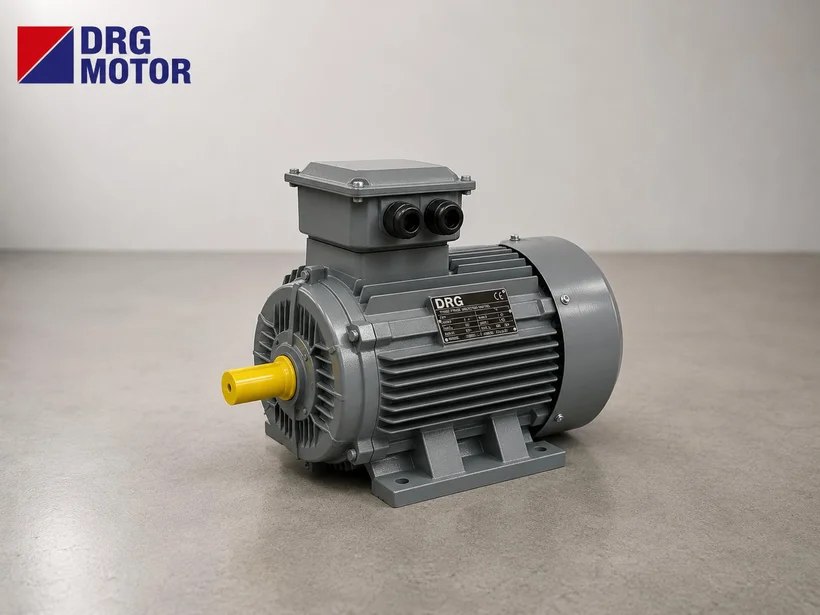
Speed and control compatibility
Almost every modern packaging line runs its motor together with a frequency inverter or a motion control system. For this reason we assess each motor as a whole in terms of insulation class, drive compatibility and thermal endurance. Under inverter operation, topics such as cooling demand at low speed, harmonic loading and bearing life become important. A well-matched motor and drive pair raises line speed while pulling energy consumption down. On lines that run at variable production speed in particular, it matters greatly that the motor can hold constant torque across a wide speed range and cool itself without strain even at low rpm; where needed we recommend an external fan (forced cooling) or a higher efficiency class motor. During the quotation stage we review your speed profile and cycle count together, avoiding both oversized and undersized motor choices. When you tell us the brand and model of your existing drive, we also account for practical points such as the cable length between motor and drive, dv/dt voltage spikes and winding insulation. The result is a drive that runs reliably not just right after commissioning, but for years.
Hygiene and food-line conditions
A significant share of packaging machines work in the food, beverage and pharmaceutical sectors. On these lines, washdown-capable housings, an appropriate ingress protection (IP) rating and cleanable surfaces come first. For environments exposed to intense cleaning chemicals we recommend motors with higher protection ratings and suitable paint or coating. In dusty flour, sugar or granule environments, enclosed housings and smooth-surfaced designs that limit dust build-up are preferred, since dust settling on the frame blocks cooling and drives up winding temperature. For motors working around cold rooms or freezer lines, condensation and low-temperature endurance are treated as a separate topic. Clarifying these details up front sharply reduces the risk of early wear and unexpected downtime in the field, and keeps you clear of trouble during hygiene audits.
Spare-part continuity and quick swaps
On a packaging line a motor failure usually stops all production. That is why we think about continuity, not just the first sale. Thanks to the standard frame sizes and common power-speed combinations we keep in stock, we can supply a fast equivalent motor when a breakdown occurs. When you share your existing motor's nameplate data, flange and shaft dimensions, we quickly put a directly compatible alternative in front of you. We applied the same continuity approach earlier in supplying a yem makinesi motoru, and we saw on the floor how a planned-stock strategy shortens downtime.
The mixing and dosing connection
Many packaging lines include a mixing or dosing step before filling. Here drive stability is a direct factor in product consistency and filling accuracy. The mikser motoru used in such applications and the packaging drive complement each other; sourcing the whole line from a single supplier eases both mounting compatibility and service continuity. Buying the motors for different stations from one supplier also simplifies spare-part management.
Gains on the efficiency and energy side
In most plants packaging lines run all day, often across three shifts. This continuous use turns the motor's efficiency class directly into a cost item. A higher-efficiency motor may need a slightly larger budget at purchase, but it pays for itself quickly through the annual energy bill and reduced heat loss. On the supply side we present this calculation transparently, comparing the consumption profile of your current motor with the alternative we propose. The goal is not merely to replace a failed motor; it is to install a drive that does the same job with less energy, a lower operating temperature and a longer bearing life. Over the long run, this approach lowers both operating costs and maintenance frequency.
Commissioning and technical support
Supplying the motor is only the first step. The correct wiring diagram, tuning the drive parameters to the application, and checking the rotation direction and brake settings on first start-up are decisive for a smooth commissioning. Our technical team stands with you throughout the process, from selection to delivery and through answering post-installation questions. Whenever you are unsure about a dimension, a flange fit or a torque calculation, we assess it together before you decide. This removes the risk of a wrong order and aims to have your machine running on the first attempt.
What to share for the right selection
A few key pieces of information are enough for us to prepare the most suitable offer. The clearer these details are, the more precisely our recommendation lands:
- Machine type and station (wrapping, sealing, labelling, conveyor, etc.)
- Required power, speed and any reduction ratio
- Cycle count and start-stop frequency
- Mounting type: foot, flange or custom connection
- Operating environment: food, dusty area, washdown line, etc.
- Drive/control system details
A firm price depends on all of these factors and on current supply conditions; that is why we evaluate each request individually and provide a tailored quotation.
The next step for your line
If you are looking for speed, stability and service continuity together on your packaging and wrapping machines, contact the DRG Motor team for the right packaging machine motor supply. Share your machine details and let us prepare an offer that includes the motor suited to your application and the delivery time. From a single motor replacement to the drive planning of an entire line, we stand with you at every scale, with one aim: keeping your production running without interruption.