 English
 Le français
 Türkçe

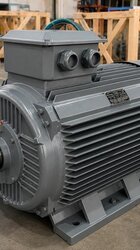
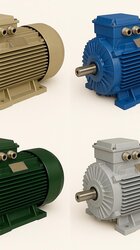
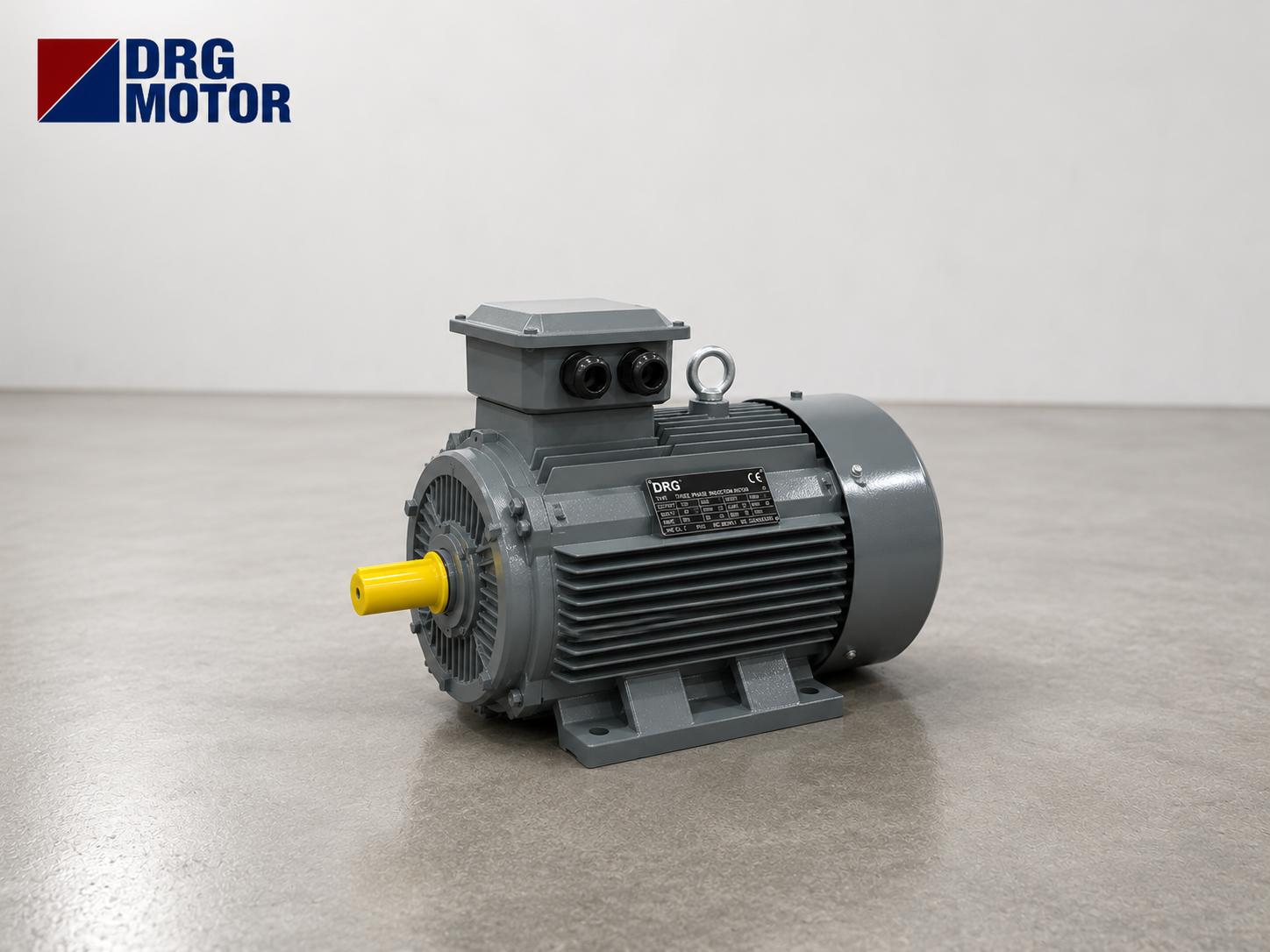

Every stage of feed production turns on a rotating shaft, and behind each shaft is a correctly chosen electric motor. From the hammer mill that crushes raw grain, to the horizontal mixers that homogenise the blend, to the pelleting press and the bucket elevators, the entire line depends on motors that run continuously and deliver high torque. That is why supplying the right feed machine motor to a feed mill is never just a spare-part purchase; it is a strategic decision that defines your production capacity and uptime. At DRG Motor we supply feed mills and feed-machinery builders with motors matched to their lines, backed by deep stock and fast delivery.
The feed sector combines almost every demanding condition a motor can face. The environment is dusty, temperatures climb, lines may run 16 to 24 hours a day, and especially on the press and hammer-mill side you see high starting torque together with sudden load swings. Each of these conditions maps to a specific motor characteristic, and the right supplier is the one who can match those characteristics to the job your machine actually does. Below we explain the motor-selection logic for the main machines on a feed line and how our quotation process works.
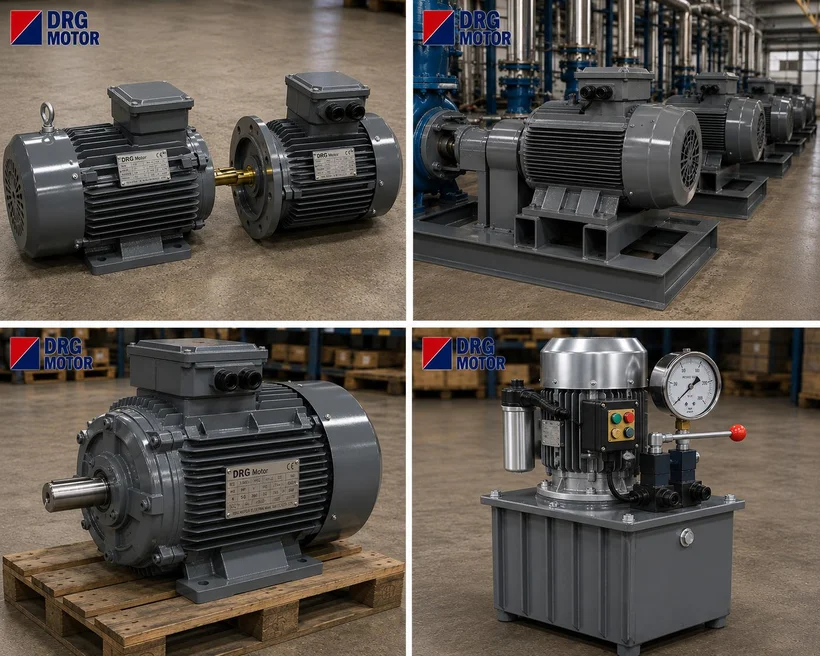
Hammer Mill Motors: High Speed, High Torque
The heart of a feed line is very often the hammer mill. Crushing grains such as corn, barley and wheat, these machines spin a rotor at thousands of revolutions per minute and demand very high starting torque the moment they engage. Skimping on power here is false economy; an undersized motor overheats constantly and burns its windings within a short time. Mill applications typically call for IE3 efficiency, 2 or 4-pole motors designed for S1 continuous duty. For related grinding loads you can review our değirmen motoru selection criteria, and together we will define the ideal power and speed combination for your hammer mill.
Mixer and Blender Motors
Blending the milled raw material homogeneously with additives such as vitamins, minerals and molasses takes place in horizontal or vertical mixers. Mixer motors ask less for high speed and far more for high torque, because the heavy mass inside a full chamber has to be set in motion. For this reason mixer drives usually run through a gearbox and favour 4 or 6-pole motors. A motor that can restart against a full chamber, delivering strong breakaway torque, keeps your line moving without jamming. We shared the details of motor selection for mixing duty in our mikser motoru article, and we scale the same logic to recommend the right power for your feed mixer.
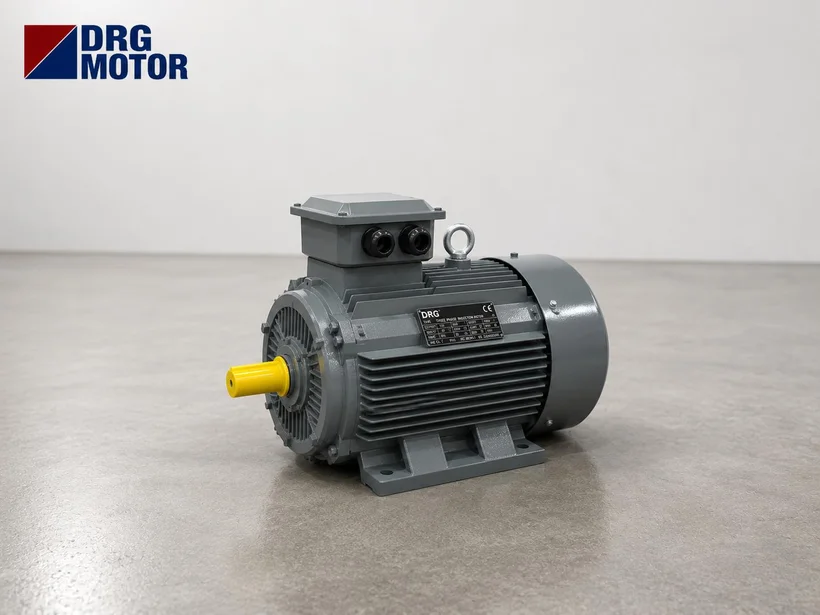
Pellet Press Motors: The Heaviest Load on the Line
Pelleting is the most energy-intensive step in feed production. The press softens the mash with hot steam and forces it through a die to form pellets, a process that draws a substantial amount of continuous power. The pellet-press motor is frequently the largest motor on the whole line; models rated 75 kW, 110 kW, 160 kW and above, in IE3 efficiency and designed for continuous heavy duty, are the norm. Here the motor's cooling capacity, bearing quality and overload endurance directly affect your production cost. A poorly chosen press motor both raises your energy bill and triggers unplanned stoppages. At DRG Motor we evaluate the main motor and feeder motor requirements of your press together, then offer a matched set.
Elevator, Conveyor and Feeder Motors
A feed line is not only big machines; the bucket elevators, screw conveyors, belts and feeders that move raw material and finished product must also run without interruption. These auxiliary drives usually use geared motors, and because the ratings sit close to one another, stock management becomes important. A flexible, broad product range is a real advantage here:
- High starting-torque geared motors for bucket elevators
- Standard 4-6 pole motors for screw and chain conveyors
- Inverter-duty motors for dosing and feeding units
- IP55 motors suited to dusty environments for filter, fan and aspirator lines
We supply all of these auxiliary drives from a single source through our general-purpose industrial motors range, removing the burden of juggling several suppliers.
Protection Class for a Dusty, Continuously Running Environment
A feed mill is, by definition, a dusty place. Flour and bran particles suspended in the air clog the cooling channels of an unprotected motor, raise winding temperature and shorten its life. That is why a minimum IP55 protection class is recommended for feed applications; in more critical zones IP56 or special dust seals may be preferred. In addition, on continuously running lines, thermal protection, PTC thermistors and an appropriate insulation class (F or H) improve motor safety. The right protection class may look like a small difference at the point of purchase, but it has a large effect on annual maintenance cost and downtime.
Factors That Determine the Motor Supply Price
A feed machine motor price cannot be expressed with a single list figure, because every line is different. The main factors that set the price are:
- Power (kW) and number of poles / speed
- Efficiency class (IE2, IE3, IE4)
- Frame material (cast iron or aluminium) and mounting type (foot or flange)
- Protection class and insulation class
- Geared or plain shaft; whether inverter compatibility is required
- Order quantity and delivery time
For this reason, instead of a flat price, we recommend sharing your machine nameplate details or technical specification. That lets us offer you a quotation that is both technically correct and aligned with your budget. Most standard ratings are ready from our stock, which means fast delivery.
Energy Efficiency and Payback Period
A feed mill runs its motors 16 to 24 hours a day. At this intensity of use, motor efficiency becomes a far bigger cost item than the purchase price. The cheap-looking initial price of a low-efficiency motor is more than offset within a few months by the difference on the energy bill. An IE3 or IE4 motor consumes a few percent less energy than its IE2 equivalent; that difference, small on its own, turns into serious savings once multiplied across dozens of continuously running motors and thousands of annual operating hours. On large motors in particular, such as the press and the hammer mill, the payback period for stepping up the efficiency class is often shorter than a single year. During the quotation stage we review your annual operating hours and the nameplate efficiency of your existing motors, then show you exactly where upgrading efficiency will repay your budget the fastest.
Inverter Compatibility and Speed Control
Modern feed lines increasingly rely on variable frequency drives to fine-tune feed rate, mixing time and press load. A motor intended to run on a drive must be a model that keeps cooling itself at variable speed and whose insulation is built for this duty. Otherwise, at low speed the fan cannot move enough air and the motor overheats. At DRG Motor we find out which of your drives will run on inverters and recommend inverter-duty motors for those points, with externally forced cooling where needed. That way you gain the flexibility of speed control while protecting the motor from premature wear.
Spare-Part Stock and Unplanned Downtime Risk
The most expensive thing in a feed mill is a stopped line. During peak season, a failure of the press motor or the mill motor means not only repair cost but lost revenue per tonne that could not be produced. The way to reduce this risk is to plan critical ratings in advance. We recommend drawing up a list of the most critical motors on your line and keeping critical spares in stock; because we already hold most standard ratings in our warehouse, we can deliver same day or next day in an unplanned failure. The right supplier relationship proves its value precisely in these urgent moments.
Why Work With DRG Motor
Feed producers and machinery builders have leaned on DRG Motor for their drive needs over many seasons, and that experience shapes how we work today. Whether you need one replacement unit or every motor for an entire pelleting line, we cover the request from end to end. With wide stock, technical consultancy and fast delivery, we do not let your line stand still. Whether you are commissioning a new feed plant or want to replace a failed motor on your existing line the same day, we prepare the right solution for you. We do not simply sell the motor and walk away; we stay with you until you are sure the power is correctly chosen, the protection class suits the environment and the mounting type fits your machine.
Send us the list of motors your feed line needs, the machine nameplate details or your technical specification; let our expert team define the most suitable power, efficiency and protection-class combination and quickly prepare a price offer. So that your production never stops because of a single motor, the right supplier is just a phone call away.