 English
 Le français
 Türkçe

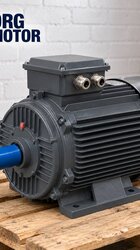
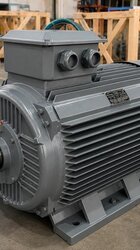
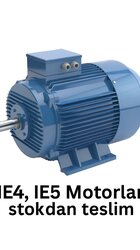

A high kW motor should be chosen by "which job it fits", not by "how powerful it is". Two motors of the same power rating serve entirely different applications when their speed, mounting and frame differ.
Define the Load Profile First
The right choice begins with the torque and speed the machine demands. A conveyor running at constant load and a crusher that starts and stops often need different designs even at the same power. Starting torque and load fluctuation directly affect how the motor is sized.
Match Speed and Pole Count
On a 50 Hz grid, 2 poles give 3000 rpm, 4 poles 1500 rpm and 6 poles 1000 rpm. Pumps and fans usually take 4- or 6-pole high kW motors, while high-speed duties take 2-pole models. The wrong speed leads to an unnecessary gearbox or lost efficiency.
Mounting, Protection and Efficiency
B3 foot, B5 flange or B14 face mounting sets how the motor attaches to the machine. If the environment is dusty or humid, IP55 protection and Class F insulation are needed. An IE3 or higher efficiency class keeps energy cost under control at high power.
DRG Motor Matched to Your Need
DRG Motor, a supplier based in Izmir, produces high-power motors up to 355 kW with various pole counts, mountings and efficiency classes. Share your application's torque, speed and ambient conditions, and we will determine the motor that fits your exact need.