 English
 Le français
 Türkçe

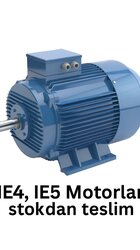

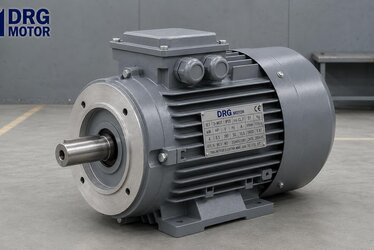
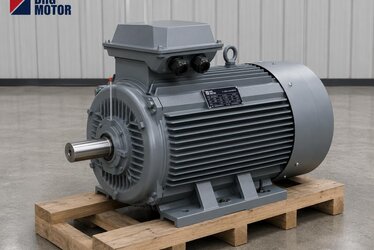
Electric motors used in fan and ventilation systems belong to an application group that calls for continuous, quiet operation and low vibration. From industrial ventilation to stack exhaust fans, the motor's speed, efficiency and protection class directly set the airflow.
How the Fan Load Affects the Motor
A fan is a load with a quadratic torque characteristic: as speed rises, the power drawn climbs rapidly. For this reason, stable operation of the fan motor at rated power and speed determines both air performance and energy use. A wrong choice causes either insufficient flow or wasted consumption.
Speed Selection and Airflow
Airflow depends largely on fan speed. Systems needing high flow use 2-pole motors (3000 rpm), while quieter, low-pressure ventilation uses 4-pole (1500 rpm) or 6-pole (1000 rpm) models. The right pole choice balances noise against efficiency.
Efficiency and Continuous Operation
Since ventilation motors usually run all day, the IE3 Premium or IE4 Super Premium efficiency class is recommended. Class F insulation and IP55 protection allow S1 continuous duty in dusty and humid air; paired with a frequency inverter, flow control becomes even more economical.
DRG Motor for Fan Applications
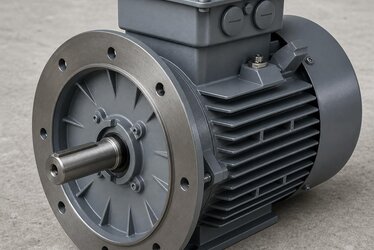
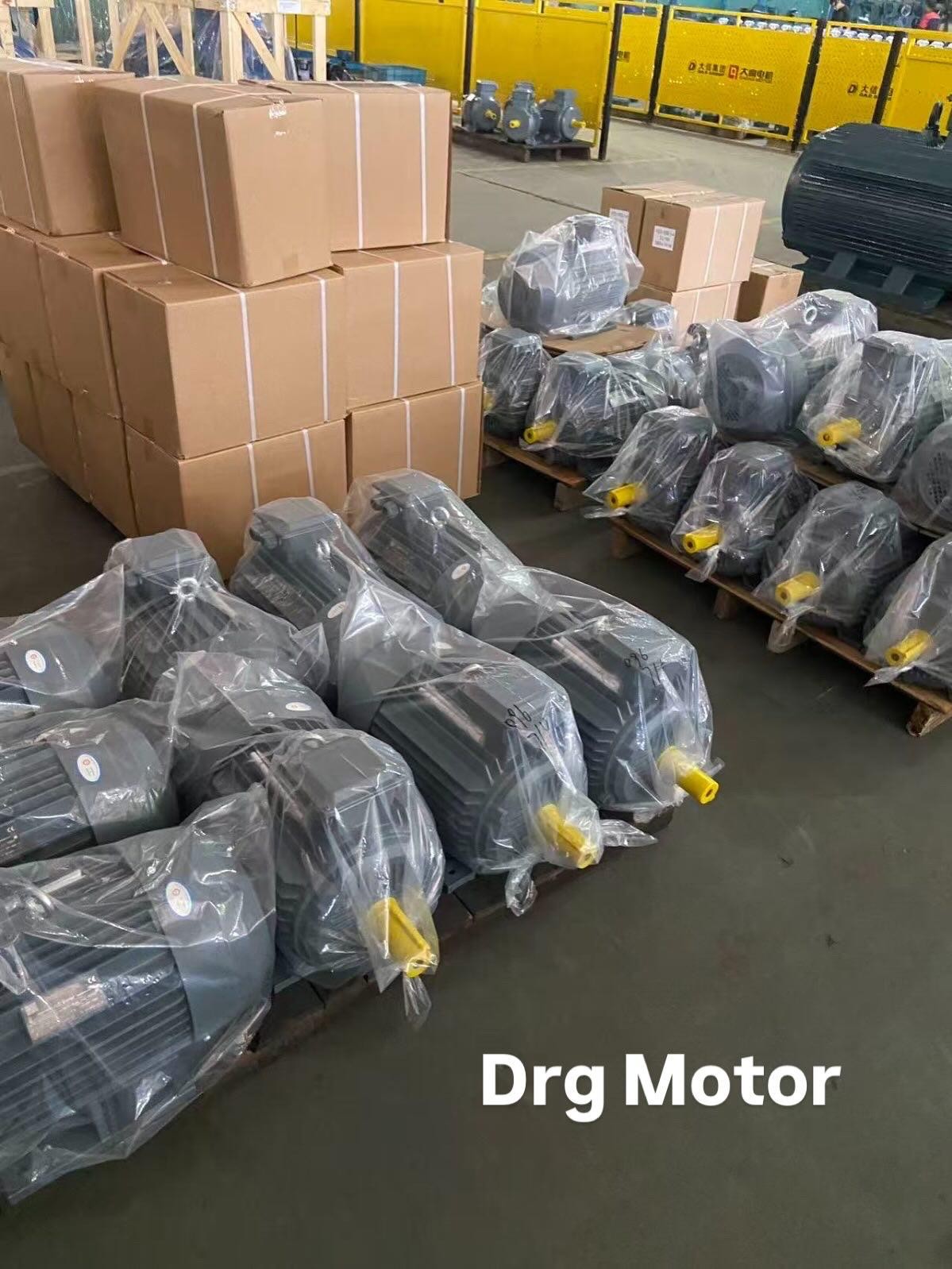
For fan and ventilation systems, DRG Motor offers motors from 0.55 kW upward, with B3/B5/B14 mounting and 400 V / 50 Hz compatibility. Contact us to define the right speed and efficiency class for your system's airflow and pressure requirements.