 English
 Le français
 Türkçe

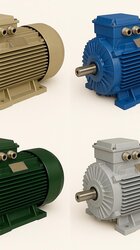
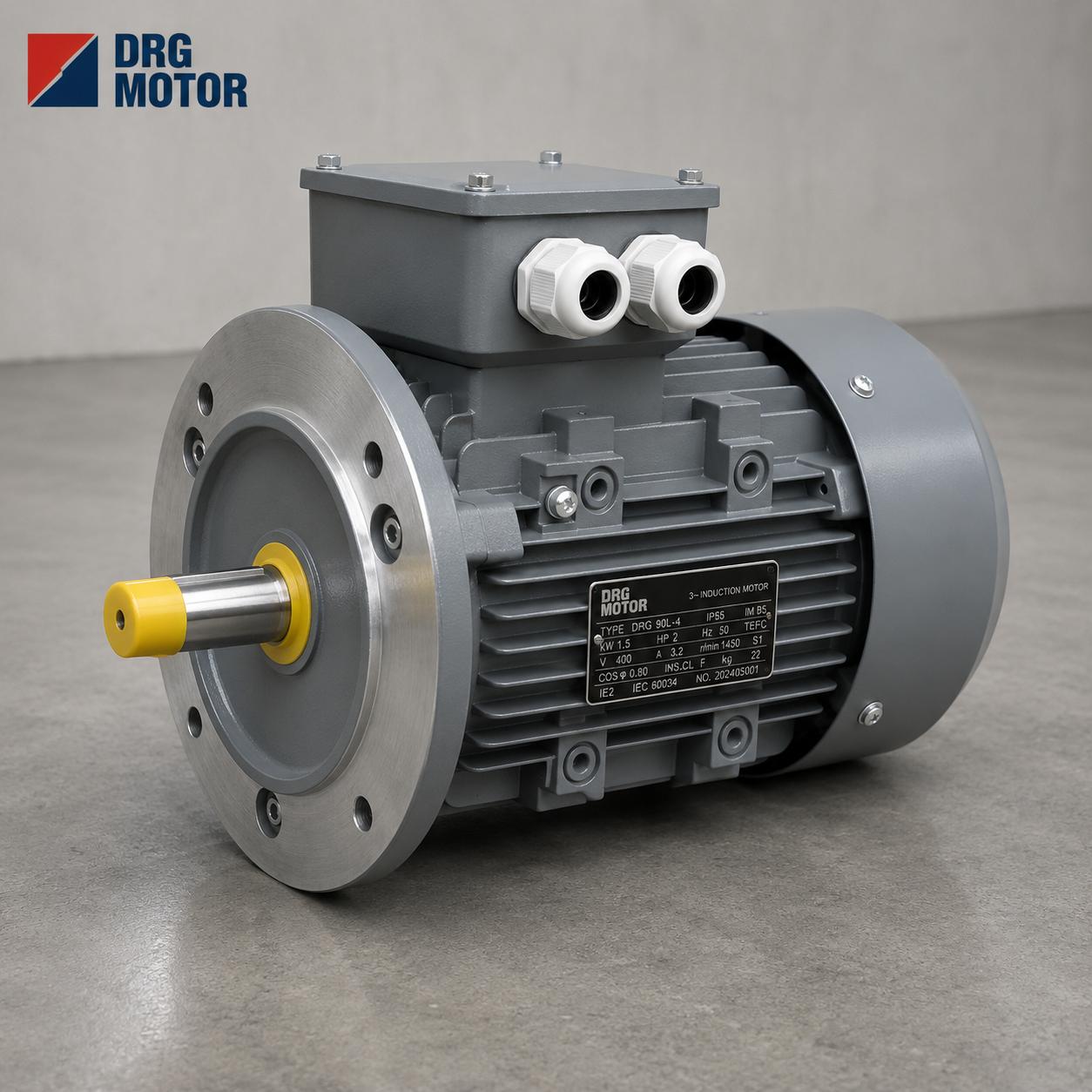

Deep well and submersible pump systems form the backbone of irrigation, drinking-water supply, industrial process, and municipal network applications where uninterrupted water delivery is essential. At the heart of these systems sits an electric motor that operates hundreds of meters below grade, under continuous load, and often in locations that are difficult to access. A poorly specified submersible pump motor leads not only to lost efficiency but to sudden failure, the cost of pulling the motor back out of the well, and days of water downtime. At DRG Motor, our focus is on understanding the power-speed match, continuous-duty endurance, and protection requirements that deep well and submersible applications demand, then supplying the right motor quickly for your project.
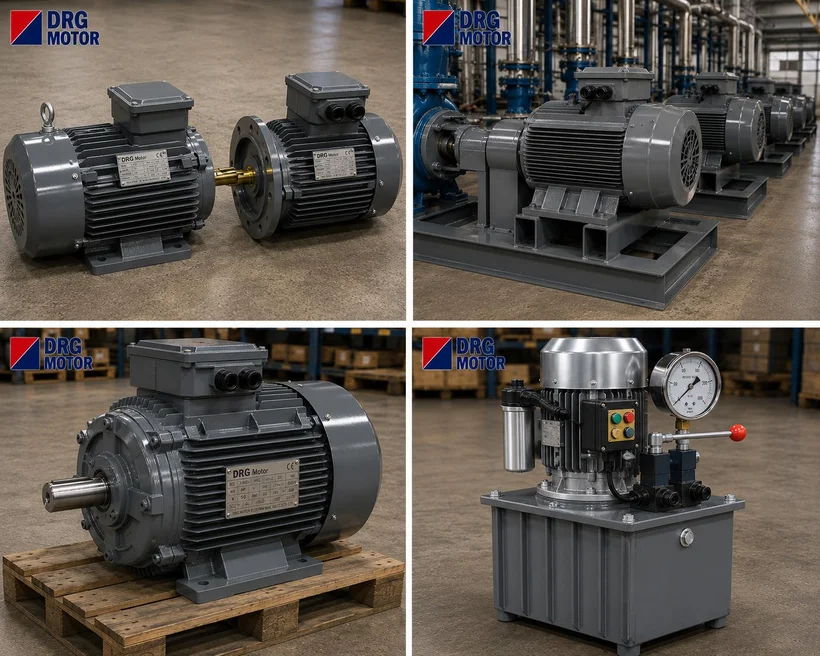
The Real Conditions a Deep Well Imposes on the Motor
A motor running in a deep well faces a load profile far beyond that of a surface-mounted application. As the head increases, the hydraulic power the pump demands feeds directly into the motor's shaft power, and this load can persist for 18 to 20 hours a day, or without interruption during peak agricultural seasons. Seasonal variation in the water table, the narrow diameter of the borehole, and the difficulty of bringing the motor back to the surface for service all make it essential to size the motor not merely as "sufficient" but as "safe" from the very first selection. In practice this means keeping the nominal operating point comfortably below the motor's rated power. Otherwise, during hot summer months, low water levels, and voltage swings, the motor runs constantly at its own limit and winding life shortens rapidly. It is also worth remembering that once a deep well motor is commissioned, it will often remain in the same position for years, which multiplies the cost of any selection error. The geographic location of the well, the ambient temperature, the mineral and sand content of the water, and the flow the line carries are all variables that affect the motor's real working load. For this reason, motor selection should be based not only on the pump's catalog values but on the actual operating conditions in the field. A correctly sized motor keeps running without reaching its thermal limit even on the most demanding day of the season.
How Power and Speed Matching Affects Pump Efficiency
In submersible and deep well pumps, the foundation of performance is the correct match between motor power and pump rotational speed. Multistage centrifugal pumps are designed to deliver their optimum head and flow at a specific speed, so the motor's pole count and rated speed must be chosen in harmony with the pump curve. Deep wells requiring high head generally favor higher-speed motors, while applications where high flow dominates call for a different balance of speed and power. A mismatched pairing forces the pump to operate outside its efficiency curve, which wastes energy and increases axial thrust forces. Speed matching also directly determines the current the pump draws, the torque on the shaft, and consequently how much the motor heats up. When the pump's operating point shifts to the right or left of the curve, the motor either consumes excessive power needlessly or fails to provide adequate pressure, and both situations cost the operation money. In a continuously running well system, even a small difference in efficiency adds up to a noticeable line item on the annual energy bill. During the quotation stage, DRG asks for data such as head, required flow, and well depth precisely so the motor falls within the correct power-speed class for that operating point. This way the pump runs in the efficient zone it was designed for, and the motor turns under a balanced load throughout its life.
Why Continuous-Duty (S1) Endurance Is Decisive
Most water-supply systems run on a continuous rather than short-term duty cycle. For this reason, evaluating the motor against the S1 continuous-duty regime is critical in submersible and deep well applications. The heat the motor generates under continuous load must be removed in a stable manner, the winding insulation class must suit this regime (for example, Class F insulation used with a Class B temperature rise), and bearing selection must be made for sustained rotation. In applications with frequent stop-start cycles, starting current and thermal protection must be taken into account, because every start places additional thermal and mechanical stress on the windings and shaft assembly. In systems with automatic pressure control, how many times per hour the motor switches on and off must stay within the maximum permitted number of starts; otherwise the winding fatigues prematurely. In continuous-duty motors, the real issue is removing heat in a stable way; in submersible motors the flow of water in the well usually performs this task, whereas in surface motors fan and housing cooling become decisive. For this reason, installation conditions such as the motor's minimum water flow velocity should not be overlooked during selection either. If the motor's duty type does not match the application, even a correct nameplate power rating will translate into a short life in the field.
- Continuous water supply: a motor suited to the S1 regime with a stable heat balance.
- Frequent on-off cycling: starting current and thermal protection compatibility take priority.
- Seasonal heavy duty: a power margin left so the motor runs below its rated point.
Sealing and Protection Expectations
For motors operating in water or in a humid borehole environment, the protection rating is not negotiable. Submersible-type motors require complete sealing against water ingress, while deep well surface applications call for a high IP protection class with dust and moisture resistance. Windings impregnated against moisture, a watertight cable entry connection, and a shaft seal or gland assembly chosen to suit the application all determine the motor's true field life. In wells containing corrosive groundwater, sand, or sediment, material selection deserves additional consideration. In a motor that remains permanently submerged, even the smallest weakness in sealing leads to water reaching the winding and a short circuit, which in turn brings the cost of pulling and replacing the unit. For this reason, cable joints, gasket surfaces, and housing seams carry special importance in submersible applications. In surface-drive well motors, although there is no direct water contact, a high protection class is still required because of the elevated humidity, rain, and dust at the wellhead. Clarifying during the quotation process whether the application is wet (submersible) or dry-mounted (surface drive) allows us to supply a motor in the correct protection class.
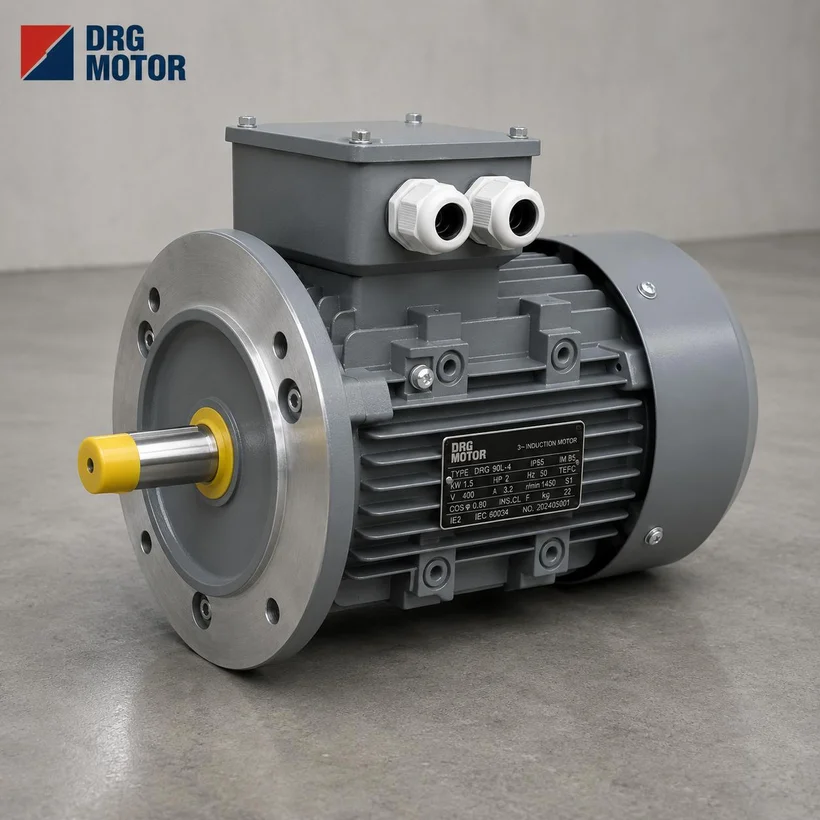
Surface Motor Drive Scenarios
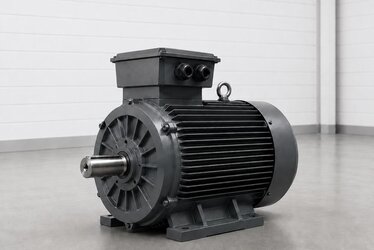
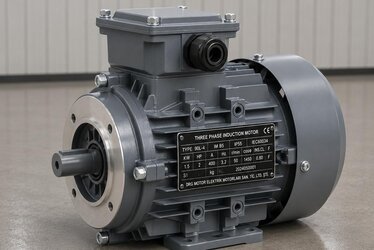
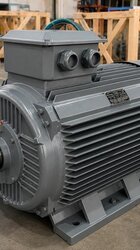
Not every deep well application requires a submersible-type motor. In some systems the pump sits deep in the well while the motor is positioned at the wellhead or in a pump station, providing drive through a line shaft or a belt-and-pulley arrangement. These surface-drive scenarios are favored particularly in higher-power installations and facilities able to perform their own maintenance, since they make service and upkeep of the motor far easier. In this case, a standard surface motor is selected with the right protection class, mounting type (foot or flange), and shaft-end features to match the application. Cooling is simpler with a surface drive, but alignment of the transmission components and vibration management become more prominent. Misalignment of the shaft or an incorrectly set belt tension places unnecessary radial load on the motor's bearings and can shorten its life. For this reason, in a surface-drive scenario the bearing and shaft design matter as much as the mounting type and must be chosen to suit the application. Which scenario is more appropriate is determined by evaluating factors such as well depth, required power, maintenance capability, and budget together. DRG can supply motors for both the wet submersible scenario and the wellhead surface-drive scenario in the required power, speed, and mounting class; when selecting a suitable model we evaluate the project's options together using our pump motors range.
Resilience Against Voltage Fluctuation and Field Conditions
On agricultural and rural irrigation lines, the grid feeding well pumps is often at the end of long runs, where voltage drops and fluctuations are common. At low voltage the current the motor draws rises, the windings heat up, and in a continuously running well motor this accelerates wear. For this reason, motor selection must weigh the power value together with the voltage quality of the line. A suitable starting method, the correct cable cross-section, and thermal-overload protection sized in harmony with the motor are the most practical defenses against field fluctuations. In particular, as well depth increases the cable length grows as well, and if the voltage drop along the cable is not accounted for, the motor is forced to run at a voltage below its nameplate value. Phase imbalance, the risk of dry running, and sudden voltage interruptions are also among the leading causes of well motor failure, so it is advisable to consider the motor together with suitable protection relays. Choosing the motor with an appropriate margin for these conditions prevents the future cost of failure and of pulling the unit back out of the well, and lowers the total cost of ownership of the system.
The DRG Supply Approach: The Right Motor, a Fast Quote
DRG Motor is not a seller of pumps or generators for deep well and submersible applications, but a B2B solution partner that supplies the electric motor the system requires. Our focus is to evaluate your project's head, flow, well depth, operating hours, and grid conditions together, then quote the motor in the correct power-speed and protection class quickly, within our stock and procurement capabilities. Whether you are replacing the motor in an existing submersible system or building a new well pump project, sharing your application data speeds up the right motor selection. Get in touch with us for the power, speed, and protection class your project needs, and we will send you the suitable options and a quote as soon as possible. A correctly chosen well motor means years of uninterrupted water.