 English
 Le français
 Türkçe

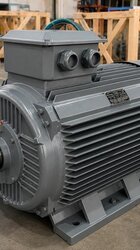
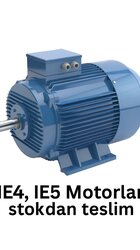
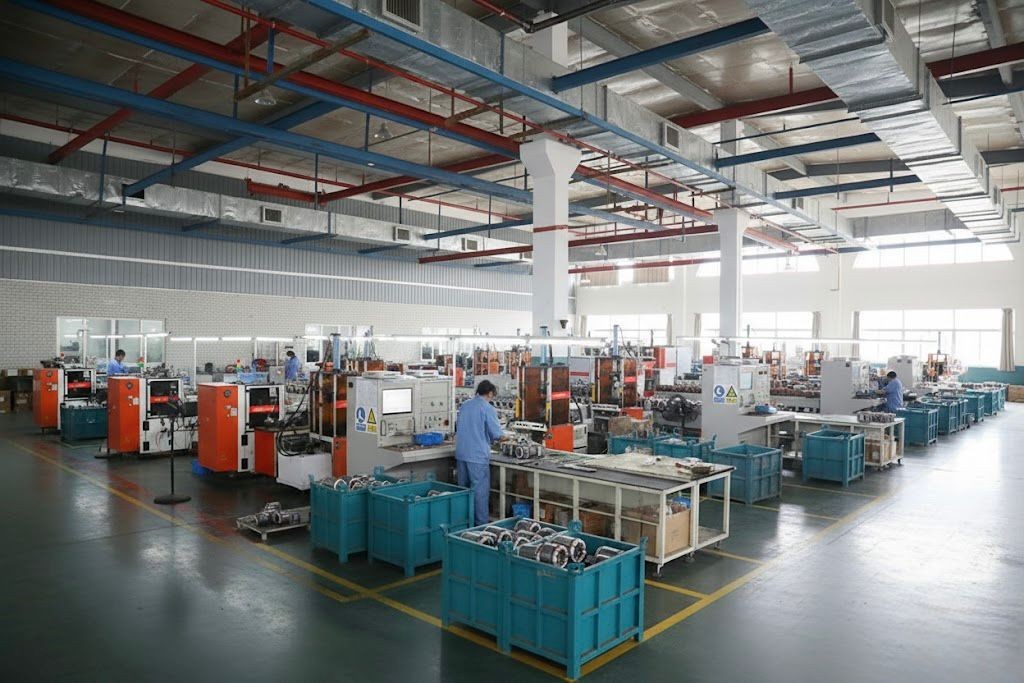

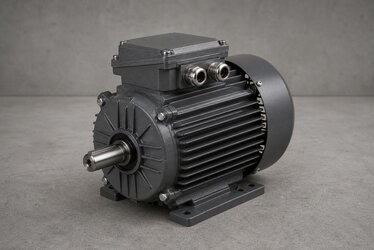
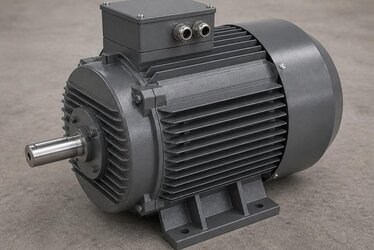
A three-phase electric motor runs on the rotating magnetic field created by alternating current from three separate phases and is the most widely used motor type in industry. The DRG Motor three-phase range combines this fundamental operating principle with a high efficiency class, a durable frame and a wide power range to meet the continuous-running needs of production lines.
How Does a Three-Phase Motor Work?
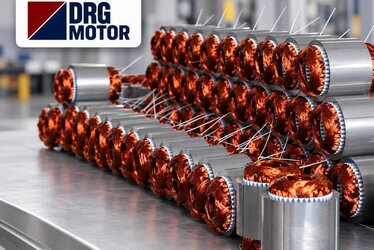
The current applied to three winding groups placed 120 degrees apart in the stator creates a rotating magnetic field. This field induces current in the squirrel-cage rotor and drags it along; the rotor turns slightly behind the field, and this difference is the slip. Unlike single-phase motors, the three-phase design produces high torque on its own without an additional starting element.
The Relationship Between Speed and Pole Count
On a 400 V / 50 Hz supply, the synchronous speed is set by the pole count: a 2-pole turns at around 3000 rpm, a 4-pole at 1500 rpm and a 6-pole at 1000 rpm. The application's speed and torque needs determine the pole choice; lower speeds are preferred for high-torque loads such as mills and crushers.
Efficiency, Protection and Frame
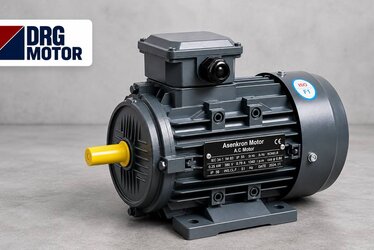
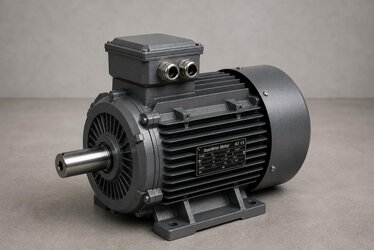
The DRG three-phase range is built in IE3 Premium and IE4 Super Premium efficiency classes under IEC 60034-30-1; IP55 protection and Class F insulation ensure safe operation in dusty and humid areas. The cast iron frame offers resistance to vibration and shock, while the aluminium frame gives a weight advantage.
The DRG Motor Three-Phase Range
İzmir-based supplier DRG Motor offers three-phase motors from 0.55 to 355 kW with B3 foot, B5 flange and B14 face mounting options. Share your application's power, speed and mounting type to receive technical support for the correct model and a current quotation.