 English
 Le français
 Türkçe
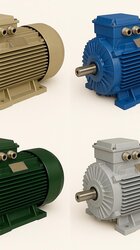

Asked for a price on an asynchronous motor, we ask four things back: what it drives, how many hours a year it turns, what the air around it carries, and what starter and cable it will sit behind. Without those, a figure quoted is a figure for a different motor.
The Environment Sets Part of the Price
A dusty aggregate plant, a damp washing bay and a heated indoor line do not buy the same machine. IP55 covers dust and splashing water and suits most production halls; wash-down and open-air positions push the protection higher, and a salt-laden or corrosive atmosphere adds a paint specification. Class F insulation rated to 155 °C leaves headroom where the ambient is warm. Each of these is a line on the specification before it is a line on the invoice.
What a Cage Machine Costs to Keep
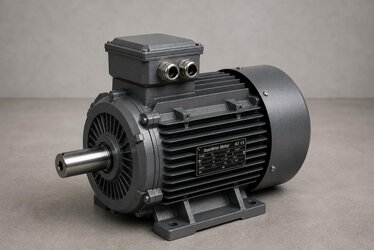
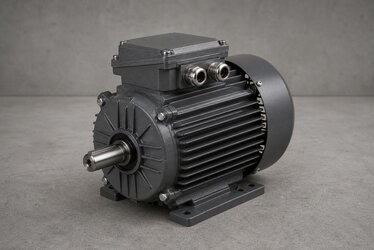
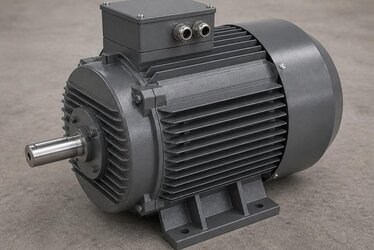
A squirrel-cage asynchronous motor carries no brushes and no commutator, so nothing in it wears by design. The recurring cost is bearing grease, a fan cover and cooling ribs kept clear, and a periodic insulation-resistance reading on the winding. Against that short list the maintenance budget of a cage motor over a decade rarely decides between two offers — which is precisely why the energy figure does.
The Motor Is Not the Whole Cost
The drive train around it carries its own bill: the starter or inverter sized to the rated current, cable cross-section and protection set from the same figure, the coupling or belt drive, and the base or slide rail it bolts to. A motor larger than the duty needs enlarges every one of those items. Sizing to the measured load profile, rather than to a margin invented at the desk, is where the money is actually saved.
What to Send Us for a Firm Figure
Rated power in kW, the speed or pole count — 2 pole near 3000 rpm, 4 pole 1500 rpm, 6 pole 1000 rpm — mounting as B3, B5 or B14, frame material, protection class, yearly running hours and quantity. With those in hand we quote from stock across 0.55 to 355 kW in IE2, IE3 and IE4, name the delivery date, and re-issue the figure when the market moves instead of leaving an expired one standing.