 English
 Le français
 Türkçe

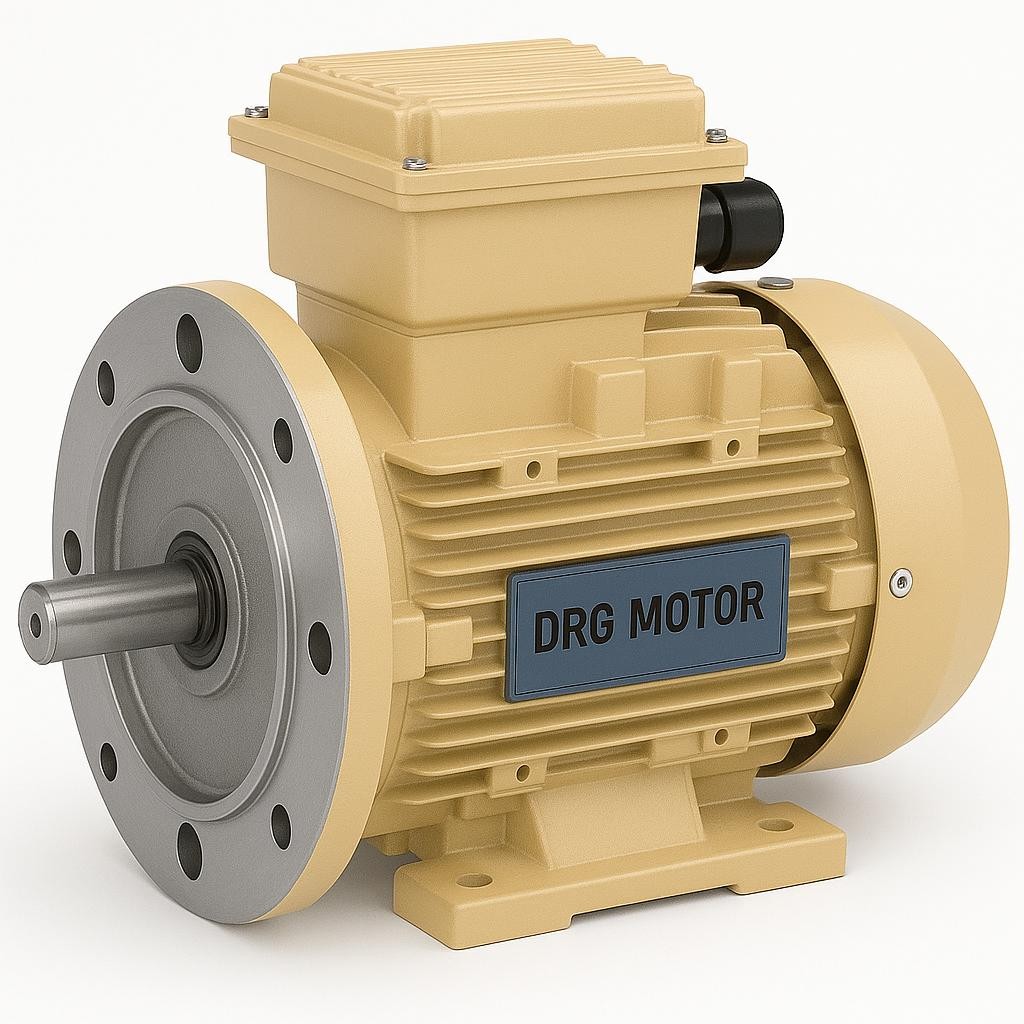

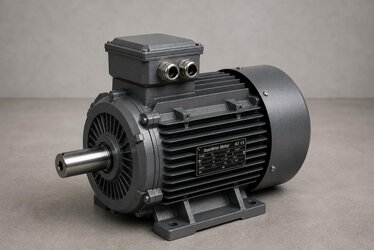
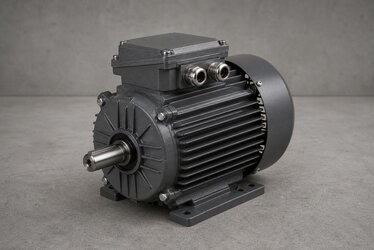
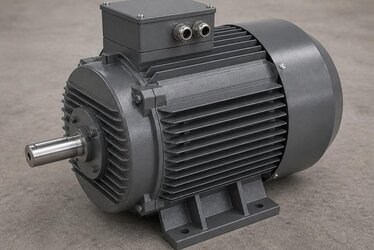
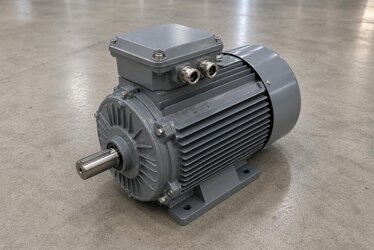
An AC asynchronous motor works by a rotating magnetic field inducing current in the rotor, needs no brushes or slip rings, and is the most common electric motor type in industry. Its rugged build, low maintenance and ability to run straight from the mains make it the standard solution for applications ranging from pumps to conveyors.
How an Asynchronous Motor Works
The stator's three-phase winding creates a rotating magnetic field. This field induces current in the short-circuited squirrel-cage rotor, and the rotor turns by interacting with that current's field. Because the rotor turns slightly below the field's speed, that is with "slip", the motor is called asynchronous; at exact synchronous speed the induction, and therefore the torque, falls to zero.
Speed and Pole Count
On a 50 Hz supply the synchronous speed depends on the pole count: 2 poles give 3000 rpm, 4 poles 1500 rpm and 6 poles 1000 rpm. The real shaft speed sits below this by the amount of slip. The speed the application needs sets the pole choice; high speed suits pumps and compressors, while low speed suits torque-heavy loads such as conveyors and mixers.
Build, Protection and Efficiency
DRG asynchronous motors are built with a cast iron housing, IP55 protection and Class F insulation, rated for S1 continuous duty. The efficiency class can be specified from IE2 to IE4 per IEC 60034-30-1; on continuously running lines, a higher efficiency class lowers the energy cost over the motor's life.
Choosing the Right Asynchronous Motor
Load character, running hours, speed and mounting type (B3/B5/B14) are the main factors that define the right motor. DRG Motor supplies three-phase asynchronous motors from 0.55 to 355 kW from its İzmir manufacturing base; share your application and we will pick the most suitable model together.