English
 Le français
 Türkçe

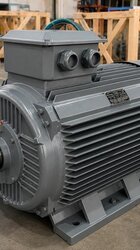
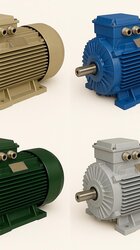
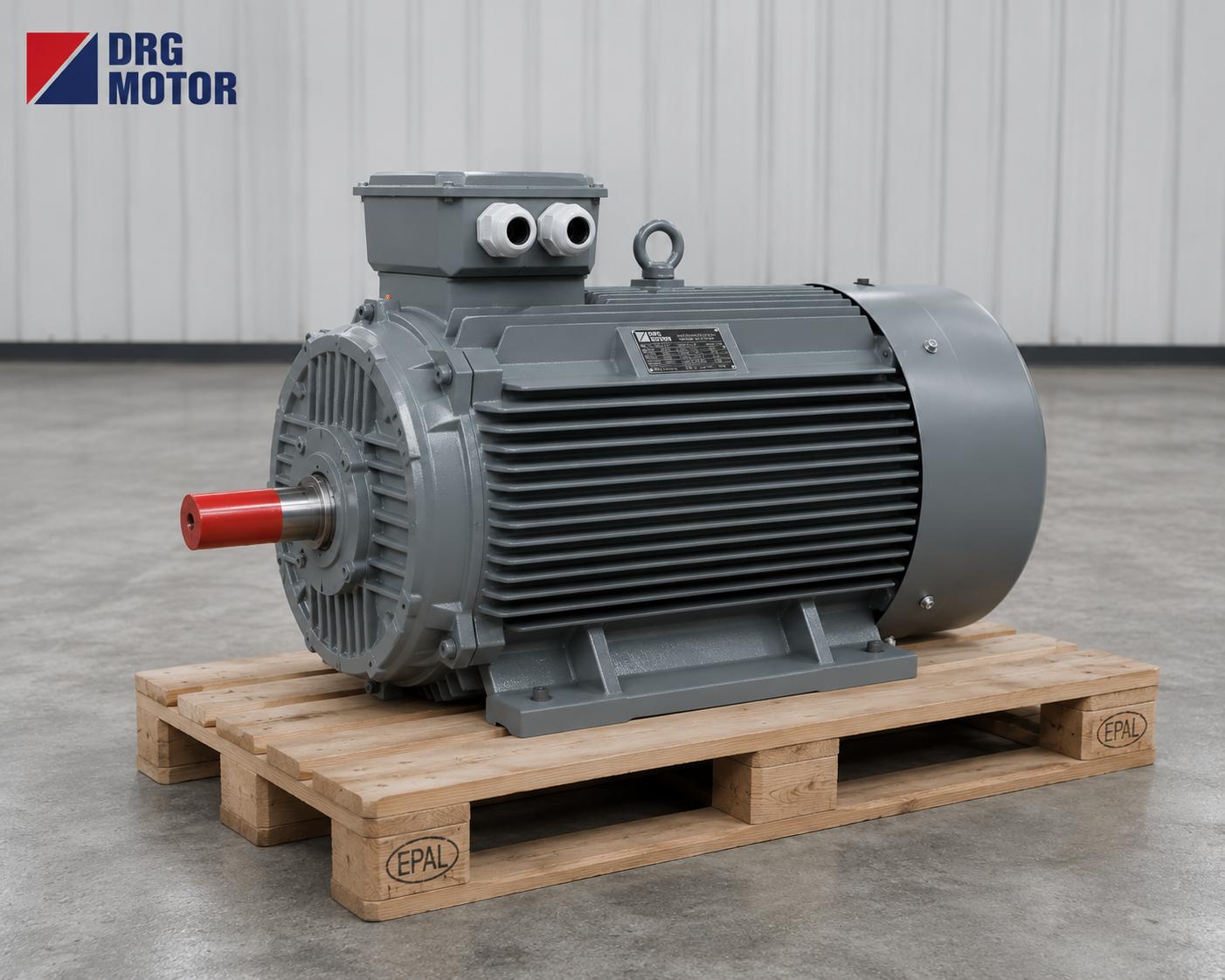

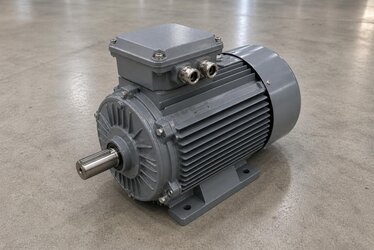
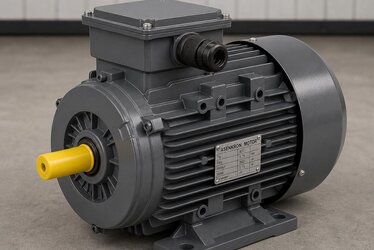
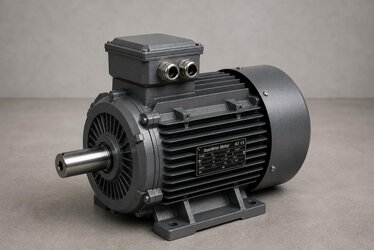
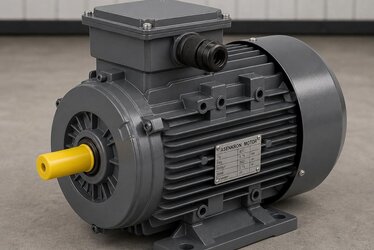
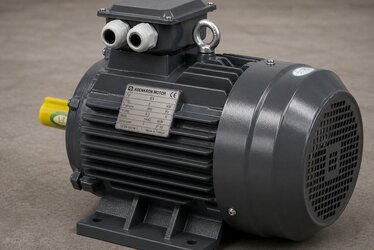
Before fitting a new motor onto an industrial line, the first question worth asking is not the power rating printed on the nameplate, but at what speed and with which mounting geometry that power will be delivered. A motor rated at 4 kW, with 4 poles, a B35 mounting and IE3 efficiency class sits exactly at the intersection of three decisions: adequate torque, balanced speed, and the freedom to mount either on feet or on a flange. This combination is the configuration suppliers are asked for most often, spanning applications from pumps and conveyors to gearbox inputs and fan drives. At DRG Motor, this guide looks at what to watch for when choosing this motor and how to reach the right supply decision with a practical eye.
Why the 4-Pole Speed Is So Widely Chosen
A 4-pole asynchronous motor turns at roughly 1500 rpm synchronous speed on a 50 Hz grid, settling into the 1440-1470 rpm band under load. This range is something like the golden ratio of industry: not as aggressive as the high speed of 2-pole motors, nor as slow as the heavy torque of 6-pole units. Centrifugal pumps, hydraulic units, compressors and many gearbox inputs are designed precisely around this speed window. Carrying 4 kW at 1500 rpm gives you roughly 26-27 Nm of rated torque, which is more than enough starting and continuous torque for mid-sized mechanical loads. A plant that gets the speed choice wrong later tries to compensate with pulley ratios, which means both efficiency loss and extra cost.
What Flexibility a B35 Mounting Gives You
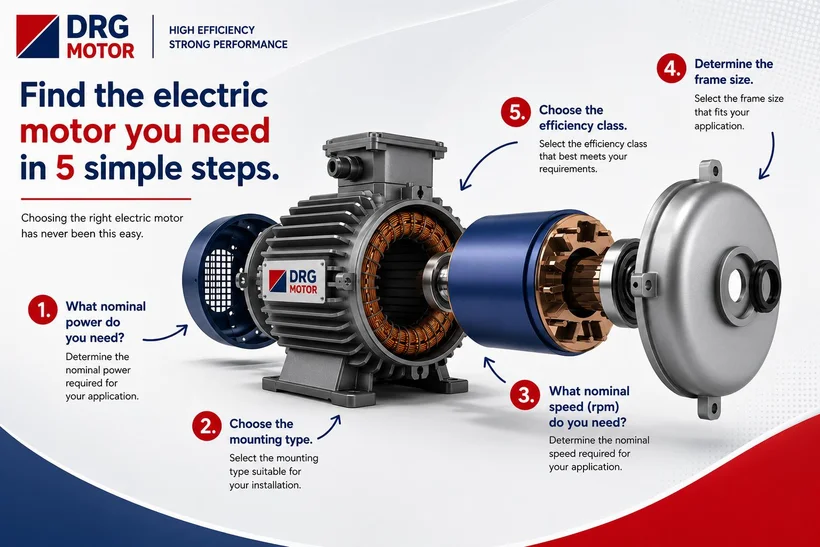
The B35 frame form takes its name from combining two separate connection capabilities in a single body. The motor can be bolted to a chassis with the feet underneath, and it can also be mounted directly onto a gearbox, pump housing or machine casing via the large flange on its drive end. This dual flexibility is a real advantage in the field: you can use the same motor stock across different applications, reduce the risk of mounting errors, and adjust positioning during future line changes without removing the motor. Many procurement officers choose B35 at the start of a project to cover both B3 (foot) and B5 (flange) needs in a single line item. Selecting the correct flange dimension is critical; the typical flange hole pattern and spigot diameter for a 100L frame must match the connected equipment exactly. Confirming this fit in advance prevents surprise returns after shipment.
IE3 Efficiency Class: Legal Requirement and Real Savings
The IE3 premium efficiency class is no longer a preference across most power ranges but a requirement under current regulations. On a continuously running motor like a 4 kW unit, the few percentage points of efficiency difference between IE3 and IE2 translate into a visible electricity bill gap over hundreds of running hours per year. On a line that runs around the clock, the purchase price of the motor is only a small slice of the total cost of ownership; the real spend is the energy the motor draws over its lifetime. For buyers who want to weigh efficiency class against cost, calculating the payback period using the ie3 motor fiyatı against IE2 turns the purchase decision into clear numbers. In most continuous applications, the extra cost of an IE3 motor amortizes itself through energy savings within the first few years.
Reading the Right Frame and Nameplate Values
A 4 kW 4-pole motor generally corresponds to the 100L frame size in the standard IEC frame table. Knowing how to read the nameplate values during procurement prevents the wrong motor arriving on site. The key items to check are:
- Rated power and speed: 4 kW and the 1500 rpm band must match the nameplate exactly.
- Voltage and connection: will you run 400V delta / 690V star, or a different grid structure.
- Protection class: IP55 is the accepted standard for dusty and humid environments.
- Insulation class: Class F insulation provides a safe buffer in hot environments.
- Flange and shaft dimensions: the shaft diameter and keyway must match the connected equipment.
When you clarify these five items before ordering, the chance that the delivered motor fits on the first attempt becomes almost certain.
Usage Scenarios with a Frequency Inverter
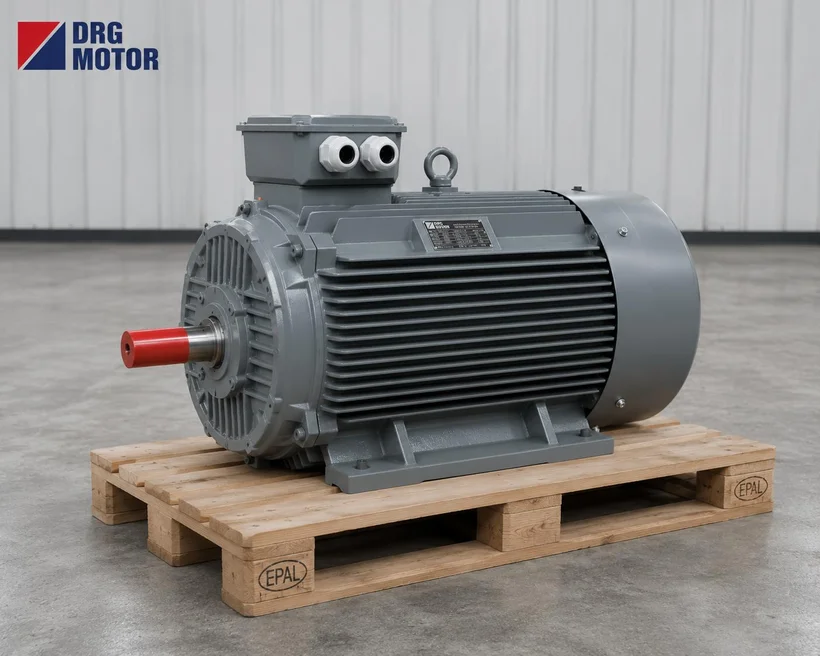
A large share of modern plants run motors of this class not at fixed speed but at variable speed behind a frequency inverter (VFD). A 4 kW 4-pole IE3 motor can hold its efficiency across a wide speed range thanks to its inverter-compatible winding design. In pump and fan applications in particular, speed control alone delivers significant savings by reducing energy draw according to flow demand. The point to watch here is whether the motor's cooling stays adequate if it runs continuously at low speed; for applications turning at low speed for long periods, a force-cooled (external) fan or a larger frame can be considered. Discussing such fine details at the ordering stage prevents surprise overheating issues in the field.
Determining the Right Configuration by Application
The same 4 kW 4-pole B35 motor should be ordered with different details depending on which machine it connects to. On a centrifugal pump, the shaft end and flange spigot come to the fore, while on a gearbox input the flange hole pattern and shaft tolerance class are decisive. On a conveyor drive, starting torque and a frequent start-stop regime matter, whereas in a fan application the moment of inertia takes priority. So instead of seeing a standard 1500 rpm IE3 motor as a single uniform item, sharing the real load profile of your application with us yields the best result. When deciding within a similar power class, evaluating the 3 kw 1500 ie3 trifaze motor option as an alternative reference helps you find the right step between power increments.
Factors That Set the Price and the Supply Approach
The supply price of a 4 kW IE3 motor is not a single fixed number; it varies with the brand, stock availability, order quantity, flange and shaft customizations, and delivery time. That is why moving forward on a current quotation rather than a net price is the most transparent route for both buyer and seller. DRG Motor, with its broad stock network and range of brand options, focuses on offering the configuration best suited to your project's technical requirement under favorable terms. Whether you are planning a single motor or a serial supply for a line expansion directly affects pricing. To get the right motor on the right terms, you can review the IE3 electric motors page in our product range and then request a quote tailored to your application.
Stock, Lead Time and Speed of Access to the Field
In most projects, when the motor will be in your hands matters as much as its technical specification. For a plant waiting to restart a stopped line, a 4 kW 4-pole motor that can be delivered from the shelf is far more valuable than a custom order arriving weeks later. So when planning supply, look at nameplate values and at the supplier's stock depth and shipping network. A common configuration such as a 100L frame, 1500 rpm and B35 mounting is usually held in ready stock at the right supplier, which turns into a critical advantage at the moment of failure. Maintenance teams keeping a single spare motor in stock for critical lines is the simplest way to lower the cost of unplanned downtime. Clarifying lead time and shipping options before ordering protects your project schedule from surprises.
Maintenance, Lifetime and Spare Part Continuity
An item often overlooked when buying a motor is whether you will be able to source a part when its bearing, fan cover or terminal box is needed five or ten years later. The 100L, a common frame in the IE3 class, is also a safe choice in terms of part availability; with its standard bearing sizes and common spare parts, it remains easy to maintain even years later. The right supplier does not just sell the motor; it also commits to lifelong spare part and technical support continuity. With regular lubrication, vibration monitoring and correct alignment, a motor of this class comfortably exceeds its rated lifetime. When making the purchase decision, asking about the service network behind the motor is as important as asking about the initial price.
To Speed Up Your Supply Decision
A 4 kW 4-pole B35 IE3 motor, when chosen correctly, is a solution that runs efficiently and maintenance-free for years and adapts quickly to the field. The strength of this configuration lies not in how common it is, but in how precisely it is built around your own application. When you clarify details such as shaft size, flange pattern, protection class and inverter compatibility before ordering, your investment pays off from day one. Share your line's needs in a few minutes and our technical team will respond quickly with a quote covering the best frame, brand and delivery option for you. The right motor, paired with the right supplier, keeps your production flowing without interruption.