 English
 Le français
 Türkçe

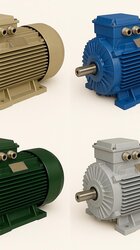
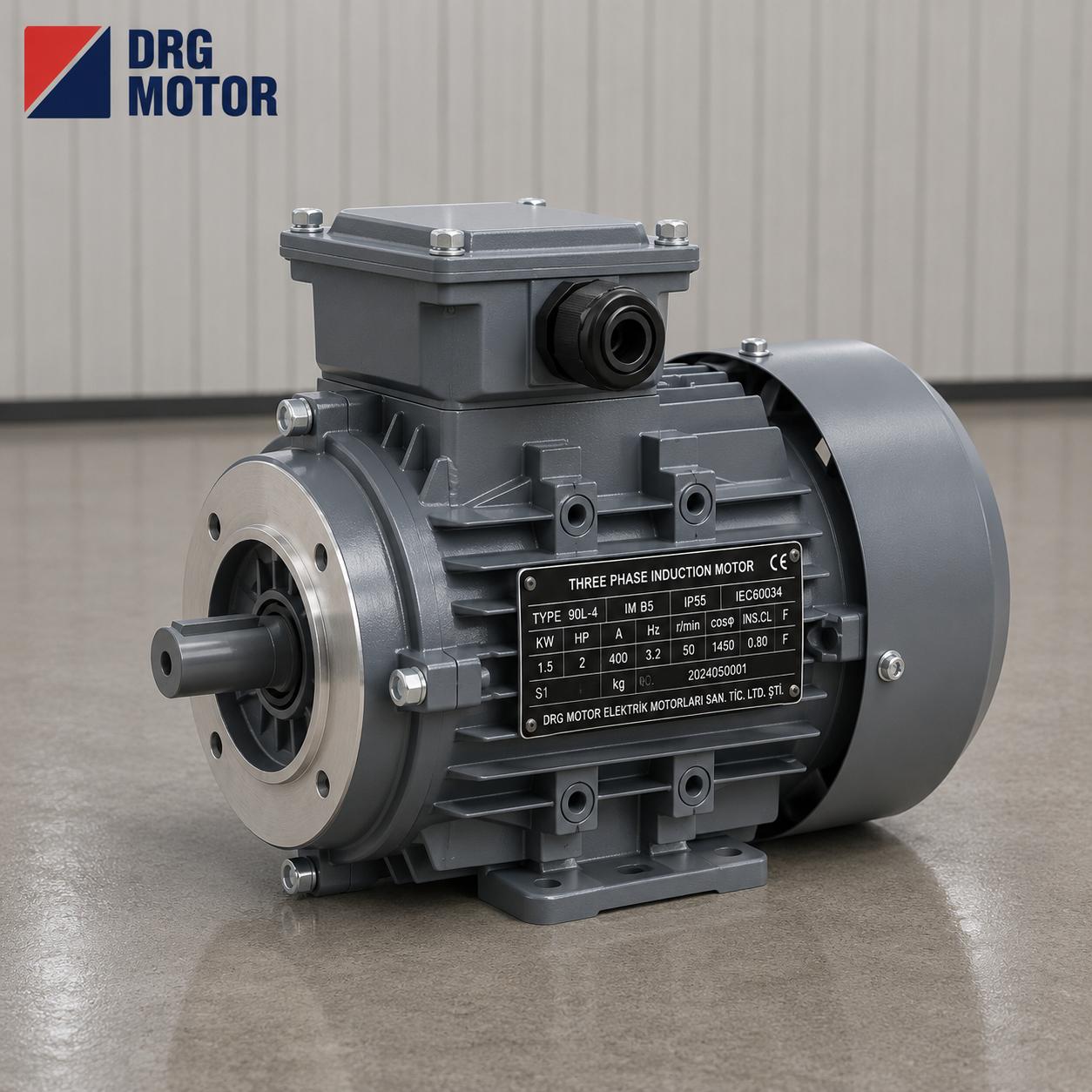

Choosing a motor by glancing at the price tag and picking the cheapest option feels reasonable in the moment. Yet for a motor that runs around the clock in your plant, the real cost does not begin at the cashier; that is where it merely ends. The figure hiding beneath your electricity bill is the cost that should actually concern you over a motor's lifetime. This is exactly where the decision between the IE3 motor price and the long-term burden of an IE2 unit shapes your budget for years. In this article we look past the sticker and compare the two efficiency classes through the only lens that matters in a real purchasing decision: total cost of ownership. Our aim is not to hand you abstract tables, but to show clearly which class will charge you less and earn you more under your plant's real operating conditions.
The Sticker Is Just the Tip of the Iceberg
For an induction motor spinning in industry, the purchase price often accounts for less than five percent of the money spent over its working life. Almost all of the rest is energy. A high-speed motor running continuously can burn many times its own price in electricity within the very first year. Focusing on the gap between an IE2 and an IE3 sticker is therefore like staring only at the part of the iceberg above the water. The decision should be driven by the energy line hidden below the surface. When you put a motor's ten-year energy consumption into a single table, the few-hundred-dollar difference in the initial purchase usually becomes trivial next to the full picture. The most common mistake plant owners make is treating the decision as a one-time expense, when in fact a motor is an item that bills you again and again, month after month.
What the Efficiency Gap Really Means in Practice
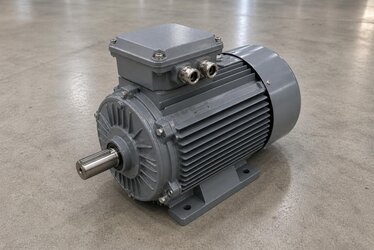
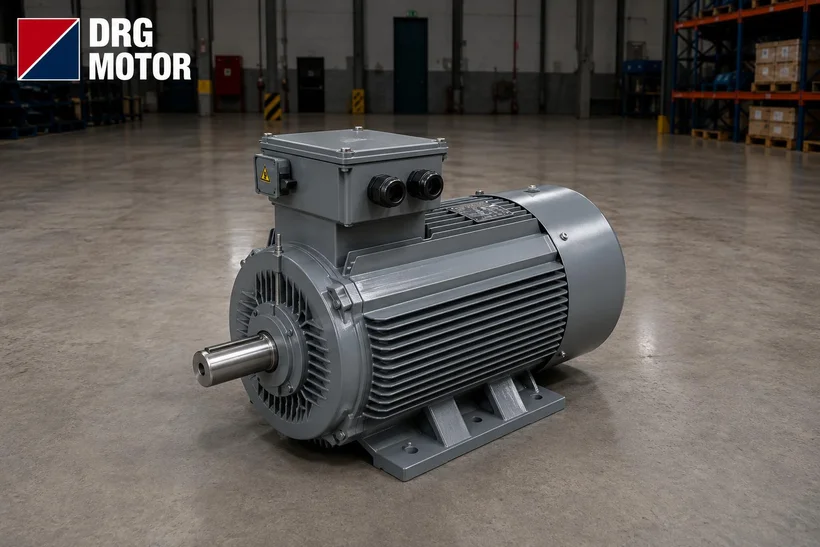
IE3 class motors deliver the same mechanical power while drawing less electricity. A difference of a few percentage points may look small on paper, but for a motor turning seven or eight thousand hours a year the monetary value of that gap is striking. Choosing IE3 over IE2 in a mid-power unit, for instance, visibly reduces lost power, and that reduction lands directly on every monthly bill. As efficiency rises, the motor also runs cooler, which translates into longer winding insulation life and fewer thermal stresses on the unit. Efficiency is never just a label value; the copper cross-section inside the motor, the quality of the laminations, the cooling design and the rotor construction all combine to create that gap. Two motors of the same rating may look alike from the outside yet consume very different amounts of energy because of these internal details. In that sense, the efficiency class is also an indirect indicator of the engineering quality built into the motor.
Payback: When the Premium Pays for Itself
The extra amount you pay upfront for an IE3 motor comes back to you over time through lower energy consumption. In multi-shift facilities this payback period rarely exceeds eighteen to twenty-four months. Every year that follows is pure saving. The main factors driving the payback period are:
- The motor's annual operating hours and load profile
- The industrial electricity unit price in your region
- The power rating and speed of the motor
- The actual efficiency gap between the two classes
- The motor's average loading ratio
Because these variables differ from one plant to another, quoting a single figure would be misleading; the right approach is a calculation built on your own load profile. In a period when electricity unit prices climb year after year, the saving an efficient motor delivers also grows every year. In other words, the calculation you make today tilts even further in your favor in the future. When estimating the payback period, add the expected rise in energy cost over the motor's lifetime to today's tariff; the decision then rests on far more solid ground.
The Math Shifts for Lightly Loaded Motors
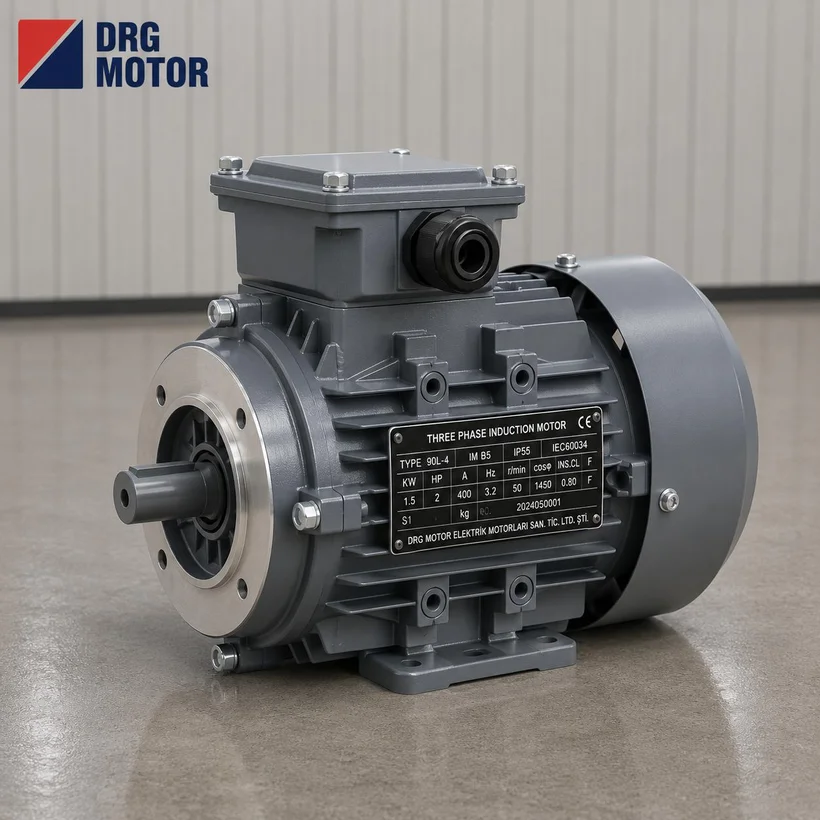
Not every application benefits equally from a higher efficiency class. A motor that runs only a few hours a day, or one that spins constantly at low load, sees a much slower return on the IE3 premium. In these cases it is wiser to steer the investment toward correct sizing rather than efficiency class alone. In most plants motors are selected with far more power than the task requires, which inflates both the initial investment and the energy losses. If your motor spends most of its time lightly loaded, pairing it with a s\u00fcr\u00fcc\u00fc uyumlu motor for variable speed control can open up an even larger saving than the efficiency class ever would. Reading your load profile correctly is the first step in deciding which class will actually pay you back. Sometimes the right decision is not a more expensive efficiency class but the combination of a power rating that fits the application precisely and smart control.
The Right Choice by Application
For pump, fan and compressor groups that run continuously and at high load, IE3 is almost always the more economical option. When a pompa elektrik motoru drives a system operating seven days a week around the clock, the gain from efficiency more than covers the investment within a few years. By contrast, for a standby motor that rarely engages, an IE2 unit can still be a reasonable choice. When deciding, you must always put the motor's true annual running time on the table. A plant may hold hundreds of motors, and applying the same rule to all of them is not correct. The right approach is to group motors by running hours and load intensity, and to move the motors that turn the most and carry the heaviest load into a higher efficiency class first. This method directs a limited budget toward the points that will return the highest saving.
Maintenance, Heat and the Quiet Costs
The efficiency gap does not show up only on the electricity bill. A motor that runs cooler wears its bearings and insulation more slowly, which reduces the frequency of faults and downtime. An unexpected stoppage on a production line usually costs far more than the motor itself. The lower operating temperature of IE3 class motors indirectly stretches the maintenance schedule and lowers the risk of unplanned downtime. These quiet costs are often ignored because they never appear in a sticker comparison, yet they can be decisive in the total picture. A motor that operates with its temperature under control shows more predictable performance in every component, from grease life to insulation class. That predictability makes production planning easier and cuts the number of unexpected service calls. In the long run, the most expensive motor is the cheap one that stops often.
Stock and Lead Time Are Costs Too
One line item often skipped in a motor decision is delivery time. A motor that does not reach your site while the line waits costs you money no matter how efficient it is. So choosing the right efficiency class is only part of the equation; being able to source that motor quickly and reliably is just as much a part of the total cost. Broad stock and ready logistics keep production from halting during an emergency failure. That is precisely why we keep common power and speed ratings in stock at DRG Motor; the moment you decide, you do not have to wait for the motor.
Let Us Calculate the Right Investment Together
There is no single correct answer to the IE3 versus IE2 question; the right answer is embedded in your plant's load profile. At DRG Motor we evaluate your operating hours, power requirement and electricity tariff together, then lay out the payback period for both scenarios transparently. With our broad stock and fast supply network, once you decide we get the motor to your site quickly. If you would like to start with the IE3 electric motors in our inventory, simply share your power and speed details. Get in touch with us, and we will quote the efficiency class best suited to your application alongside a clear cost analysis, so your investment starts paying off from day one. You do not have to guess which motor is right for you; let us calculate it together and let the numbers make the call.