 English
 Le français
 Türkçe

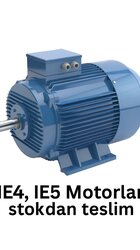

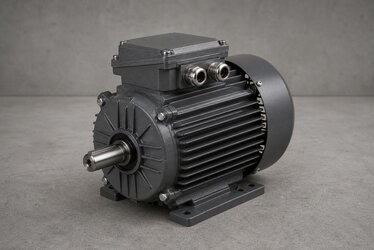
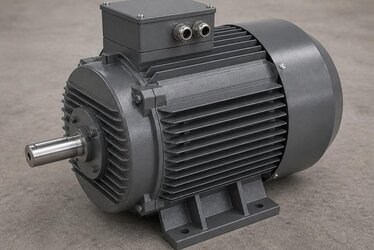
The three-phase asynchronous motor runs on the rotating magnetic field created by alternating current from three separate phases and is the most widely used motor type in industry. Thanks to its simple construction, low maintenance need and durability, it is the choice for the vast majority of drive applications.
Operating Principle
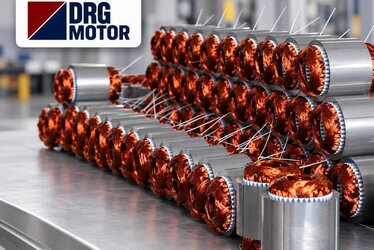
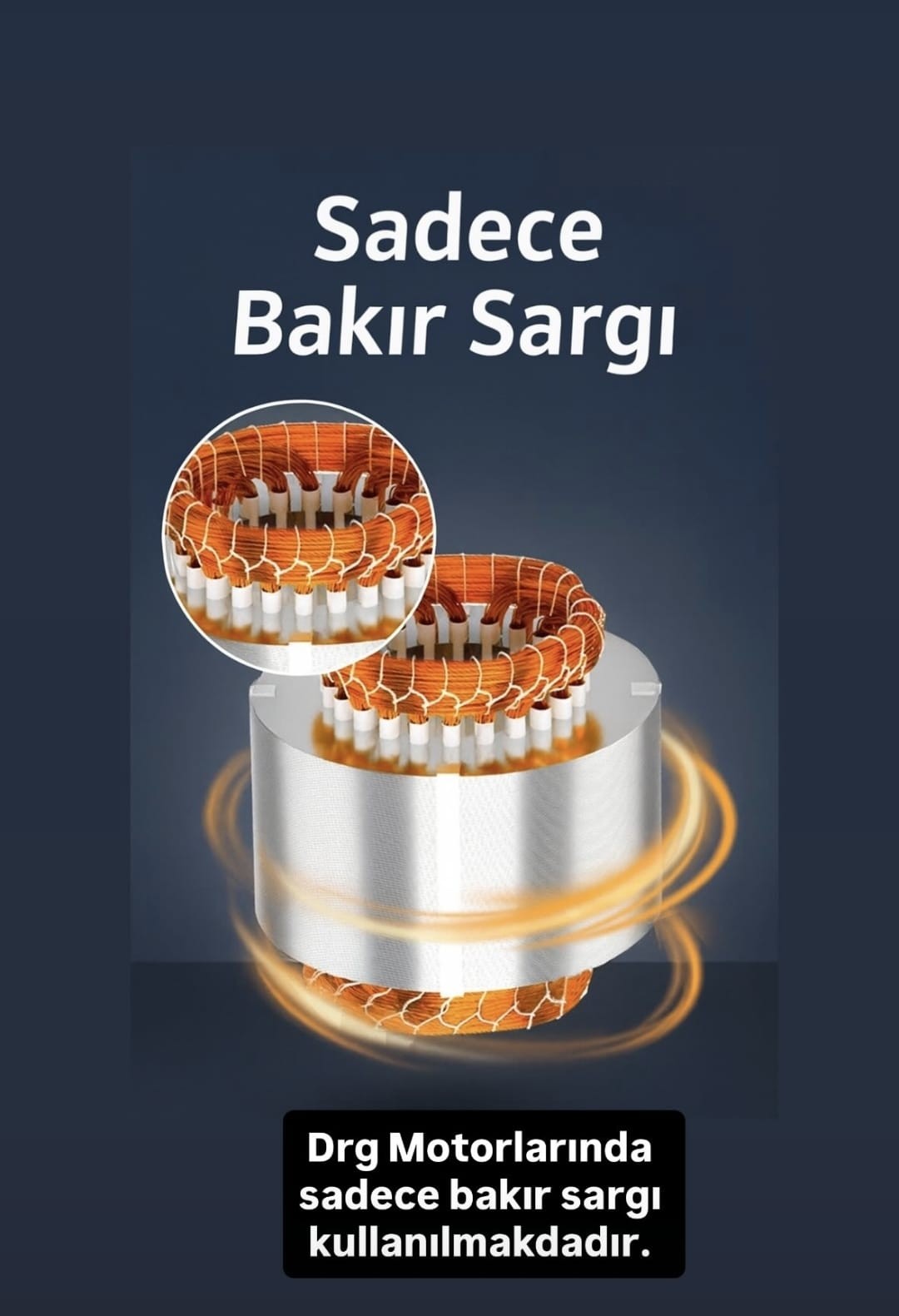
Three winding groups placed 120 degrees apart in the stator produce a rotating magnetic field when fed with three-phase current. This field induces current in the rotor conductors, and the resulting second magnetic field drags the rotor along. The rotor turns slightly slower than the rotating field; this speed difference is called slip and is the reason the motor is named "asynchronous".
The Relationship Between Speed and Pole Count
On a 50 Hz supply, synchronous speed is set by the pole count: 2 poles give 3000 rpm, 4 poles 1500 rpm and 6 poles 1000 rpm. The actual rotor speed sits slightly below these values because of slip. The speed the application requires directly determines the pole count.
The Advantage of the Squirrel-Cage Rotor
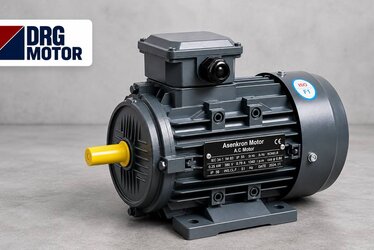
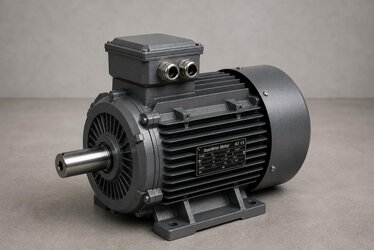
The most common type is the squirrel-cage rotor; because it has no brushes or slip rings, it has few wearing parts and low maintenance. When a cast iron or aluminium housing, Class F insulation, IP55 protection and S1 continuous duty come together, the result is a long-life, reliable drive.
Choosing the Right Asynchronous Motor
Power, speed, mounting type (B3 foot, B5 flange, B14 face) and efficiency class must be set to the application. DRG Motor offers three-phase asynchronous motors from 0.55 to 355 kW, 400 V / 50 Hz, in various pole and frame options; reach out for a configuration that fits your need.