 English
 Le français
 Türkçe

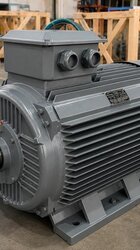
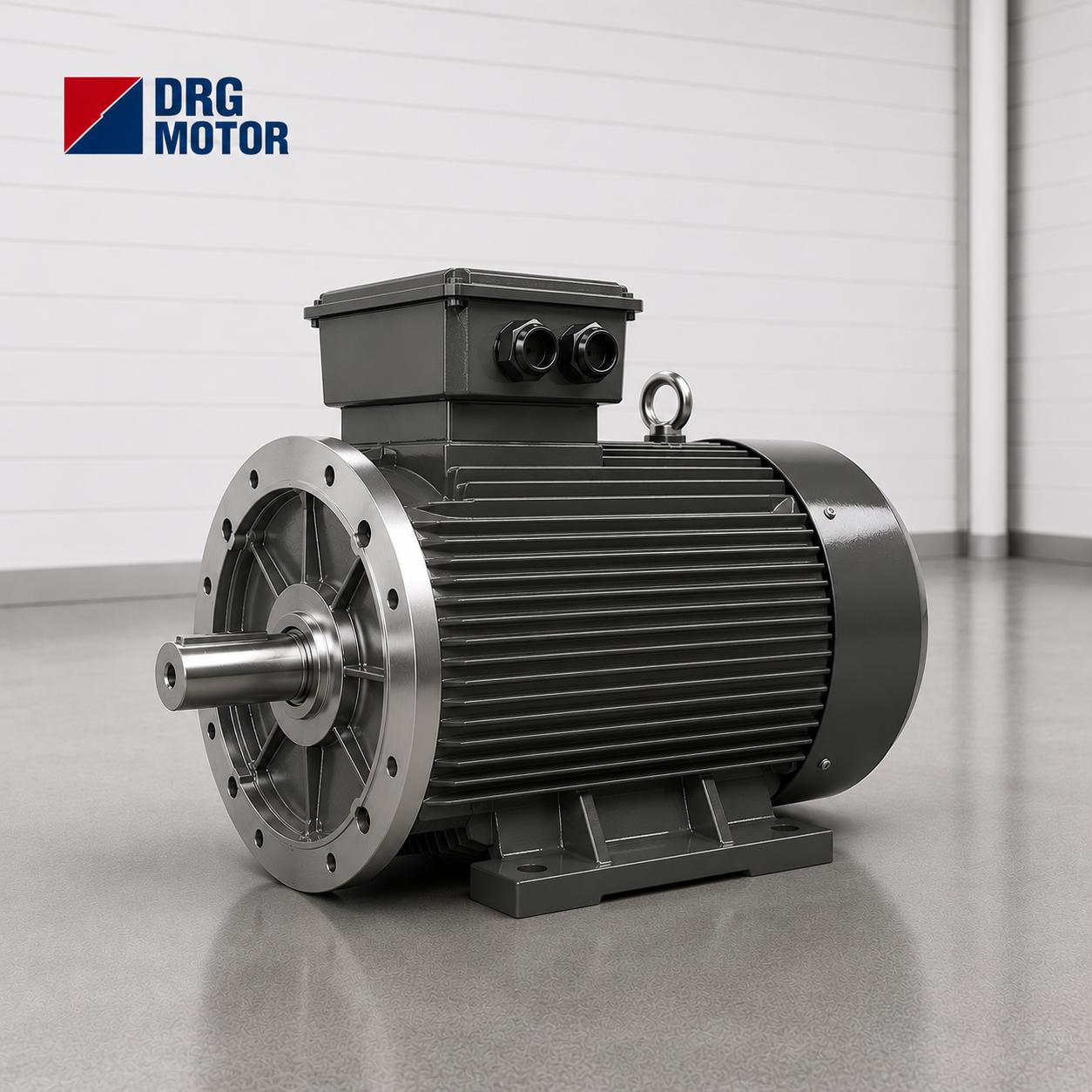

In a milling plant, the heart of the operation is the drive system that delivers power to the stone, grain, or ore. This is exactly where choosing the right mill motor stops being a simple technical detail and becomes a strategic decision that shapes your production uptime, your energy bill, and your maintenance calendar. At DRG Motor, we supply low-speed high-torque motors for flour mills, hammer mills, ball mills, stone mills, and feed plants across Turkey quickly and reliably, so your line keeps turning. Our goal is not merely to sell you a part; it is to build, together with you, the right drive solution that will run for years without stopping.
Why torque comes before speed in mill drives
Mill loads behave very differently from ordinary fan or pump loads. A bed full of material places an enormous starting moment on the motor at the very first turn. If the starting torque you select is not enough to rotate a loaded mill, the system either refuses to move or the motor draws excessive current and trips on thermal protection. That is why the first thing we look at when supplying a mill motor is not the nominal power rating, but the relationship between starting torque and breakaway torque. When a mill has been standing loaded for a while, the material packs together and the breakaway moment climbs even higher; a selection that ignores this reality will fail on the first cold start.
There are two main ways to produce high torque at low speed: choosing a high-pole motor, or pairing a standard motor with a gear unit. We decide which path fits your plant by listening to your load profile and your existing mechanical layout first. That way you neither overpay for an oversized motor nor face early failure from an underpowered one.
High-pole motor or motor-gearbox package?
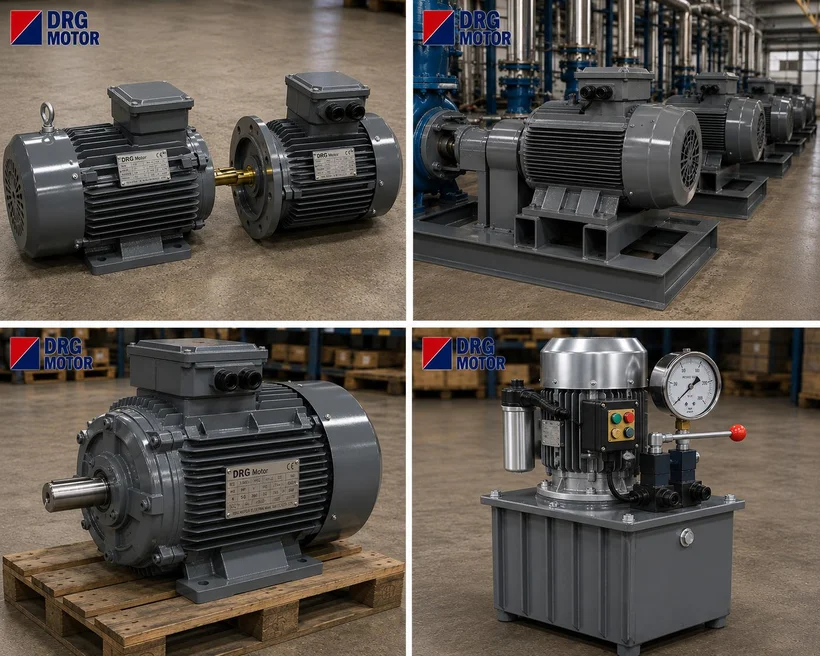
For mills that directly require low speed, 6-pole, 8-pole, or even higher-pole motors are often the right call. These run straight from the grid, turn slowly, and handle high inertia more smoothly. However, when the required output speed is very low, pairing a standard motor with a helical or bevel gear unit is usually both more economical and more compact. A geared group also delivers very high torque at the output shaft and allows direct coupling to the mill shaft. When we make this call, we weigh the following:
- Required output shaft speed and torque
- Daily running hours and starting frequency
- Inertia and the load's behavior at start-up
- Existing mounting flange, foot dimensions, and space constraints
- Energy efficiency class and your payback target
- Your maintenance team's field experience and spare-part access
Once we have run that assessment, we recommend not a single product but a verified drive package. We applied the same approach earlier on beton santrali motoru projects, where it proved itself under heavy start-up loads. A mill and a concrete plant may look different at first glance, but from the motor's point of view they share the same core challenge: lifting a heavy load from a standstill.
The right protection class against dust, heat, and vibration
The mill environment is harsh on motors. The air is permanently loaded with fine flour, bran, mineral, or ore dust. That is why we never pick the protection class at random for the motors we supply. We recommend at least IP55 for dusty environments and IP65 or higher enclosures for plants with heavy dust and wash-down cleaning. High-temperature winding insulation (class F or H) and, where needed, reinforced bearing solutions directly extend the motor's expected service life. Fine dust works its way into the bearings and fan clearances of a poorly protected motor, both spoiling cooling and accelerating wear.
Heat is critical in motors that run continuously at high torque. Inadequate cooling is the single biggest cause of shortened winding life. We ask about the plant's ambient temperature and the motor's location, and when needed we steer you toward force-cooled models or units with a higher service factor. Vibration must not be overlooked either; an unbalanced grinding load creates a constant stress that shortens bearing life. The right bearing choice and a solid mounting base keep the damage that vibration does to the motor to a minimum.
Variable speed needs with a frequency converter
Many mills no longer want to run at a fixed speed; they want a variable speed tuned to each product type. Motors fed from a drive demand extra attention: cooling can fall short at low speed, the insulation faces voltage stress, and bearing currents appear. For drive-fed applications we therefore favor motors with inverter-duty winding construction and, where appropriate, a separately powered cooling fan. This lets you run your motor at full torque down at low speed without overheating problems. A drive-based solution also adds the flexibility to change grinding fineness and switch quickly between different products, which translates directly into efficiency for multi-product plants.
Variable speed also softens the starting current. With direct-on-line starting, the high inrush current drawn from the grid both strains your supply and jolts the mechanical components. With a soft start, your mill comes up gradually, and belt and gear life is extended.
Different demands in feed, flour, and ore mills
A flour mill calls for precise, continuous running; a feed plant brings frequent starts and stops; ore grinding loads the motor with very heavy material. Each one asks for a different motor characteristic. We take this distinction seriously at DRG Motor, because a mismatched motor is either oversized and wastes energy, or undersized and fails early. We pin down the correct range for your sector and deliver from stock or with a short lead time. In a flour mill, food-safe surfaces and low noise come to the fore, while in ore grinding durability and overload tolerance are the deciding factors.
The feed and discharge sides of your mill line usually involve conveying systems too. We can package the konveyör motoru solutions we use to drive those systems into the same quote, so you have a single point of contact for the entire line. Single-source supply makes assembly compatibility easier and saves you time on warranty and service processes.
A wide product range and fast access
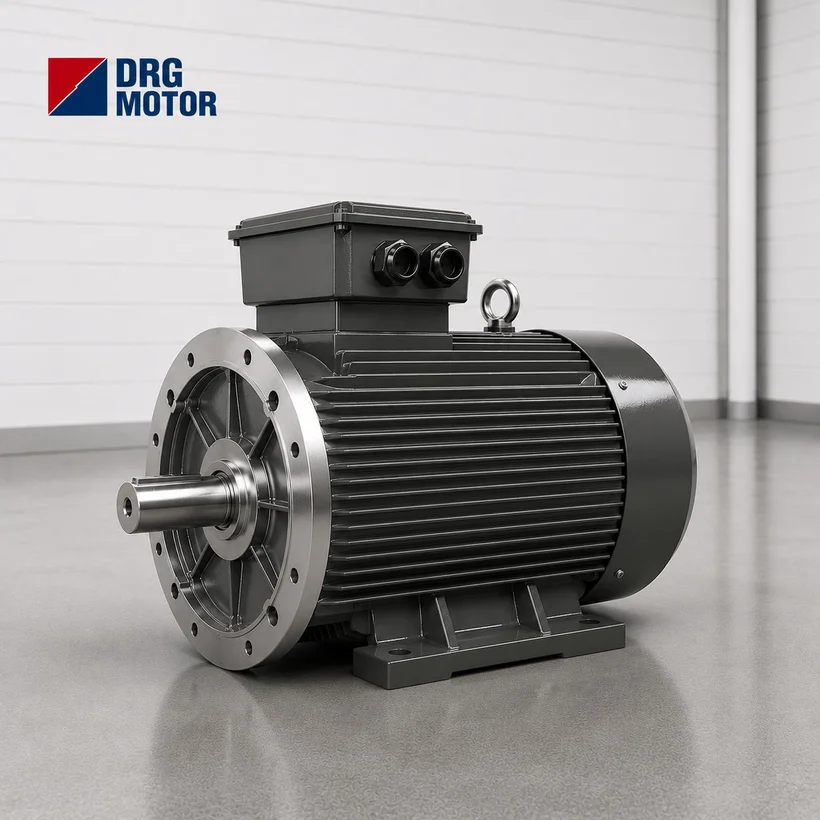
We are not tied to a single brand. To offer the power, speed, and mounting type that best fit your plant, we select from a broad portfolio of general-purpose industrial motors. This flexibility works in your favor on both price and lead time. We keep the same accessibility for spare parts and replacements, too. Because we stay within standard IEC frame sizes, you avoid mechanical fit problems when replacing an old motor; the shaft diameter, flange holes, and foot dimensions line up exactly.
Even in special sizes that are not held in stock, our supply channels let us deliver with short lead times thanks to our own supply channels. Because we know what a stopped mill costs a plant during an emergency breakdown, we also help you plan critical spares ahead of time. For many of our customers, keeping a duplicate of the main motor on the shelf as a spare has become the smartest investment for bringing unplanned downtime close to zero.
Read cost from total ownership, not the sticker
The true cost of a mill motor is not the number on the label. Energy consumption, maintenance frequency, the risk of unexpected downtime, and the service factor together make up what you actually pay. The price premium of a high-efficiency motor usually returns within a few months through energy savings. In a mill that runs long hours every day, the annual saving of an IE3 or IE4 class motor more than covers the price difference. We finalize pricing through a project-specific quote based on factors such as motor power, protection class, efficiency level, mounting type, and quantity. That way you see exactly what every lira you spend buys you.
Let's choose the right motor together
Guesswork in a mill drive is expensive. When you share your plant's load profile, operating hours, and mounting constraints with us, we prepare the best-suited low-speed high-torque solution and a price-competitive quote. Our team reviews your current motor's nameplate data and your mill's operating conditions to get the match right the first time. Reach out today for your mill motor needs; let's make the right drive decision together and keep your production running without interruption.