English
 Le français
 Türkçe

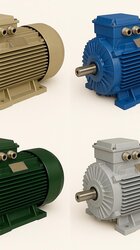
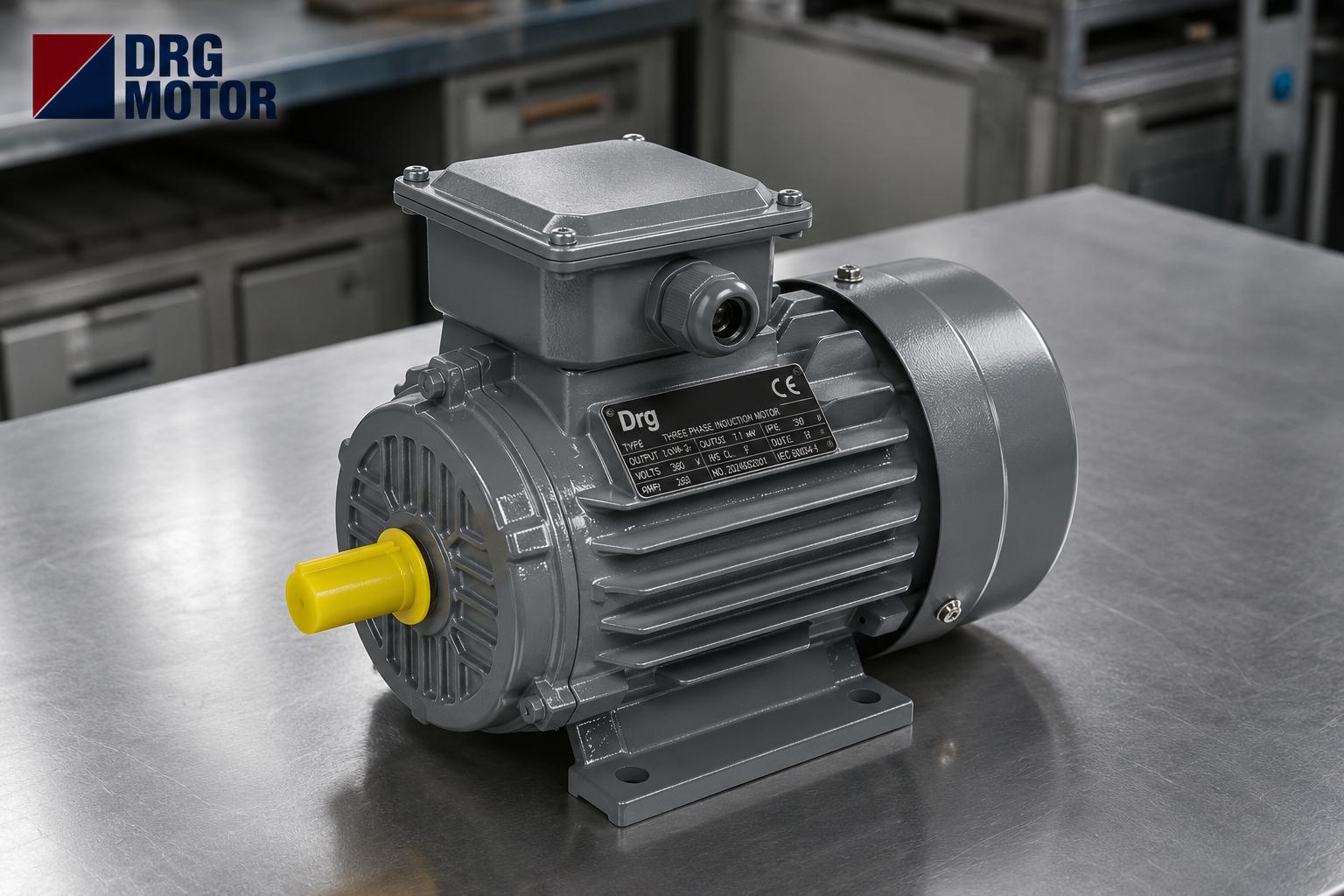

The most common mistake when ordering an electric motor is to look only at the power and speed ratings while treating the mechanical dimensions as an afterthought. Yet what decides whether a motor will physically fit your machine is not the kilowatt figure but the shaft diameter, shaft length, keyway, and frame dimensions. A motor that arrives in the wrong size will not slide onto the pulley, line up with the coupling, or bolt onto the existing base, even if its nameplate shows the correct power. At DRG Motor, we work through this mechanical side of the purchase with you so that the unit fits your machine exactly, and we deliver it under fast supply terms. In this guide we explain, step by step, the relationship between shaft size, keyway detail, and motor frame size, what information you should share at the quotation stage, and why choosing the wrong dimensions costs you both time and money.
Shaft Diameter: The First Condition for Pulley and Coupling
The shaft is the single point through which a motor transmits power to the outside world, and its diameter must match the bore of the pulley, coupling, or gear hub that goes onto it precisely. Even a one-millimeter difference makes assembly impossible; if the shaft is too thick the pulley will not fit, and if it is too thin a gap remains and vibration damages the hub and shaft. Each standard frame size corresponds to a specific shaft diameter; for example, a small frame may carry a 14 or 19 mm shaft, while larger frames have 28, 38, or even 48 mm shafts. If you are replacing an existing motor, measuring the old shaft diameter with a caliper and sharing it is the most reliable starting point for us. For a new installation, we base the choice on the bore of the element to be driven and recommend the matching frame-and-shaft combination. That way, when the unit arrives, you avoid extra costs such as machining the shaft, removing the pulley, or hunting for an adapter sleeve.
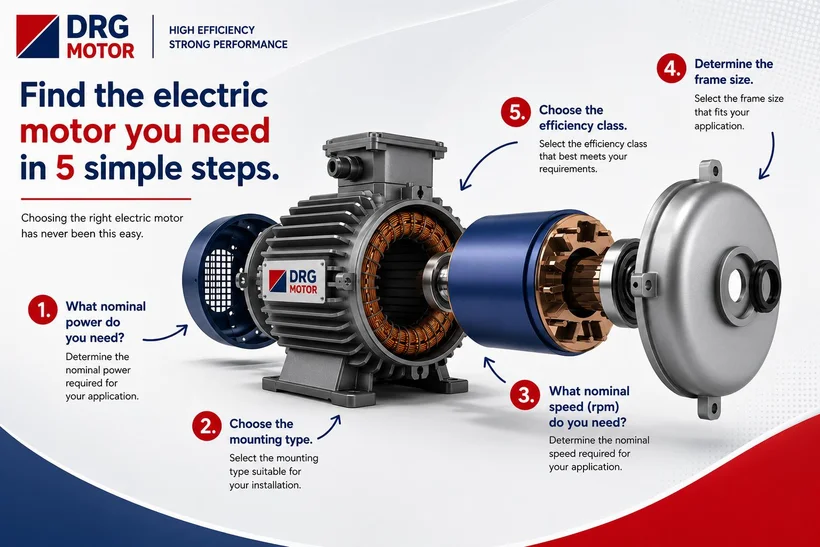
Shaft Length and the Hidden Importance of the Keyway
Even with the correct shaft diameter, an insufficient shaft length means the pulley will not seat fully, the keyway will not be exposed, and power transmission becomes unsafe. The free length from the shaft end to the frame face must be chosen to suit the width of the element being fitted; when a wide pulley meets a short shaft, the pulley overhangs the shaft end and an unbalanced load is imposed. The length and depth of the keyway are also defined in standard tables according to the shaft diameter, and a correctly sized key is essential for transmitting torque without slipping. For special applications that require a double-ended shaft, or where an extended shaft is needed, stating this at the quotation stage allows us to supply the right unit the first time. A photograph of your existing motor's shaft end, along with a few measurements, is often all we need to identify a compatible equivalent within seconds.
What the Frame Size Actually Tells You
The motor frame size so often discussed in the industry is expressed under the IEC standard as a combination of a number and a letter. The number gives the height from the center of the mounting foot hole to the shaft axis in millimeters; this value is called the axis height. The letter defines the longitudinal length of the frame and is generally coded as S (short), M (medium), or L (long). Two motors may share the same axis height yet differ in length under a different letter code, which changes the foot-hole spacing and the total footprint. Matching a frame code to power alone is therefore not enough. The motor that will sit on a base, gearbox, or machine bed must agree with the existing hole pattern in both axis height and length. Reading this code correctly is the shortest route to avoiding surprises during installation.
- Axis height (mm): distance between the floor and the shaft center
- Length letter (S/M/L): the length class of the frame
- Foot-hole spacing: the bolting pattern to the machine
- Flange type and diameter (if any): gearbox or pump connection
Foot or Flange: Do Not Confuse the Mounting Type
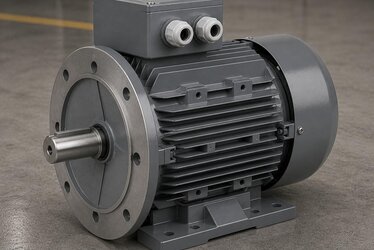
A motor of the same frame size can be supplied as foot-mounted (B3), flange-mounted (B5), face-mounted (B14), or in a combination of these. If the mounting type is chosen incorrectly, the motor cannot be installed on the machine even though its dimensions look right on paper. Pumps and gearboxes usually call for a flange connection, while applications such as conveyors and fans favor a foot-mounted frame. When a flange is involved, the flange diameter, bolt-circle diameter, and spigot diameter must match separately as well. At this point the connection geometry becomes just as decisive as the frame size. Material choice is interwoven with this decision; depending on the environment and load profile, we assess together the difference between a pik döküm motor and an aluminum frame and recommend the connection-and-frame combination best suited to your application. In this way you obtain both the right dimensions and the right material from a single supplier.
The Link Between Duty Cycle and Dimensions
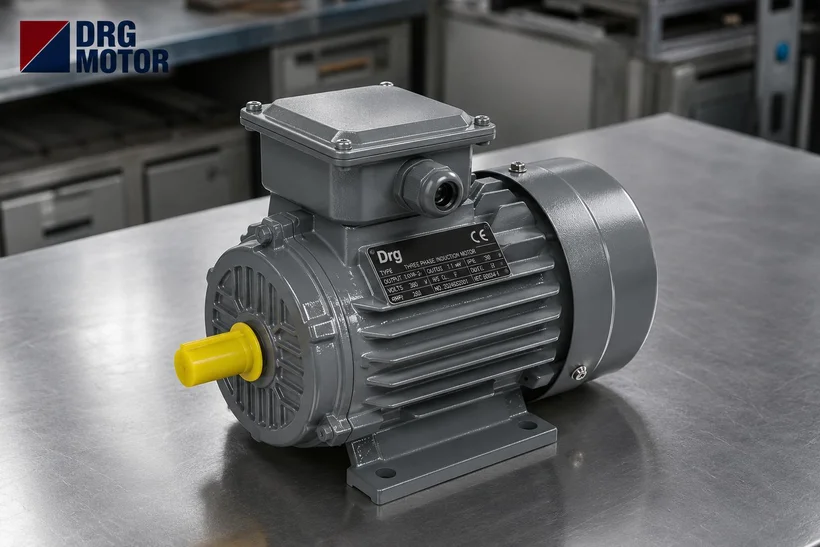
Mechanical dimensions on their own are not enough; how often the motor starts and stops, and how long it runs under load, also affect the correct frame choice. An application that turns continuously under load and one that starts and stops frequently behave differently thermally even at the same power, and this relates to the cooling capacity of the frame. For this reason, alongside the dimension conversation we also put the duty cycle on the table; the s1 s3 çalışma distinction determines whether the frame we select can handle the heat load. A motor chosen on a wrong duty assumption may overheat and shorten its life even if its dimensions fit perfectly. To build the right combination, we evaluate the mechanical and thermal sides together.
Read the Nameplate Correctly When Replacing a Motor
Replacing a failed motor is usually faster than selecting one from scratch, because you have the old motor's nameplate and dimensions to hand. Sharing the frame code, power, speed, voltage, and mounting type from the nameplate is often all we need to identify a direct equivalent. If the nameplate is unreadable, measuring the shaft diameter, shaft length, foot-hole spacing, and flange dimensions where applicable with a caliper leads us to the result. Many businesses assume that if they cannot find the old motor's brand, a new one cannot be installed either; in fact, thanks to IEC frame standards, dimensional compatibility between different brands can generally be achieved. What matters is sharing the complete and correct set of measurements. With this information, we can be sure the unit will fit your machine before anyone goes on site.
The Right Dimensions, Lower Total Cost
A motor that arrives in the wrong size does not only create return and waiting costs; it stops the production line unnecessarily, consumes the installation team's time, and often inflates the budget with a second, rushed order. A supply process where the dimensions are defined correctly from the outset, by contrast, ensures the motor is ready for installation the moment it arrives. We keep a wide range of frame sizes and shaft dimensions in stock and ship quickly across common ranges. For the large majority of standard applications, our general-purpose industrial motors category answers many needs from one place with the right axis height and mounting type. So instead of searching for separate suppliers, you gain the advantage of both the right dimensions and a short lead time together.
Share Your Dimensions, Let Us Speed Up the Quote
Getting a motor to fit your machine is far more about defining the right set of dimensions than about finding the right kilowatt. Once the shaft diameter, shaft length, keyway, axis height, length letter, and mounting type come together, all that remains is matching power and speed. When you share these mechanical details with us, we prepare a quotation that transparently explains the factors driving the price, namely power, speed, frame material, mounting type, efficiency class, and lead time. We always give a firm price once the requirements of the application are clear, because every dimension and feature affects the cost differently. When you send a photo of your existing motor's nameplate and a few basic measurements, we quickly identify the unit that fits your machine exactly and present our quotation. To order the right motor the first time, get in touch with us today; our specialist team stands beside you at every step, from sizing to delivery.