 English
 Le français
 Türkçe

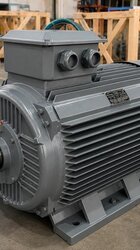
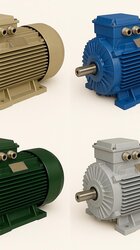
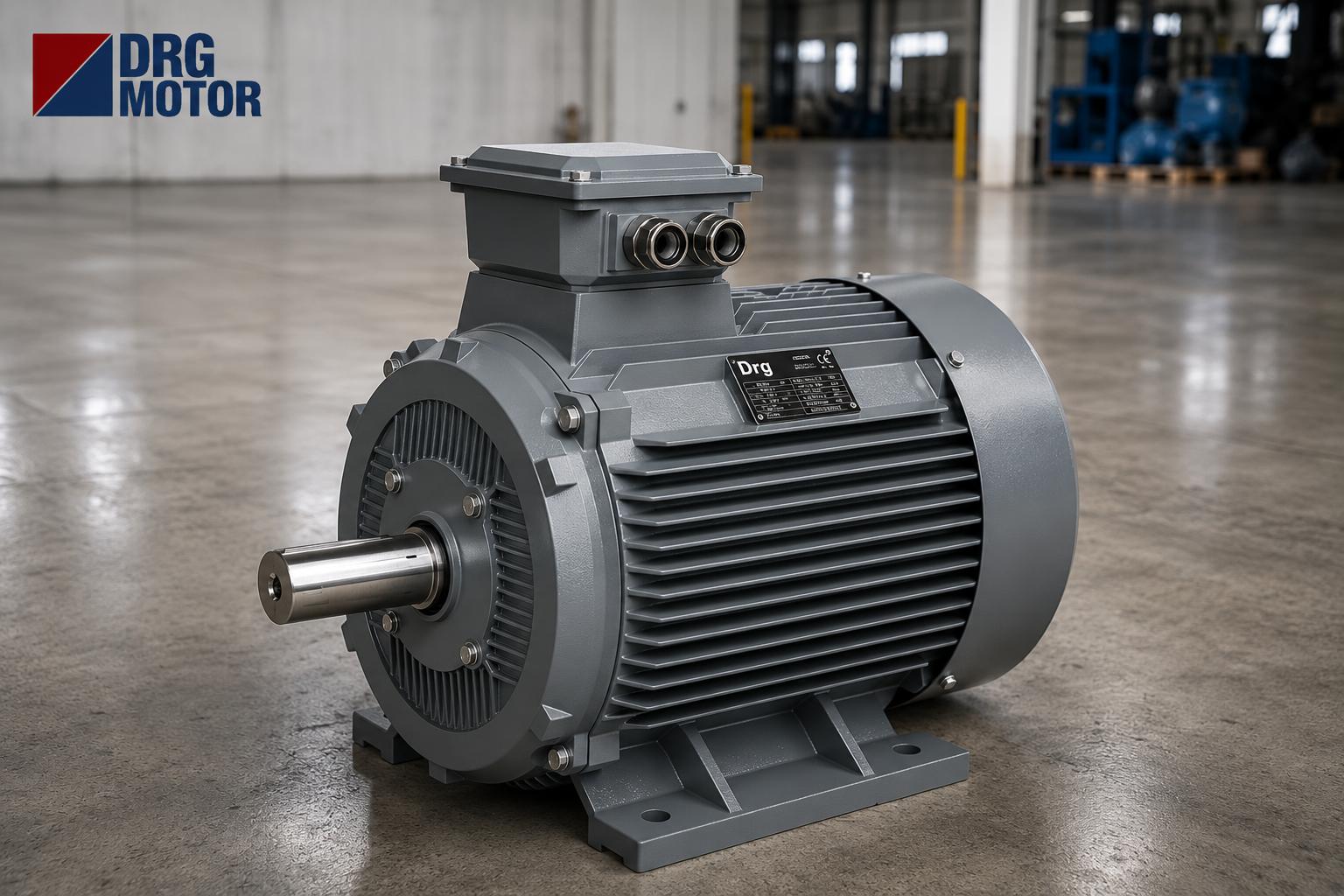

When buying an electric motor, the conversation usually revolves around power and speed, yet the question of frame material slips past most projects. In reality it is one of the most decisive choices you will make, shaping the motor's service life, its fit with the working environment, how easily it can be handled, and even its total cost. Whether to choose a cast iron frame or an aluminum one depends on where and under what conditions the motor will run, and each has its own strengths and weaknesses. At DRG Motor, this is precisely one of the most common points of hesitation we encounter across requests from different sectors. In this article we look at the differences between a pik döküm motor and its aluminum-framed counterpart through a buyer's eyes, explaining which application calls for which and what to watch for so you make the right call at the quotation stage.
Why the Two Frame Types Behave Differently
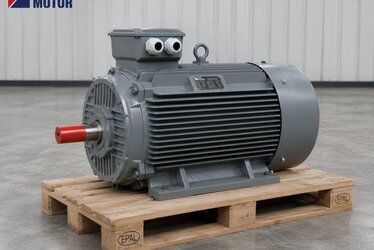
Cast iron, that is grey iron, is a heavy and sturdy material with high resistance to impact, vibration, and mechanical stress. Aluminum, by contrast, is markedly lighter, sheds heat more quickly, and carries a natural advantage against corrosion. The character of these two materials governs how the motor behaves throughout its working life. In heavy industrial conditions, on lines with constant vibration, and at higher power ratings, cast iron is preferred; in applications that are moved often, expected to be light, and sit in the mid-power range, aluminum comes to the fore. The right choice means speaking the language of the application, not of the material alone.
Durability and Mechanical Stress
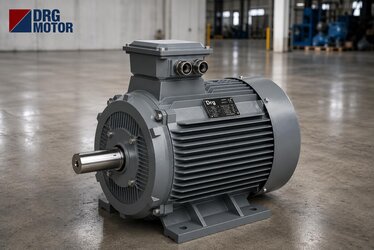
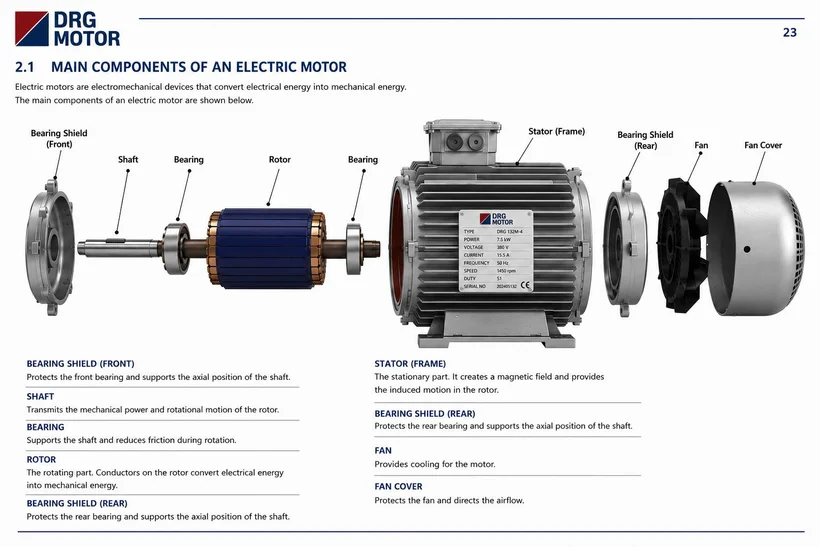
A motor's frame is not merely a box that houses the windings and bearings; it is a structural component that damps vibration, carries mounting forces, and protects against external impact. Cast iron is clearly superior in this role. Thanks to its high mass it absorbs vibration, handles the radial loads created by belt-and-pulley tension without trouble, and carries a lower risk of cracking in the event of a drop or knock. On heavy machinery, crushers, conveyors, and continuously stressed lines, that durability means years of trouble-free running. An aluminum frame is also quite sturdy with modern casting techniques, but it does not offer the same impact resistance, so in environments with high mechanical risk the advantage of cast iron is beyond dispute.
Weight, Handling, and Ease of Installation
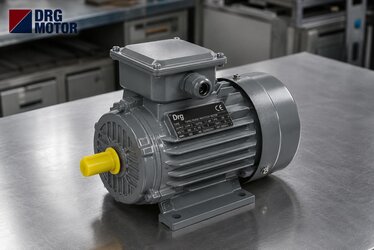
The most visible advantage of an aluminum frame is its weight. Being noticeably lighter than a cast iron motor of the same power makes it easier to transport, lift, and install. It greatly eases the work of crews operating at height, mobile equipment that changes location often, and technicians who have to remove the motor single-handedly during maintenance. The places where this lightness genuinely pays off tend to resemble one another: in mid-power installations such as pumps, fans, and ventilation, at points like rooftops or mezzanines where access to lifting gear is limited, and in maintenance scenarios where the unit has to come off and go back on with one pair of hands before a crane or forklift is ever called in, an aluminum frame visibly takes the strain out of the job. The same holds for portable equipment, where the motor travels constantly on a vehicle or skid and every kilogram adds to the total load. The common thread across all of these is simple: when a motor is moved by human hands rather than bolted to a fixed base, the low mass of aluminum translates straight into saved labor and improved safety.
By contrast, the weight of a cast iron frame becomes not a drawback but an advantage in fixed, heavy-duty applications, precisely because it damps vibration. In other words, the matter of weight too should be judged together with the nature of the application rather than on its own.
Heat Dissipation and Cooling Performance
Aluminum has higher thermal conductivity than cast iron, which means the motor sheds the heat it generates through the frame more quickly. In well-ventilated spaces with a low ambient temperature, this property helps keep the winding temperature somewhat lower. However, the high mass of a cast iron frame also acts as a buffer against sudden temperature swings by storing heat and releasing it slowly. In applications that run continuously under heavy load and start and stop frequently, this thermal mass is an advantage. What truly matters here is the motor's efficiency class and insulation class; the frame material alone does not determine cooling. On projects where a high ambient temperature is expected, selecting the correct insulation class is at least as important as the frame, a topic we covered in detail in our earlier article on f sınıfı izolasyon.
Corrosion, Moisture, and the Working Environment
Aluminum shows a natural resistance to corrosion thanks to the thin oxide layer that forms on its surface, sparing you rust concerns in humid environments free of aggressive chemicals. A cast iron frame, for its part, is protected against corrosion with suitable paint and coating; with the right surface treatment it withstands external factors for many years. In special environments containing salt, acid, or dense chemical vapor, additional protective measures may be needed for both materials. What is critical here is the motor's protection class (the IP rating) and the frame surface treatment. When you share the details of your working environment, it becomes far easier for us to recommend the right combination of both material and protection class, heading off the corrosion surprises that would otherwise appear a few years down the line.
Power Range and Typical Use Areas
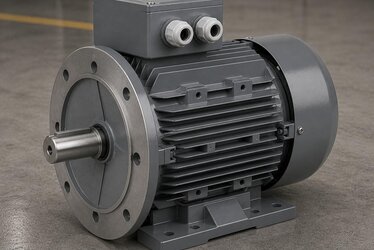
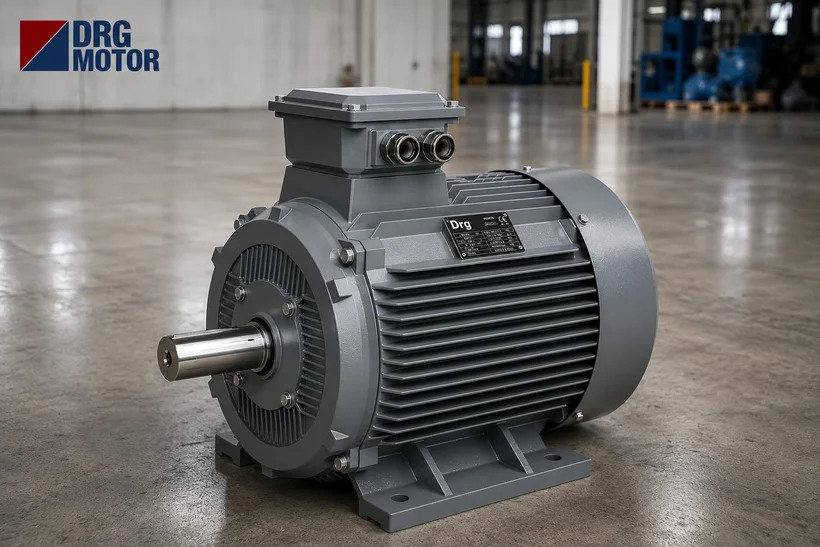
In practice each frame type comes to the fore in particular power ranges. The aluminum frame is generally preferred at small and medium powers, that is across the bulk of everyday industrial applications. Cast iron becomes dominant at medium-to-large and high powers, in heavy industrial conditions. Above a certain power rating, an aluminum frame struggles to provide the mechanical strength required, and for that reason suppliers offer mostly cast iron at high powers. The power class you operate in largely determines the frame choice on its own. The motor's duty cycle also enters the picture here; whether it runs continuously or intermittently affects the selection. We explained the impact of the duty cycle on an order in detail in our article on s1 s3 çalışma regimes; judged together with the frame decision, it makes it possible to choose the right motor the first time.
What Changes on the Cost Side
Cost is naturally a deciding factor in any purchase, yet it would be wrong to explain the price difference between the two frame types with a single line item. The budget gap between cast iron and aluminum usually arises far less from the frame itself than from the choices that surround it. At the root sit the grade and wall thickness of the casting alongside the motor's power-speed combination and efficiency class, because even at an identical kW rating a high-efficiency motor carries more copper and more careful workmanship. On top of this comes the corrosion side: since the natural oxide resistance that is often enough for aluminum has to be reproduced on cast iron through suitable paint and coating, the protection class demanded for an aggressive setting (IP55 and above) and the surface treatment push the price upward on both materials. Finally, how the motor is to be mounted, that is the choice between foot, flange, or combined mounting, together with any non-standard shaft-end requests, directly affects the casting mould and the machining steps; add the order quantity and the lead time you need, and the final price takes shape.
The weight difference also feeds into shipping cost; on projects where many motors are transported, the lightness of aluminum can create an advantage on the logistics side. On the other hand, the long life and resistance to harsh conditions of a cast iron frame lower the total cost of ownership in the right application. In short, you need to look not only at the sticker price but at the total value the motor will create over its life. That is why, at the quotation stage, we steer you not toward the cheapest option but toward the balance best suited to your application.
The Questions to Ask Before Deciding
There is no single right answer when it comes to the frame choice; the right answer lies in the requirements of your application. To decide, you need to clarify where the motor will run, how often it will be moved, whether there is a risk of vibration and impact in the environment, and what the ambient temperature and humidity conditions are. If the duty is fixed, heavy, and high-power, cast iron is a strong candidate; if lightness, easy installation, and mid-power are to the fore, aluminum becomes a sensible choice. Because the general-purpose industrial motors in our broad range cover both frame options, you can source whichever suits your application best from a single supplier. If you are unsure which is right for you, we are here to make that decision together.
Let Us Settle the Choice Together
The choice between cast iron and aluminum gives the right result when it is made by looking at the real conditions in which the motor will run, not by a rule learned by rote. A wrong frame choice may look like a saving at first glance, but it comes back as early failure, handling difficulty, or unnecessary cost. Our aim at DRG Motor is not simply to sell you a product, but to deliver the right motor that fits your application exactly, withstands the ambient conditions, and adds value to your budget, all under reliable supply terms. Share your need, your working environment, and your power requirement; let our specialist team settle together whether cast iron or an aluminum frame suits you better and prepare our quotation quickly. Get in touch with us today to choose the right motor the first time.