 English
 Le français
 Türkçe

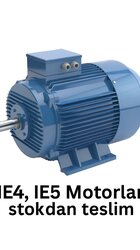
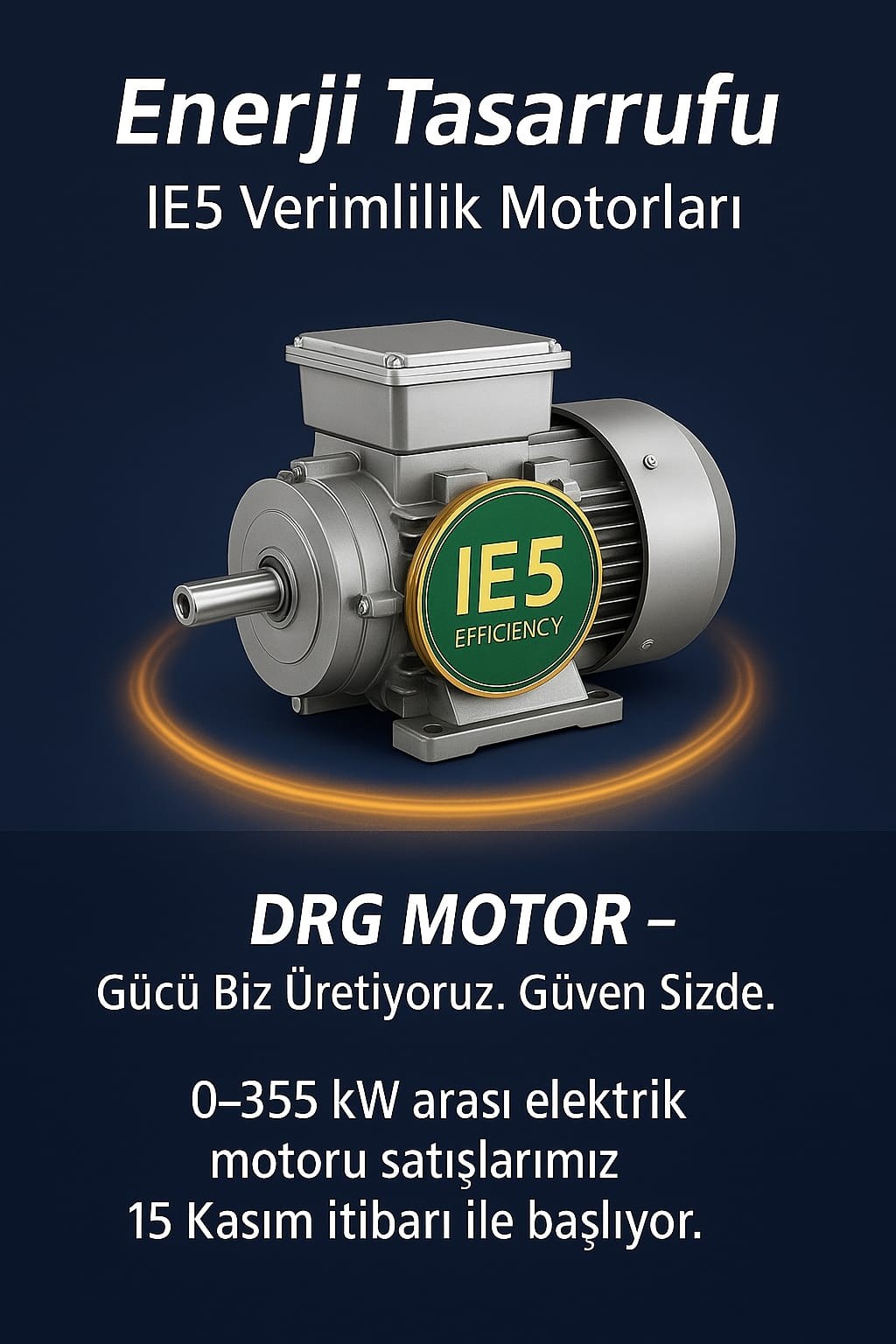

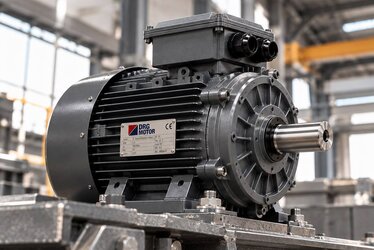
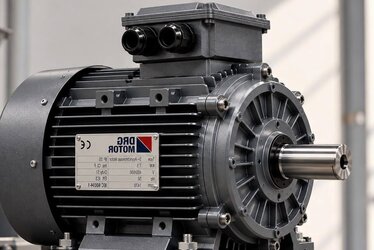
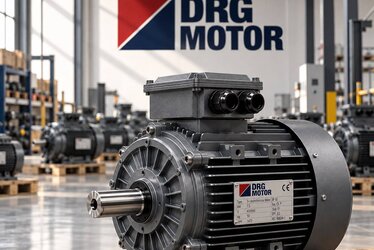
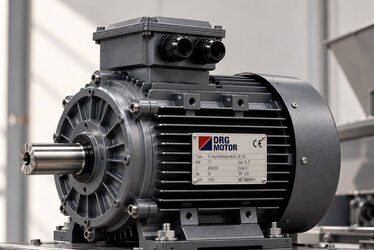
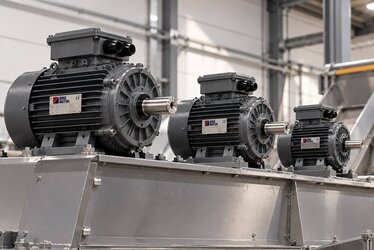
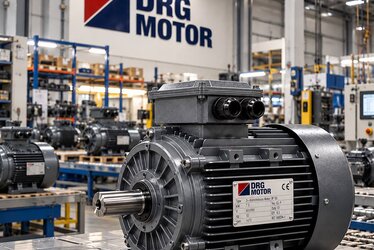
An industrial electric motor is a drive component engineered for the dust, heat, vibration and round-the-clock duty of a factory floor. An efficient industrial motor produces the same mechanical work while drawing less electricity, which directly lowers the energy bill that is one of any plant's largest cost items. DRG Motor answers this need with its three-phase induction motor range.
What Separates an Industrial Motor from a Domestic One?
A shop-window fan and a factory conveyor do not use the same motor. An industrial motor comes with a cast iron frame, IP55 dust and water protection, Class F insulation and an S1 continuous duty rating. It connects to a 400 V / 50 Hz three-phase supply and is cooled to keep winding temperature safe even under long, uninterrupted running.
How Efficiency Class Shows Up on the Bill
The IEC 60034-30-1 standard ranks motors from IE1 to IE5. On a continuously running motor, moving from IE2 to IE3 Premium or IE4 Super Premium yields a visible drop in annual energy consumption. Since the electricity paid over a motor's life far exceeds its purchase price, choosing the efficiency class is a long-term savings decision.
Matching Power and Speed Correctly
An oversized motor runs inefficiently at low load, while an undersized one is constantly strained. Pumps and fans favour 2-pole 3000 rpm, general drives 4-pole 1500 rpm, and heavy, high-torque loads 6-pole 1000 rpm. The power range spans from 0.55 kW up to 355 kW.
Identifying the Right Motor for Your Plant
İzmir-based supplier DRG Motor reviews your application's load profile, running hours and mounting type (B3 foot, B5 flange, B14 face) to recommend the most suitable efficiency class. The goal is to minimise not the upfront price but the total cost over the motor's entire life.