 English
 Le français
 Türkçe

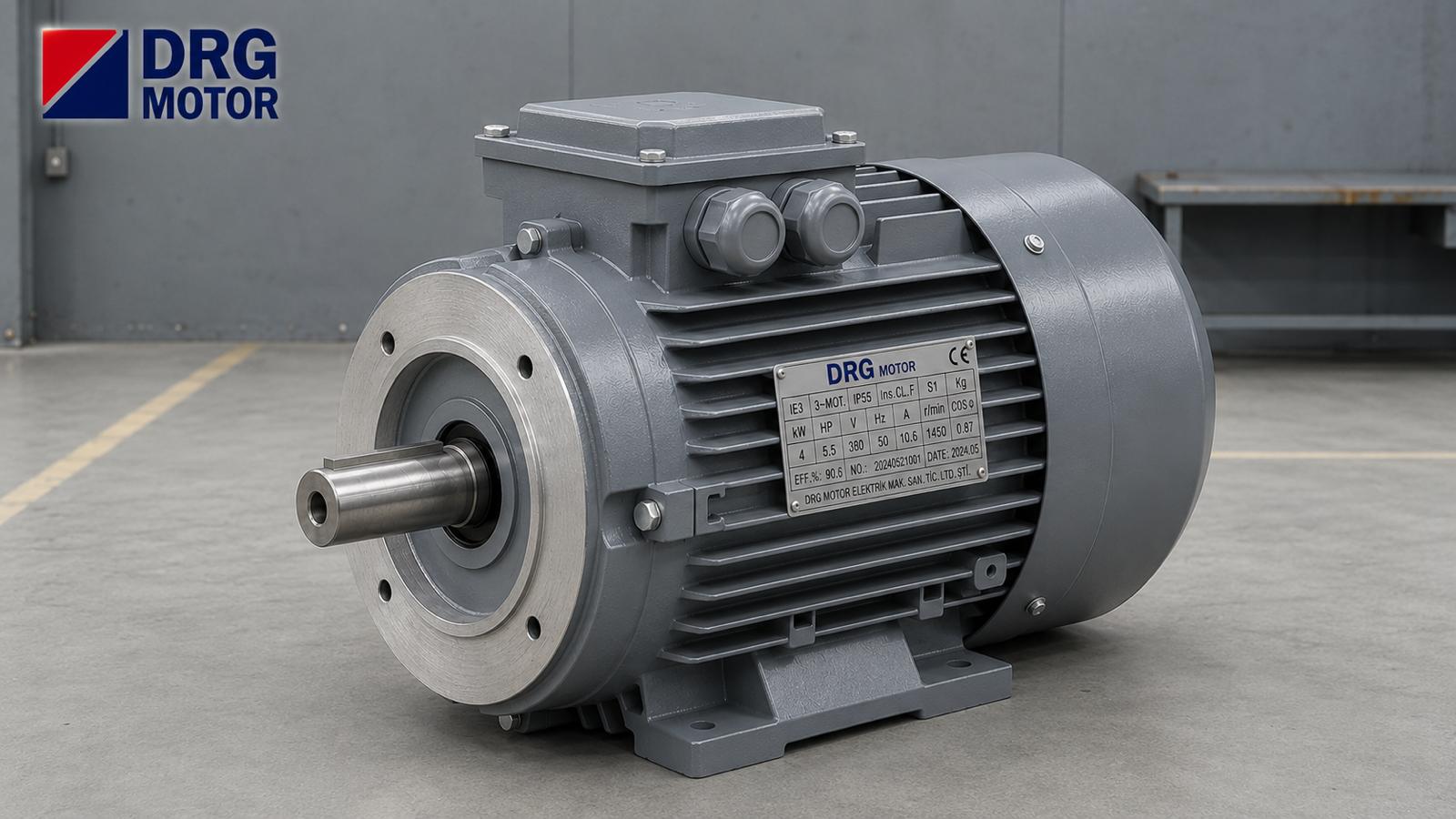

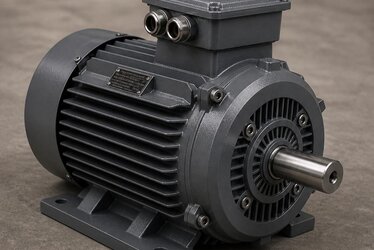
When a business buys an electric motor, the efficiency class stamped on the nameplate is usually the line item that gets the least attention at purchase and causes the most regret when the energy bills arrive. The gap between IE3, IE4 and IE5 may look like just a couple of decimal points of efficiency, but on a line running three shifts that small difference turns into a six-figure energy cost by the end of the year. At DRG Motor we are a supplier that helps businesses across Turkey choose the correct efficiency class and delivers it from stock with fast lead times; our goal is never to sell you the most expensive motor, but the one that pays for itself fastest given your application and operating hours. This article explains, in concrete terms, which numbers to look at when deciding on an IE3 IE4 IE5 motor, which false assumptions to avoid, and what to clarify before you request a quote.
The Class Means More Than the Label
The IE code is an international measure of how much electrical energy a motor converts into mechanical energy at full load. IE3 is premium efficiency, IE4 is super premium, and IE5 is ultra premium, with each step meaning a defined reduction in losses. The full-load efficiency difference between an IE3 motor and an IE4 motor of the same power can look minor on paper; but if the motor runs 16 to 24 hours a day, that small percentage corresponds to thousands of kilowatt-hours. Glancing at the label and concluding "they are practically the same" is the most common and most expensive mistake buyers make. The right decision is based not on the efficiency percentage alone, but on that percentage multiplied by your annual running hours.
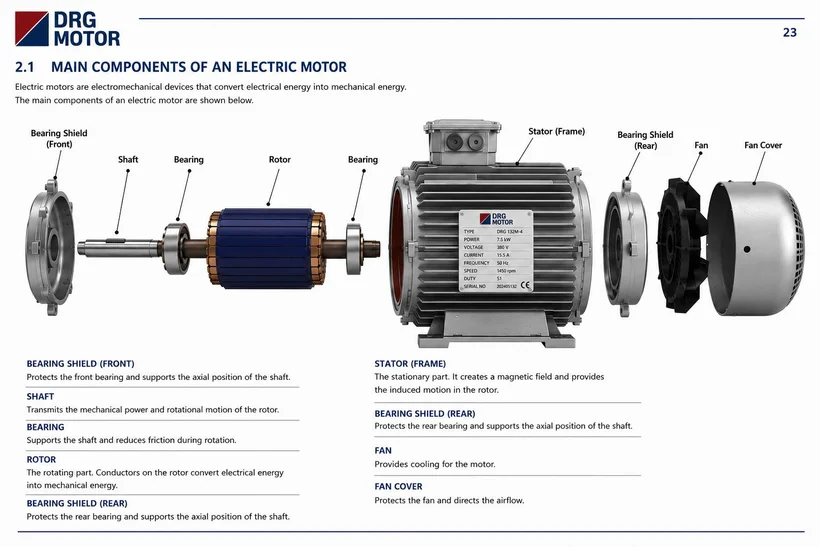
The physical reality behind the efficiency class is this: not all of the electrical energy entering the motor reaches the shaft. Heat losses in the winding resistance, magnetic losses in the iron core, bearing and fan friction, and windage all turn part of the incoming energy into heat. A higher IE class means these losses are reduced through better-quality copper, an optimized core design, and lower-friction mechanical solutions. As a result, a high-efficiency motor does not just consume less energy; it also runs cooler, its winding operates at a lower temperature, and its service life is correspondingly extended. So the return on stepping up a class is not limited to the energy bill, it also shows up in the overall durability and the interval between failures.
Running Hours Drive the Decision
The single most powerful variable that determines which efficiency class you should buy is how many hours per year the motor turns. On a motor that runs only a few hours a day, the energy savings from IE4 or IE5 will not cover the higher purchase price for many years. On a fan, pump or compressor motor that runs continuously, however, the higher class usually repays the extra investment in less than a year. The practical approach is this:
- For motors running under roughly 2,000 hours per year, IE3 is usually the most sensible balance point.
- For motors in the 4,000-6,000 hour range, IE4 provides a clear advantage.
- On continuous, three-shift critical lines, IE5 minimizes total cost of ownership.
When you share your annual running hours at the quote stage, we calculate how quickly each class would pay for itself in your case and send it back as a clear comparison table.
Thinking in Payback Numbers
Choosing an efficiency class is a financial decision, not an emotional one. A higher-class motor costs more at the moment of purchase, but it consumes less energy, and that difference stays in your pocket every operating hour. The payback period is found by dividing the extra purchase cost by the annual energy saving. In scenarios where the electricity unit price is high and the motor runs at large power for long hours, the payback period for IE4 and IE5 becomes surprisingly short. Under the opposite conditions, stepping up to a higher class can mean tying up capital you did not need to spend. Our role is to run this calculation using the real data of your application and show you which class actually makes sense.
There is one item that often gets left out of the payback calculation: the tendency of energy prices to rise over time. A calculation made with today's electricity price makes the return on investment look longer than it really is, because as energy becomes more expensive over the motor's life, the saving a high-efficiency motor delivers each hour grows too. On a motor that will be used for ten years, this cumulative effect is very pronounced. A higher efficiency class therefore acts as insurance not only against today's bill but against future price increases as well. When we prepare a quote, we share this cumulative perspective so you can judge the decision on life-cycle cost rather than a single year.
Watch Out When Running on a VFD
If your motor will run at variable speed on a drive, that is a variable frequency inverter, the efficiency-class decision becomes even more important. High-efficiency motors keep their advantage on inverter-fed systems because they also show low losses at partial load. However, inverter supply puts extra voltage stress on the winding insulation, so reinforced insulation and the right bearing selection become critical on IE4 and especially IE5 motors. On variable-flow applications such as pumps and fans, combining an inverter with a high efficiency class multiplies the energy saving. Setting up this combination correctly requires the motor to be supplied with inverter-compatible specifications, so we strongly recommend stating this detail when you request your quote.
Frame Size, Connections and Stock Fit
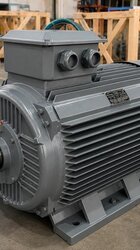
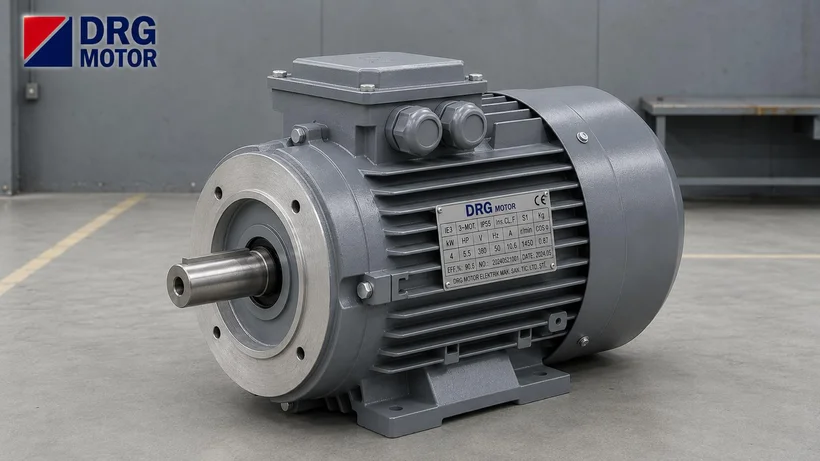
When stepping up to a higher efficiency class, the detail most businesses overlook is the motor's physical dimensions and connection layout. An IE4 or IE5 motor of the same power can, in some cases, bring a different frame length, terminal box position or weight; compatibility with your existing coupling, pulley and mounting feet must be confirmed in advance. The value we offer is not just the motor itself, but delivery without errors in the correct frame type, mounting arrangement and shaft size. Because our wide product range lets us offer different efficiency classes in the same mechanical dimensions, we can often eliminate the need for any mechanical change when you upgrade the class. If your requirement is specifically IE4, you can review the options on our IE4 electric motors page and request a quote directly.
The Right Choice for Each Application
Efficiency-class selection cannot be considered separately from the application. On a water supply line holding constant pressure or in a booster set, high efficiency pays off every single hour; so when the duty cycle is long, choosing an pompa elektrik motoru in the IE4 class is usually the smart move. By contrast, on a low-running-hour application such as a yangın pompası motoru that only starts in an emergency, the energy advantage of a higher class never materializes in practice; here the priority is reliability and standards compliance. The right supplier is not the one who pushes the most expensive class onto every application, but the one who recommends the genuinely correct class for each one.
Regulation and a Future-Proof Choice
Regulations on efficient motors tighten every year, and lower efficiency classes are being phased out of the market step by step. While IE3 is still a valid choice for many applications today, at medium and large powers the preference is shifting increasingly toward IE4. If you are building a new line or planning a long-life investment, starting one step higher both reduces regulatory risk and secures continuity of spare parts and replacements in the future. Building this foresight into your decision protects you from the cost of a mandatory upgrade a few years down the road.
Let Us Pin Down the Right Class Together
The choice between IE3, IE4 and IE5 is not an equation with a single right answer; it is an optimization problem that shifts with your power, running hours, electricity price and how critical your application is. At DRG Motor we build that equation for you, calculate the payback period of each class with your real data, and recommend the solution that amortizes fastest. Send us your motor power, annual running hours and application type, and we will quickly prepare and send a quote that compares all three efficiency classes at the same power, with the cost and saving items laid out clearly. Instead of overpaying for energy for years with the wrong class, let us make the right decision together from the very start.