 English
 Le français
 Türkçe

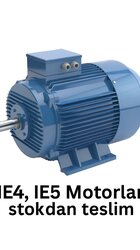
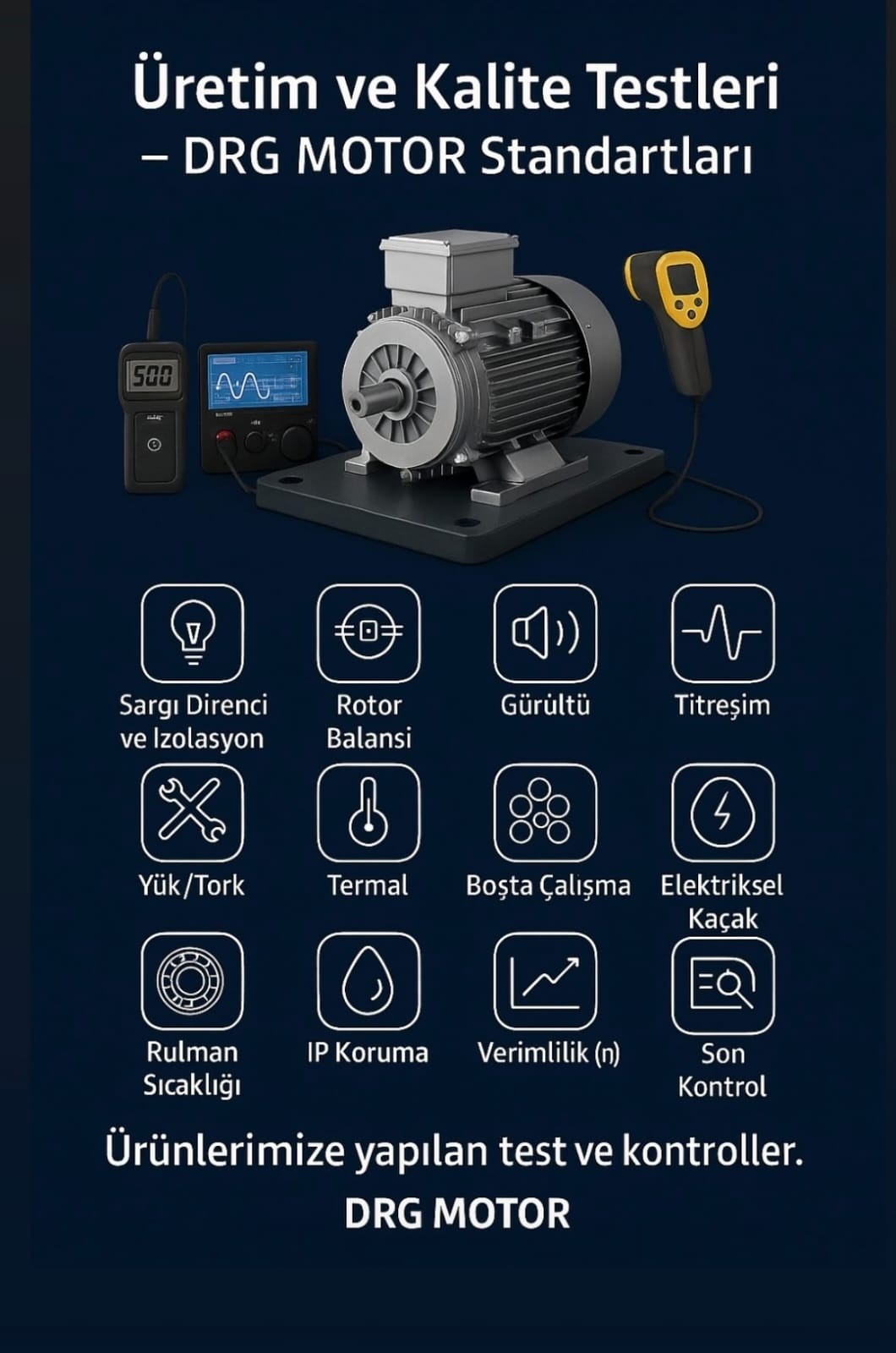

The IE3, IE4 and IE5 classes represent the three rising steps of efficiency in the IEC 60034-30-1 standard. This code on a motor's nameplate shows how few losses it runs with at a given power, and choosing the right class depends on the plant's running hours and energy cost.
The Difference Between the Three Classes
IE3 Premium is the most common baseline in industry. IE4 Super Premium lowers losses one step further than IE3, offering higher efficiency. IE5 Ultra Premium is the highest step defined by the standard and targets the lowest possible loss. As the class rises, efficiency increases and the motor runs cooler.
Which Class for Which Application?
For motors that run few hours a year or serve as standby, IE3 is often enough. On pumps and fans turning in shifts in continuous S1 duty, IE4 is a sensible middle ground. In critical, non-stop processes with very expensive energy, the lowest loss offered by IE5 comes to the fore.
A Shared Technical Foundation
All three classes can be supplied on a 400 V / 50 Hz supply with 2, 4 and 6-pole options (3000, 1500, 1000 rpm). Class F insulation, IP55 protection and S1 continuous duty are the common foundation of these motors; the difference between the classes lies in the efficiency of the internal design, independent of frame and mounting type.
IE3, IE4 and IE5 Compared
The right class is not the highest efficiency but the efficiency best suited to the duty profile. As an Izmir-based supplier, DRG Motor stocks IE3, IE4 and IE5 class motors across the 0.55–355 kW range and helps you determine the class that best fits your plant's load profile.