 English
 Le français
 Türkçe

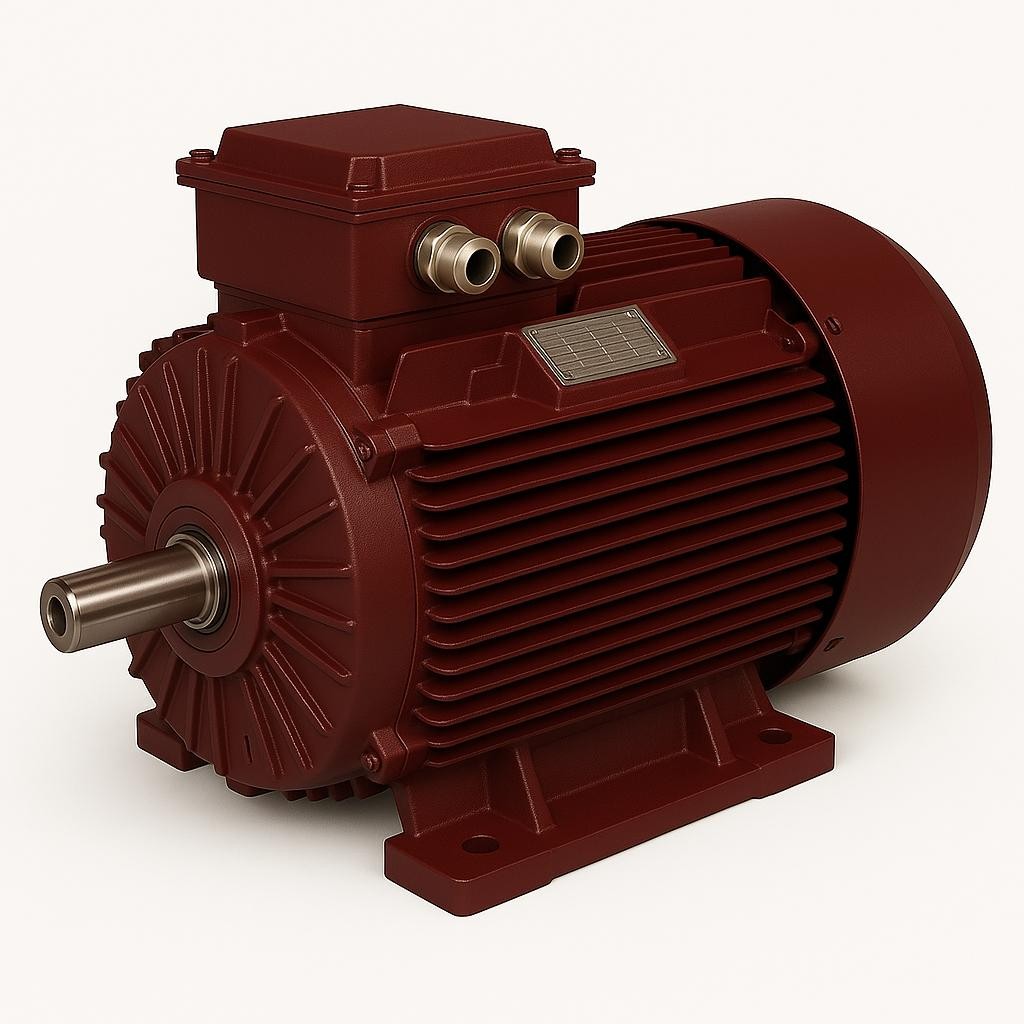

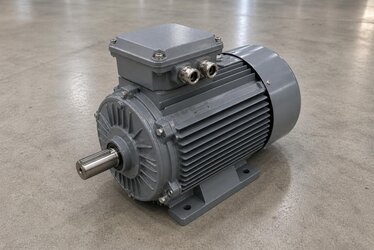
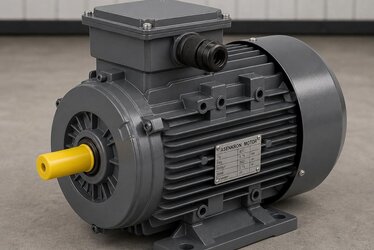
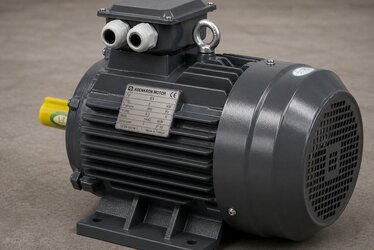
An electric motor is a machine that converts electrical energy into rotary motion through a magnetic field. How efficiently it performs that conversion defines its efficiency class. The IE3 motors DRG Motor builds in İzmir carry out these fundamental operating principles at high efficiency, and understanding how they work makes choosing the right motor far easier.
The Rotating Magnetic Field
In a three-phase motor, three winding groups placed 120 degrees apart on the stator produce a rotating magnetic field when fed with alternating current. This field induces current in the rotor bars, and the induced current creates its own magnetic field. The interaction of the two fields turns the rotor; this is the operating principle of the asynchronous motor.
Speed, Poles and Slip
On a 50 Hz supply, synchronous speed depends on pole count: 2 poles give 3000 rpm, 4 poles 1500 rpm and 6 poles 1000 rpm. The rotor can never quite catch the field, leaving a small speed difference called "slip" — and it is precisely this difference that induces the torque-producing current.
Efficiency and the IE3 Class
During operation, copper losses, iron losses and friction appear as heat. IE3 Premium motors reduce these losses by using higher-grade laminations and more copper. The result is less current drawn from the grid for the same shaft power, and a lower operating cost.
IE3 Motors in İzmir
As an İzmir-based supplier, DRG Motor offers IE3 motors that apply these operating principles at high efficiency, from 0.55 to 355 kW. For IP55-protected, Class F insulated motors, our technical team can help you match the speed and frame to your application.