English
 Le français
 Türkçe

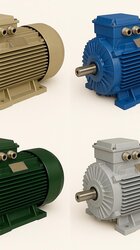

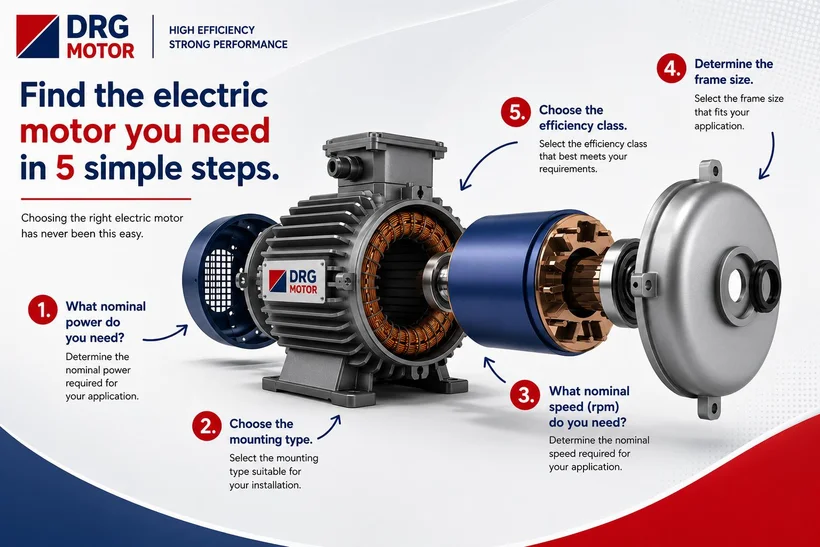
Choosing an electric motor at the correct power and speed is only half of the purchasing process; the other half is how you physically attach that motor to your machine. Many businesses get the kW and speed right yet end up unable to use the motor they received, losing weeks to returns and exchanges, simply because they overlooked the mounting type. The B3 B5 B35 mounting codes are exactly the detail that is most often confused and most expensive to get wrong. B3 means foot-mounted, B5 means flange-mounted, and B35 describes a combination that is both foot- and flange-mounted, and these three types are not interchangeable. At DRG Motor, we have prepared this guide based on hundreds of incorrect orders we have seen from the field; our aim is to clarify the correct mounting code at the quotation stage so you commission your motor right the first time. Whether you are building a new line or replacing a failed motor, when you share the criteria below we supply the exact matching product under fast delivery terms.
The Core Difference Between the Three Mounting Types
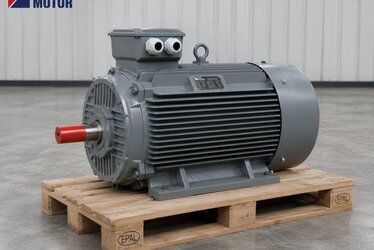
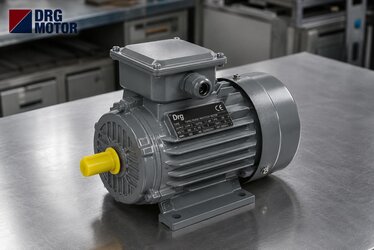
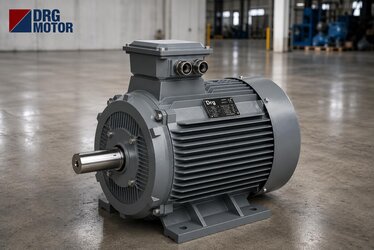
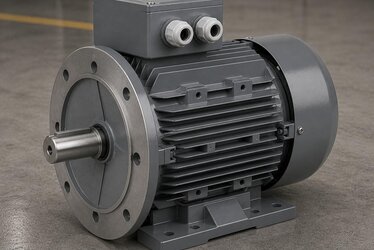
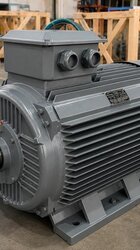
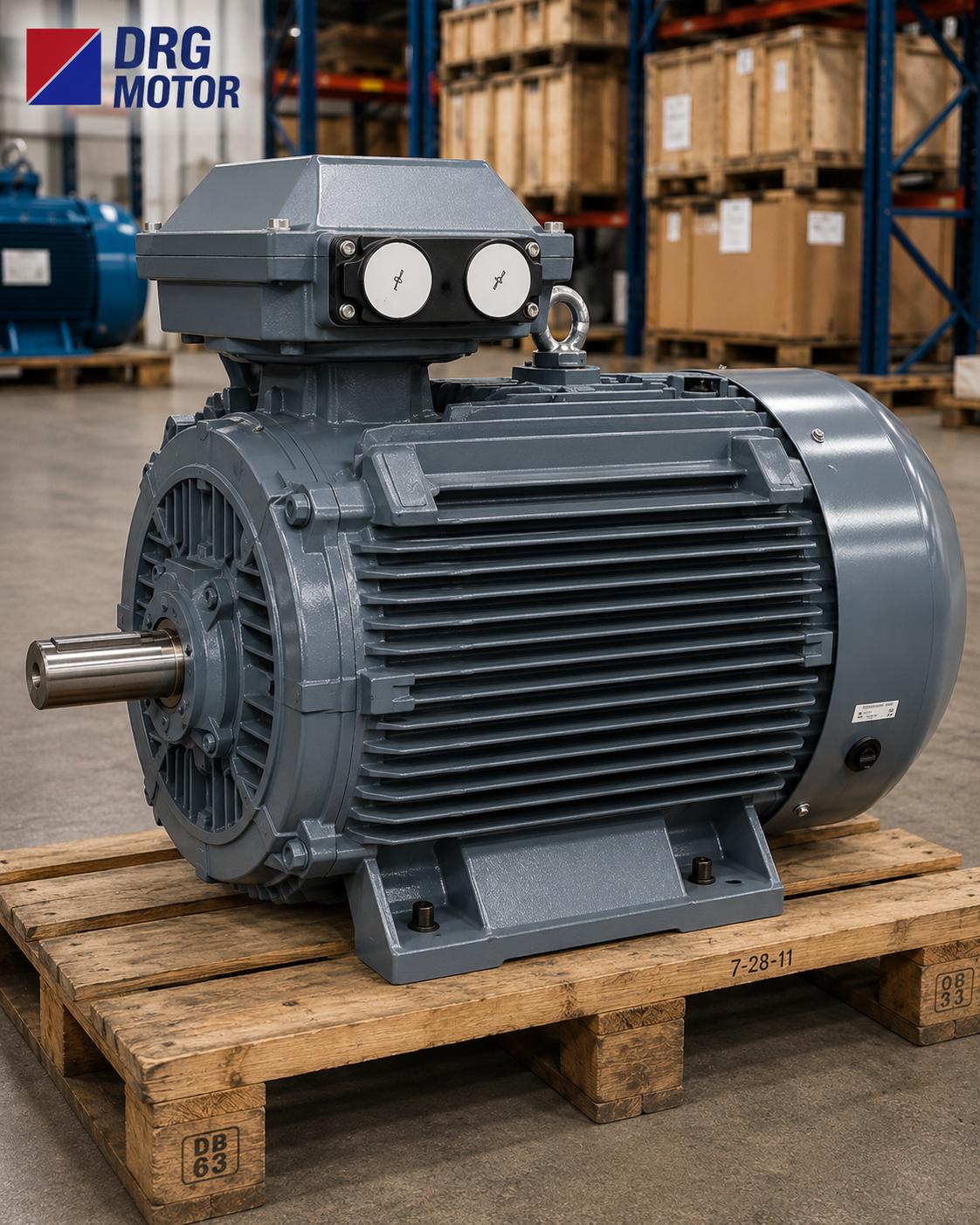
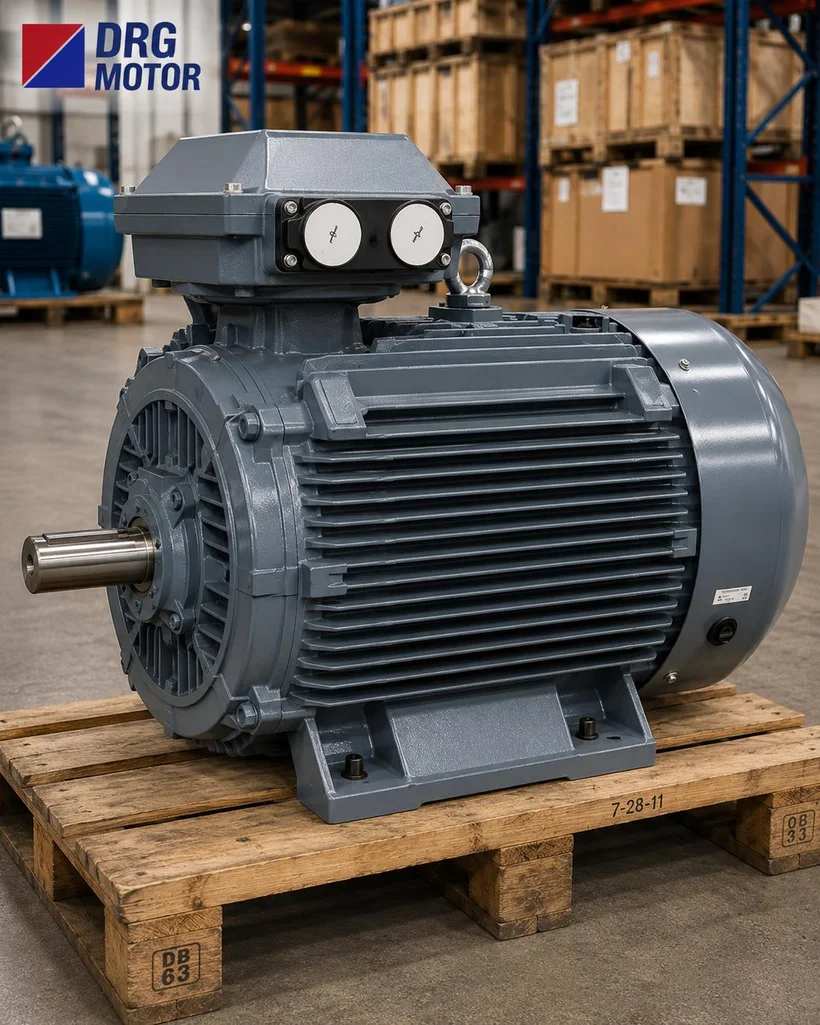
The mounting code defines which surface of the motor is fastened to the machine. In the B3 type, the motor is bolted to a base through the feet beneath its frame; this is the most common and most economical connection, preferred in classic applications where power is transmitted by belt-and-pulley or coupling. The B5 type has no feet; the motor is bolted directly to a gearbox, pump, or machine body through the drilled round flange on its front cover. The B35 combines these two worlds: the motor has both feet and a front flange, so it sits on a base and gains additional support from the flange at the same time. Because this combination provides extra rigidity under heavy loads or in high-vibration applications, it is the most flexible option. Even when the power and speed of all three types are identical, the connection geometry is completely different; ordering based solely on the kW figure on the nameplate therefore often leads to major surprises at the installation stage.
Which Dimensions Are Critical on a B5 Flange
The most frequent mistake with flange-mounted motors is to state only the flange type while skipping its dimensions. B5 flanges are produced in standard diameters, and each frame size has a specific flange size. The wrong flange size means the holes will not align with the bores on the gearbox or pump body, and the motor cannot be connected at all. At the quotation stage we clarify the following flange values:
- Flange outer diameter and bolt-hole circle diameter
- Number of holes and hole diameter
- Spigot (register) diameter, that is the dimension of the projection at the center of the flange
- Shaft diameter, shaft length, and key dimension
- Whether the flange is the FF (through-hole) or FT (tapped) type
When these five values are shared correctly, we can be certain the motor will fit your gearbox or pump exactly. If shaft and speed leave you uncertain, our guide on motor devir sayısı also helps you firm up the choice, because shaft-to-speed compatibility determines the life of the transmission element just as much as flange fit does.
Shaft Height and Foot Holes on a B3 Motor
With the B3 type, the key point is the shaft height; that is, how far the motor shaft sits above the base. This value defines the frame size in millimeters and is critical for keeping the belt-and-pulley alignment correct. If the wrong shaft height is selected, the pulleys will not line up, the belt will keep slipping, and both the belt and the bearings will wear out early. In addition, even though the foot-hole spacing is standardized, the foundation holes on your existing machine still have to match that spacing. When replacing a motor, measuring and sharing the old motor's foot-hole distances and shaft height guarantees that the new motor bolts onto the same foundation. Standard foot frames are generally compatible with one another, but on custom-built bases we always confirm this compatibility in advance. For the great majority of general industrial applications the B3 type is sufficient, which is why in our general-purpose industrial motors group the most requested mounting type is B3.
Why B35 Is the Safest Choice
Because the B35 type includes both feet and a flange, it actually provides a measure of redundancy. You can secure the motor to the base through its feet while at the same time connecting it to a gearbox through the flange; this dual support point noticeably reduces vibration, especially under high torque and shock loads. In applications such as crushing and screening plants, conveyor drives, heavy mixers, and large gearbox inputs, B35 is almost the standard. Another advantage of B35 is its flexibility: because it lets you use the same motor sometimes from the flange only and sometimes from the feet only, it simplifies stock management. Businesses can stock a single B35 motor type to cover both B3 and B5 needs. For facilities that have to keep spare motors on hand, this practical advantage turns into a significant saving of cost and time. Even so, we remind you that the flange size of a B35 must also be selected correctly, and that even when it will be used foot-mounted only, the flange must not interfere with the machine.
Shaft Direction and Operating Position
Another detail just as important as the mounting type is the position in which the motor will run. B5 and B35 flange-mounted motors can be installed with the shaft horizontal or mounted vertically with the shaft facing down or up (in vertical variants such as V1 and V3). Vertical mounting is common with flange-mounted motors; for example, a motor seated on top of a pump with the shaft facing down falls into this group. Because bearing loads and lubrication differ in vertical operation, the motor must be in a configuration suited to that position. At the quotation stage we always ask whether the shaft will run horizontally or vertically, and if vertically, whether the shaft faces up or down. When this information is skipped, even a motor of the correct mounting type can fail early in the wrong operating position. As you firm up your speed choices, our 1500 devir motor guide also helps you weigh position and load compatibility together.
The Information to Prepare Before Ordering
To get the mounting type right the first time, having a clear data set in hand before ordering makes the job far easier. The information we recommend you share with us is as follows:
- Power (kW) and speed (rpm) or number of poles
- Mounting type: B3, B5, or B35
- Frame size / shaft height information
- If flanged, the flange size and FF/FT type
- Shaft diameter, shaft length, and key dimension
- Operating position (horizontal / vertical, shaft direction)
- If possible, a photo of the old motor's nameplate
Filling in this list takes a few minutes, but it completely eliminates the weeks of returns and line stoppage that a wrong motor order brings. Even a nameplate photo often lets us read many values, including the mounting type; so when you are unsure, we recommend sending a photo.
The Factors Behind the Cost and Our Quotation Approach
The price of a motor at the same power and speed varies with the mounting type and the additional features selected. Before giving a firm figure, we prefer to understand your application, because the items that set the price are interconnected:
- Mounting type (B35 is usually positioned differently from B3 because of the extra flange work)
- Power, speed, and efficiency class
- Special flange or special shaft dimension request
- Protection class and ambient condition requirements
- Lead time and order quantity
Once you share this information, we present several options with mounting compatibility guaranteed, in a transparent way; we clearly state which feature affects the price and why, and together we strike the balance best suited to your budget. Our aim is not merely to sell a motor, but to deliver the right product that fits your machine on the first attempt and runs trouble-free for years.
The Right Mounting Code, Smooth Commissioning
The mounting type is the feature of a motor that is most easily overlooked yet most expensive to get wrong. Grasping the difference between B3, B5, and B35 correctly and clarifying the flange, shaft, and shaft-height dimensions before ordering is the most direct route to commissioning your motor smoothly the first time. At DRG Motor we do not leave you alone in this process; based on your nameplate details and machine dimensions we identify the exact compatible product and deliver it to your business under fast supply terms. Even if you are unsure of the mounting type, share a photo and the dimensions of your existing motor; let our specialist team determine the correct code for you. Get in touch with us today, and let us supply the motor that fits your machine precisely in the shortest possible time.