 English
 Le français
 Türkçe

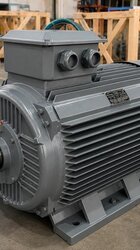
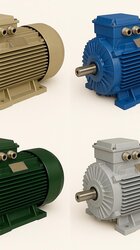
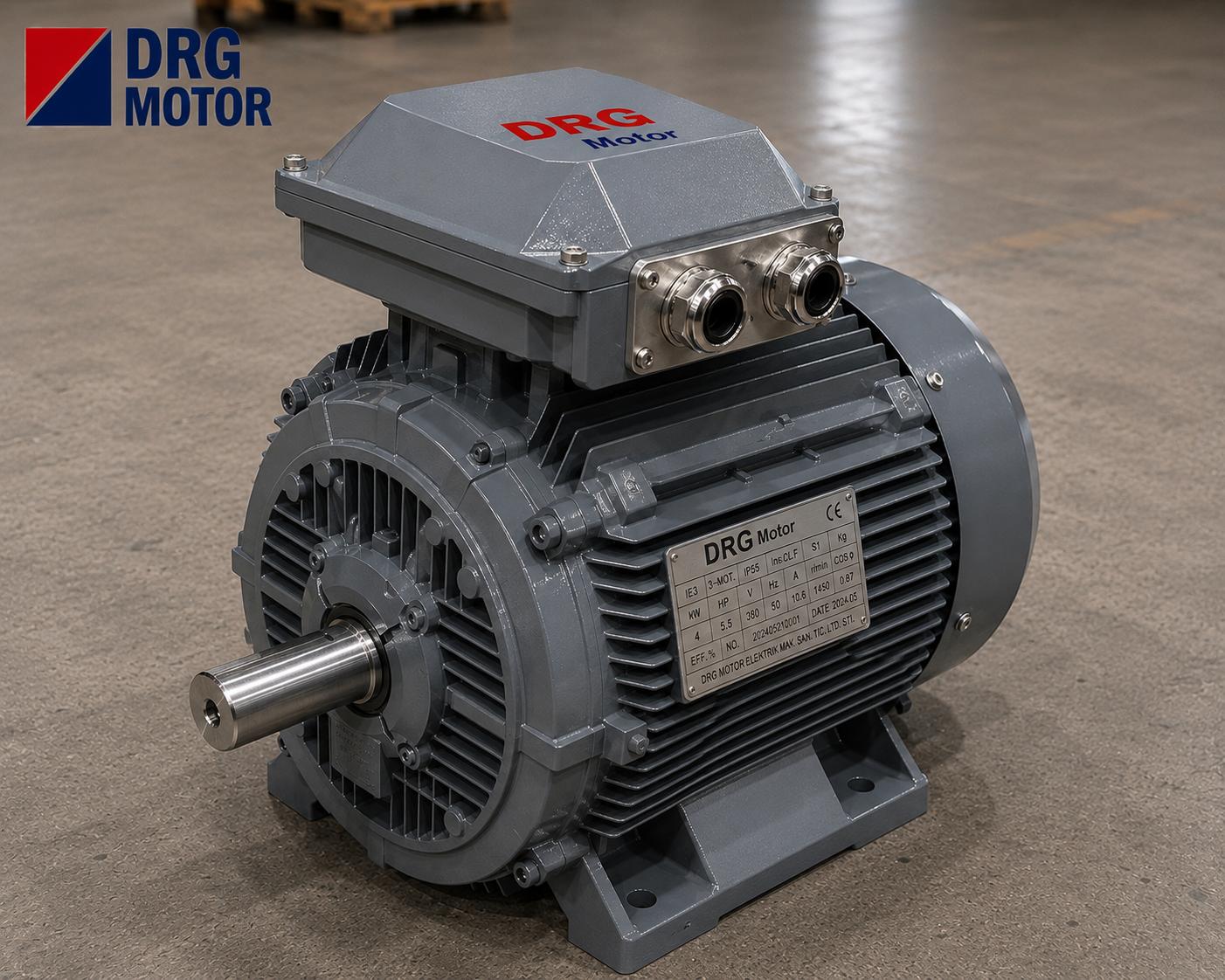

Whenever you set up a pump, fan, conveyor or geared drive on a production line, the first parameter to lock down is rotational speed. On mains-fed asynchronous motors the most widely specified option is the 1500 RPM 4-pole class, because its four-pole construction settles at roughly 1500 RPM synchronous speed on a 50 Hz grid and around 1440-1470 RPM under load. This speed window matches the torque-speed balance required by the vast majority of industrial applications, which also makes it the most favorable category for stock availability and short delivery times. On the supply side, this is by far the group we quote most often at DRG Motor, and a large share of the requests we receive from the field come down to configuring this class correctly.
Choosing the right speed class also frames every decision that follows on the project. A motor ordered at the wrong speed is either compensated for with extra mechanical converters such as belts, pulleys and gearboxes, or forced into shape with a frequency inverter. Both routes raise the initial investment and the maintenance burden. Knowing from the outset which applications the 1500 RPM class fits directly and which ones require additional equipment is therefore the first step toward protecting your sourcing budget.
Why the 4-Pole Design Is Ordered So Often
Two-pole motors at about 3000 RPM suit compressors and certain high-speed centrifugal duties, while six- and eight-pole motors lead in low-speed, high-torque agitators and heavy conveyor lines. Sitting in between, the 1500 RPM class offers the balance of both worlds: reasonable torque, acceptable noise levels, sound bearing life and broad spare-part availability. As speed rises, bearing and balancing tolerances tighten; as speed drops, the frame grows and the price climbs for the same power. Because the 4-pole class stays clear of both extremes, it forms the backbone of industry. When you are deciding which speed to drive an application at and want to clarify the relationship between pole count and speed, our guide on motor devir sayısı walks through the selection logic step by step.
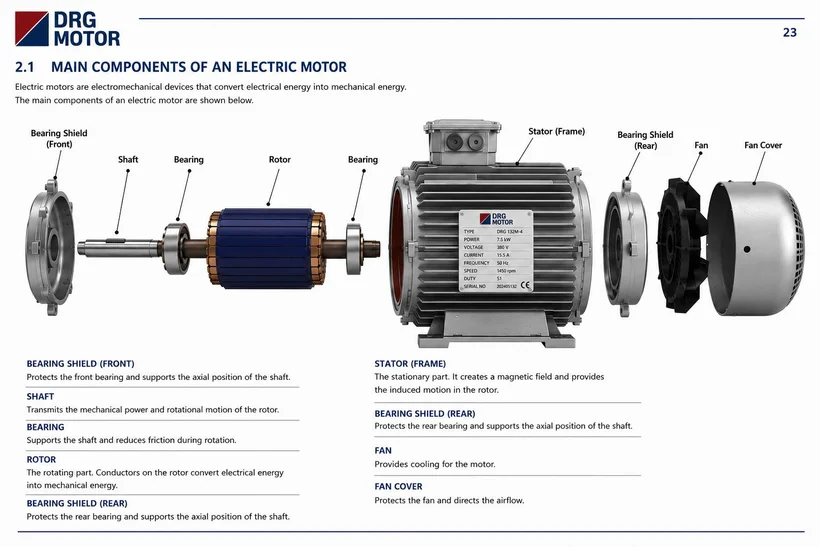
Ideal Applications for a 1500 RPM Motor
Based on our field experience, the areas where this speed class delivers the most value cluster around a clear profile. In the applications below, a 4-pole choice is usually the most sensible starting point for both energy efficiency and mechanical lifespan:
- Centrifugal pumps: For moving water, chemicals and process fluids, the 1440-1470 RPM operating speed lines up directly with the pump curve on most standard models and needs no extra converter.
- Axial and radial fans: In ventilation and extraction lines, this speed pairs directly with blade design, reducing the need for belt-and-pulley arrangements and cutting both maintenance points and energy loss.
- Belt conveyors: Combined with a gearbox, it provides the most flexible input speed to reach the desired conveying rate, and choosing the gear ratio becomes simpler from this speed.
- Compressors and hydraulic units: It delivers balanced torque in medium-pressure systems with predictable heating behavior under continuous load.
- Machine tools and general drives: It serves as the standard drive unit in machining, packaging and wrapping equipment.
- Mixers and agitators: For medium-viscosity products, it provides a stable mixing speed when paired with a gearbox.
This list is not fixed; the same application can call for a different speed class at different capacities. That is why it is important to evaluate not just the name of the application but its operating point and load character. Sharing this information at the quotation stage prevents an oversized or undersized motor from being recommended in the first place.
Considering Speed and Power Together
Selecting a motor on speed alone is an incomplete approach, because the same 1500 RPM class spans a wide power range from 0.37 kW up to 200 kW and beyond. If you misjudge the relationship between the real load your application draws and the motor rated power, you end up with a drive that is either continuously overloaded or running far below its capacity. A continuously overloaded motor raises winding temperature, shortens insulation life and leads to unexpected stoppages. An oversized motor, on the other hand, drops its efficiency and power factor at low load, which means wasted capital. Both translate into higher energy and maintenance costs. To pin down the correct power band, we recommend reviewing the calculation approach in our article on motor gücü seçimi alongside your own load profile.
Torque-Speed Curve and Starting Behavior
When ordering a 1500 RPM motor, starting torque and inrush current are often overlooked, yet they are critical in applications that start under load, such as conveyors and agitators. Standard IE3-class 4-pole motors offer a healthy torque reserve on loaded starts; however, in high-inertia systems you should plan for a soft starter or a frequency inverter. Direct-on-line starting causes no trouble at small ratings, but at larger ratings the inrush currents that stress the grid also affect fuse and contactor selection. If you share the application's moment of inertia and hourly starting frequency with us during sourcing, we can offer a package with the right starting class and a suitable drive solution rather than simply recommending an oversized motor.
Efficiency Class and Operating Cost
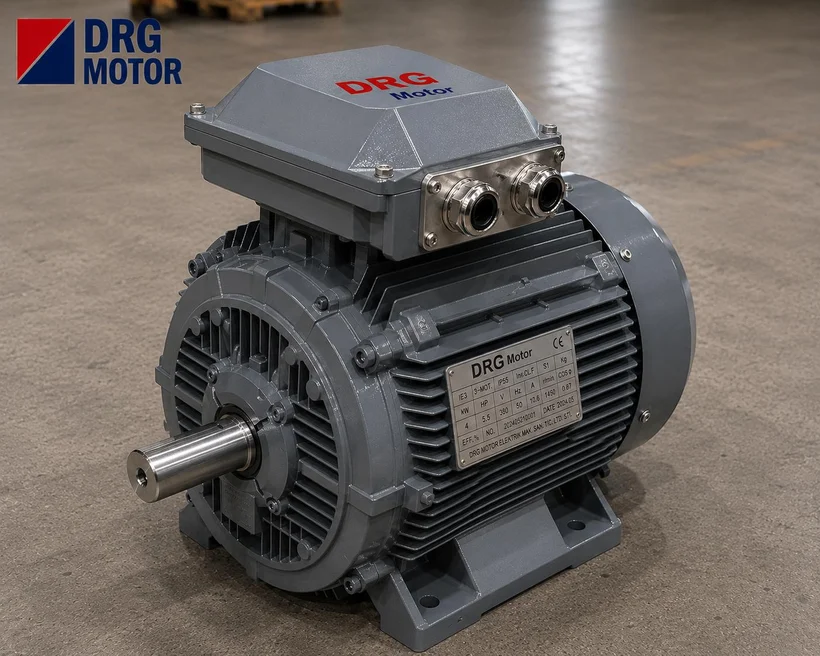
The purchase price of an electric motor typically accounts for less than five percent of its total cost of ownership; the rest is the energy it consumes over the years. That is why choosing IE3 and, where possible, IE4 efficiency in the 1500 RPM class pays for itself within a few years on continuously running lines, even if it raises the initial outlay slightly. On pump and fan systems running 16-24 hours a day, the efficiency-class difference alone becomes a visible item on the annual electricity bill. Because a high-efficiency motor does the same job while running cooler, its cooling demand and failure risk also fall, which is an indirect saving. If you share your operating hours and estimated load factor when requesting a quote, we can evaluate which efficiency class is the economical choice for you with a simple payback calculation.
Mounting Type, Protection Class and Environment
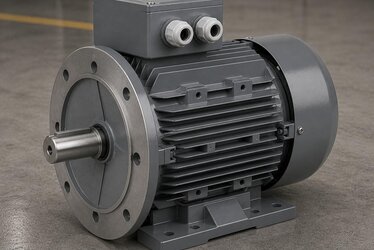
A motor of the same power and speed comes in foot-mounted (B3), flange-mounted (B5/B14) or combined mounting options, and the wrong frame type creates a mismatch on site. Pump sets usually call for flange mounting, while conveyors and general drives prefer foot mounting; clarifying this detail before ordering shortens the installation process. Likewise, dusty, humid or wash-down environments call for an IP55 or higher protection class, and food and chemical plants may require even higher ratings. Ambient temperature and altitude are also factors that affect motor power and are frequently overlooked. For standard general-purpose duties you can browse our broad stock on the general-purpose industrial motors page, and for special conditions you can request a quote directly. Clarifying the mounting type and ambient conditions before ordering prevents lost time and cost in the field from the very start.
Gaining Speed Flexibility With a Frequency Inverter
A fixed 1500 RPM speed is enough for most applications, but when flow or line speed needs to vary, a frequency inverter comes into play. With an inverter, the same 4-pole motor can run across a wide speed range by changing the supply frequency, eliminating energy-wasting methods such as throttling a valve on a pump or using a damper on a fan. On variable-flow pump and fan systems, an inverter-driven solution delivers significant energy savings in a short time. However, motors that will be driven by an inverter must be selected with a suitable insulation class and, where needed, separate cooling. A motor running for long periods at low speed may not get enough cooling from its own fan; in that case a force-ventilated frame is preferred. If your line needs variable speed, simply share your operating range at the quotation stage so we can match the motor and inverter to each other.
Lead Time, Stock and Spare-Part Planning
The lead time of a drive item is not limited to the motor itself; mounting accessories, couplings, pulleys and, if required, the drive must be planned on the same schedule. One of the biggest advantages of 1500 RPM 4-pole motors is that common power and mounting combinations ship quickly from stock, which keeps the cost of holding a spare motor low. Stocking a spare motor in the same class to prevent downtime on a critical line is an extremely economical measure compared with the risk of lost production. When building your sourcing plan, we recommend evaluating both the initial order and any likely spare requirement together; this approach keeps costs predictable and lets you bring your line back online within hours in the event of a failure.
Lower Your Risk With the Right Supply
Because the 1500 RPM 4-pole motor is the most standard and fastest-to-source category in industry, working with the right supplier dramatically shortens your delivery time. The breadth of power and mounting combinations kept in stock lets you confirm the drive item of your project in hours rather than days. At DRG Motor we let you compare different brands and efficiency classes from a single point and receive a clear quote that already includes the mounting and protection class suited to your application. Send us your application's power, operating hours, mounting type and any drive requirement, and request our price and lead-time offer today; our engineering team will quickly confirm the configuration that best fits your needs so your line runs on the right drive.