 English
 Le français
 Türkçe

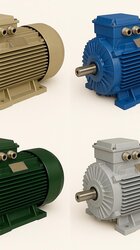
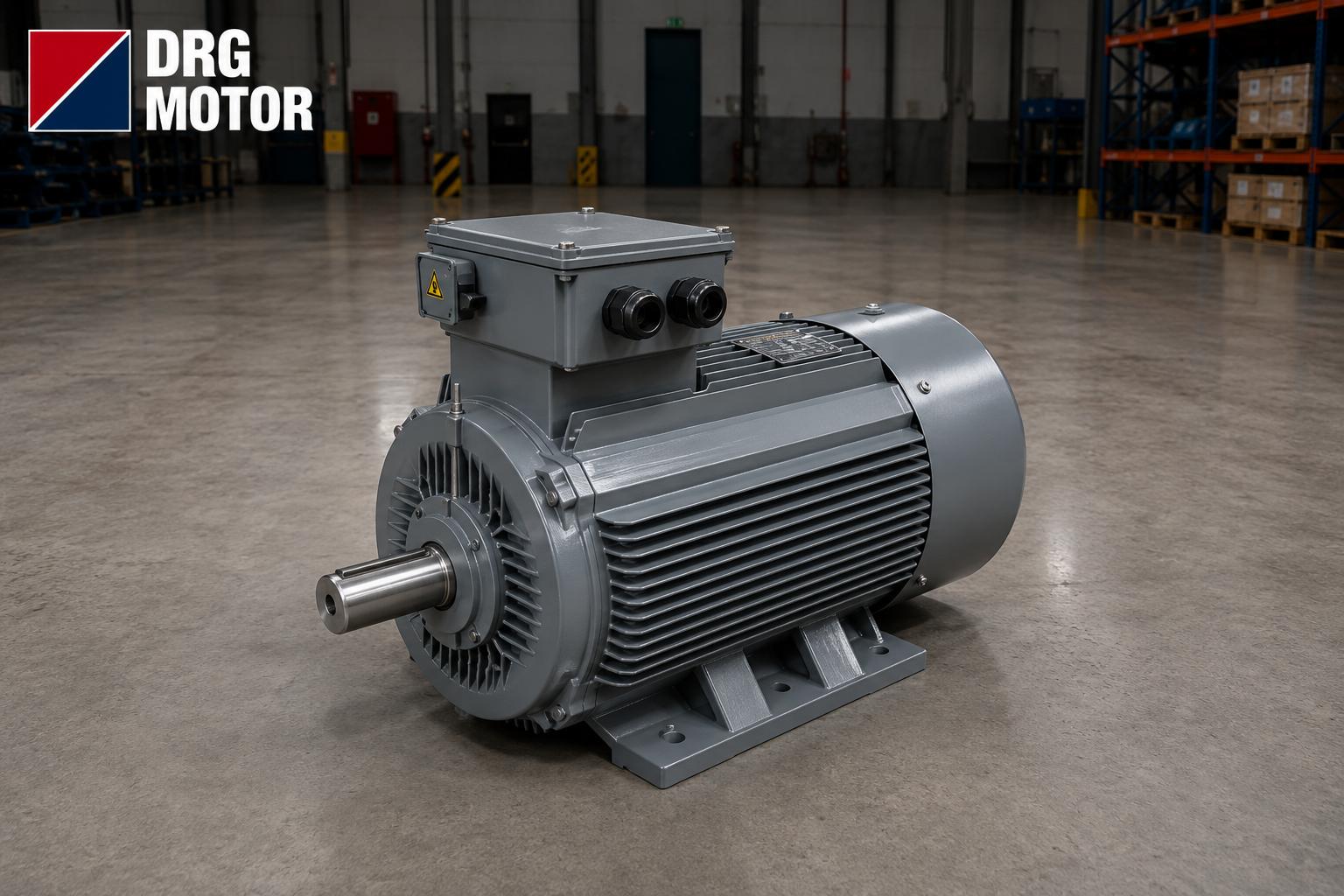

When buying an electric motor, the frame material often feels like a footnote at the bottom of the spec sheet. In reality, the choice between an aluminum and a cast iron frame directly shapes the motor's lifetime cost, how easily you can move and mount it, how it sheds heat, and how long it survives in the environment where it runs. As a B2B motor supplier serving industrial plants across Turkey, one of the most common hesitations we hear at DRG Motor is exactly this: given two motors of the same power and speed, which frame fits the budget and the application better? This guide tackles the aluminum versus cast iron comparison without drowning in theory, focusing on the concrete criteria that actually sharpen a purchasing decision.
Why frame material sits at the center of the buying decision
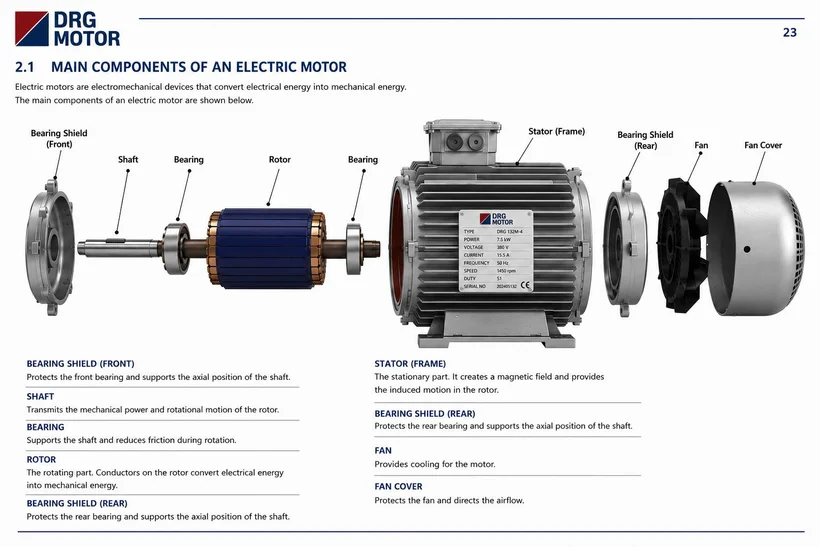
The frame is more than the motor's outer shell. It is the load-bearing structure that holds the stator, dissipates heat, anchors the motor to the machine, and manages vibration. An aluminum frame makes handling and transport easier thanks to its light weight, while a cast iron frame stands out in heavy industrial conditions through its mass and damping capacity. Both materials are proven, but the right choice depends on the load, the environment, and the expected service life. A wrong choice comes back to you either as an unnecessarily expensive motor or as premature failure.
The real advantages of an aluminum frame
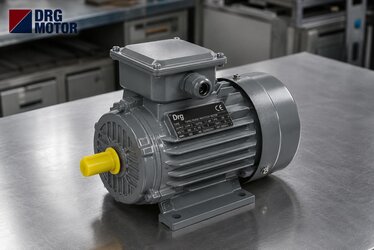
Aluminum-framed motors are noticeably lighter than their cast iron equivalents. On paper the difference may look small, but in the field it translates into real convenience: a motor one person can carry, install without a crane, and add to an existing pump or conveyor group without piling on extra weight. For mobile equipment, machines that need frequent removal, and plants where moving loads between floors is awkward, aluminum is the natural pick.
- Low weight cuts the labor needed for transport and installation.
- Natural corrosion resistance helps in humid but non-aggressive environments.
- Fast heat conduction delivers efficient cooling at small and medium power ratings.
- It often offers a more affordable starting point in smaller frame sizes.
That is why aluminum frames are usually a balanced choice for pumps, fans, compressors, small conveyors, and general machine building. Speed selection is part of that balance too; for the trade-offs that come up so often on pump and fan duty, our comparison of 2 kutup 4 kutup motor helps you settle the right speed independently of the frame.
The durability edge of a cast iron frame
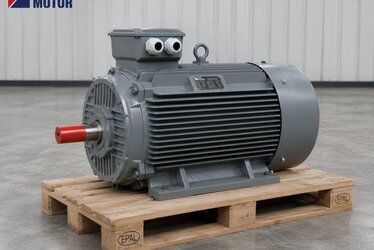
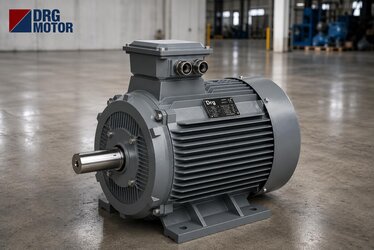
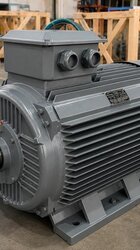
A cast iron frame presents its weight as a feature rather than a drawback. Its high mass damps vibration, resists impact, and protects the motor on lines where mechanical stress is intense. In applications that run continuously under heavy load, face sudden torque swings, or sit in dusty, knock-prone environments, cast iron springs fewer surprises over the long run. The rigidity of the frame also keeps the bearing housings aligned, indirectly supporting bearing life.
This durability pays for itself especially where process continuity is critical. For example, on grain processing lines, a un değirmeni motoru running under constant load and vibration benefits from a cast iron frame, which reduces unplanned stops and lowers total cost of ownership.
Cooling, efficiency and temperature behavior
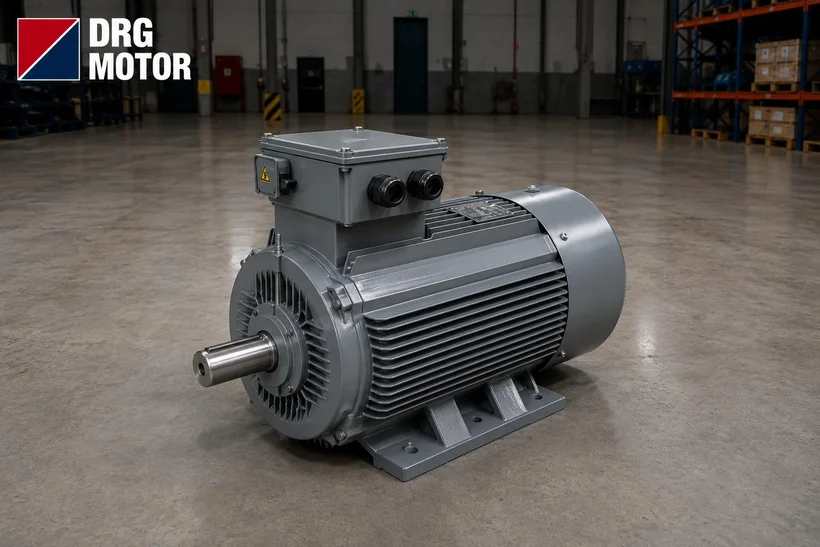
The two materials handle cooling with opposite logic. Aluminum's thin, conductive walls carry heat from the windings out through the cooling fins quickly, so the motor lets go of load-driven warmth in a short time. Cast iron instead behaves like a thick thermal buffer that absorbs heat slowly and releases it slowly. In practice the difference is this: aluminum settles its temperature fast on machines that start and stop often or draw short bursts of load, while cast iron smooths out swings under high ambient temperatures, continuous full load, and limited ventilation, holding a more stable running temperature. So before the nameplate power, choosing the frame means pinning down how the motor actually turns through the day, for how many hours, at what load, and how often it starts and stops.
How the operating environment shifts the choice
The working environment is often more decisive than the power rating. Where there are chemical vapors, sea air, or heavy humidity, the corrosion behavior of the material matters most; in dusty, impact-prone areas exposed to mechanical shock, the ruggedness of the frame comes to the front.
- For hygienic, frequently washed-down areas, aluminum's cleanability and corrosion resistance are practical.
- In harsh settings such as mining, quarries, and heavy metal processing, cast iron's durability is preferred.
- For motors installed outdoors, protection class and frame material should be evaluated together.
- On high-vibration lines, the damping capacity of cast iron reduces noise and fatigue.
Building the cost comparison correctly
Deciding on the frame purely from the sticker price is the most common mistake. The net price emerges from a combination of many factors: power, speed, protection class, efficiency class, frame size, quantity, and delivery time. Aluminum usually offers a more affordable starting point at small and medium power, while cast iron can shift the balance over the long term in heavy, continuous applications thanks to lower failure and maintenance costs. That is why the comparison should be made not on purchase price alone, but on expected service life and the cost of downtime.
At DRG Motor we work project by project; we assess your application's load, environment, and duty profile together with you and prepare a clear quote for both frame options. Alongside our fast-delivery stock alternatives, we help you pick the model that fits your application exactly from our broad range of general-purpose industrial motors.
Maintenance, spare parts and service life
Frame material is paid for twice: once at purchase, then in the maintenance that follows. Thanks to their robust construction, cast iron frames withstand repeated removal and refitting, bearing replacements, and lubrication routines for years; threaded holes and mating surfaces keep their integrity even under demanding use. Aluminum frames are light and practical, but it is worth remembering that their threads can be more sensitive to frequent, rough intervention. In plants running many motors, sticking to standard frame sizes makes stocking spare parts and spare motors far easier; having a backup that can be put into service within hours brings the biggest cost item of all, downtime, under control, far more than the frame choice itself does. Supply continuity is therefore an unseen but decisive part of the frame decision.
Stock availability and delivery time
There is a practical truth here: the best frame is not the one that fails to reach you on time. Across certain power and speed ranges, one material may be quickly available from stock while the other carries a lead time. During an urgent line stoppage or a tight commissioning schedule, fast delivery often outweighs theoretical advantages. So when you decide, factor in not just the technical comparison but also which option will arrive on site within a timeframe that fits your program. We plan our inventory so that, across frequently requested powers and speeds, both frames can be offered from stock, keeping waiting to a minimum.
Which frame suits which application
The decision usually comes down to a few questions: Does the motor need frequent removal? Is ease of handling and installation critical? Is the environment aggressive? Is the load continuous and heavy? If light weight, easy mounting, and a favorable cost at medium power are the priorities, aluminum makes sense. If durability, vibration damping, heavy continuous load, and long service life come first, cast iron is the safer investment. In most plants both types run side by side; the right approach is to think about each line separately.
Let us pin down the right choice together
The choice between aluminum and cast iron is not a contest of superiority but a question of fit. There are places where light weight and easy installation win, and places where rigidity and damping protect. What matters is setting these criteria clearly before you buy, not after. Share your application's power, speed, environment, and running hours with us, and we will give you a side-by-side quote for both frames so we can pick the most cost-effective and longest-lasting solution together. The right frame means a line that runs trouble-free for years; the wrong one is a decision that looks like a saving and turns out expensive.