English
 Le français
 Türkçe


When you choose a motor for a machine, the first technical decision often comes before power itself: how fast should the motor turn? The answer is tied directly to the number of poles. The most common choice on the market, the distinction between a two-pole and a four-pole motor, makes two units of identical power behave in completely different ways. On a 50 Hz supply, a two-pole motor runs at a synchronous speed of 3000 rpm and a four-pole motor at 1500 rpm; under load these settle to roughly 2850-2950 and 1420-1470 rpm respectively. This seemingly simple difference directly shapes your machine's efficiency, lifespan and energy cost. A wrong pole-count choice is usually patched later with an expensive belt-and-pulley arrangement or a gearbox, when the right decision made at the start would have lowered both the initial investment and the running cost.
At DRG Motor, across countless applications from many sectors, we see the same pattern: a large share of customers treat speed as a secondary detail when ordering and focus only on the kW figure. Yet the two-pole and four-pole versions of the same 4 kW power are different worlds, from base pricing to use case. In this article we lay out, in concrete terms, which application calls for which speed class, what to watch for when selecting, and what the right choice will save your operation over the long run.
The Inverse Relationship Between Speed and Torque
As pole count rises, synchronous speed falls, but at the same power the torque increases. This is a basic fact of physics you cannot bend: with power held constant, if speed halves, torque roughly doubles. A two-pole motor delivers high speed and low torque, while a four-pole motor provides noticeably higher torque at lower speed. In practice this means the two-pole motor stands out in high-speed applications such as pumps and fans, whereas the four-pole motor leads in heavy-load applications like conveyors, mixers and gearbox-driven lines. Picking the right pole count helps you avoid adding an unnecessary speed-reduction stage to the machine.
Where the Two-Pole Motor Excels
The high speed around 3000 rpm makes the two-pole motor ideal for applications that need to move fluid quickly. Centrifugal pumps, high-pressure water systems, compressors and certain extractor or fan types stand out in this class on efficiency grounds. High speed allows you to reach the same flow rate with a smaller frame, which means saved space and usually lower motor weight. But high speed has a price: bearing load, vibration sensitivity and noise are higher than in the four-pole equivalent. So when choosing a two-pole motor, quality bearings, proper balancing and tight vibration tolerances deserve careful attention.
- Centrifugal and high-pressure water pumps
- Air compressors and high-speed blowers
- High-flow extraction and ventilation fans
- Certain machining and grinding spindle drives
Why the Four-Pole Motor Is the Backbone of Industry
The most requested class in the field is, without doubt, the 1500 rpm four-pole motor. The reason is that this speed range suits a very wide range of machines and, with its balanced torque profile, reduces the need for an extra speed reducer in most applications. From conveyor belts to mixers, from crushers to packaging machines, many lines run smoothly with a 1500 rpm motor either directly or through a simple gearbox. Lower speed brings less vibration, longer bearing life and usually quieter operation. For operators that means fewer breakdowns and a more predictable maintenance plan. This versatility is exactly why most of the general-purpose industrial motors family is stocked with a four-pole option.
Energy Cost and Efficiency Compared
A point often overlooked in speed-class selection is energy consumption. When an application must run at a specific speed, choosing a motor with the wrong pole count and then dropping the speed with a belt-and-pulley ratio creates both mechanical loss and ongoing energy waste. Choosing the right speed class from the start removes that intermediate stage, letting you capture the full saving offered by the efficiency class (IE3/IE4). For a continuously running motor, the annual electricity bill far exceeds the purchase price; so even a few points of efficiency difference can pay back the initial investment within a few years. When selecting, look not just at the nameplate but at the efficiency at the real operating point.
Speed Flexibility With a Frequency Inverter
Some operations get stuck on the question "which speed?", yet the picture changes when a variable speed drive (VFD/inverter) is used. An inverter can run a four-pole motor below or above its nominal 1500 rpm, and likewise control the speed of a two-pole motor. Even so, an inverter does not fully free the motor class: torque demand, cooling and mechanical design limits still apply. The practical advice is to pick the pole count closest to the application's center of gravity in speed, then fine-tune with the inverter. This approach keeps the motor in its efficient band while preserving process flexibility.
The Right Choice Through Sector Examples
Which speed class is correct depends largely on the nature of the process. In grain-processing plants, for example, milling and sieving lines usually prefer four-pole motors for their balanced torque; our un değirmeni motoru article is a useful reference where we cover this in more detail. In environments with explosion risk, speed and the protection class both become critical; we shared our approach to this in our ilaç sektörü motor content. Every sector has its own load profile, environmental conditions and continuity needs; the right pole count is found at the intersection of these three.
Questions to Ask Us Before Selecting
To choose the right motor on the first try, a few basic questions need answers. What is the real speed the machine demands at the drive? Is the load steady or shock-loaded? How many hours a day will the motor run? Is the environment dusty, damp or explosive? Is there an existing gearbox or belt-and-pulley arrangement? Once these answers are clear, the decision between two-pole and four-pole usually emerges on its own. As the DRG Motor team, we work through this process with you and define the speed and efficiency class best suited to your application.
- Nominal speed and torque character of the driven machine
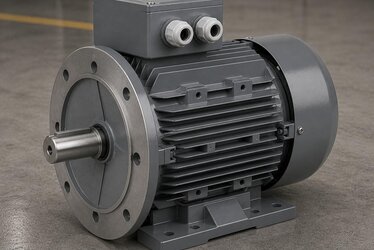
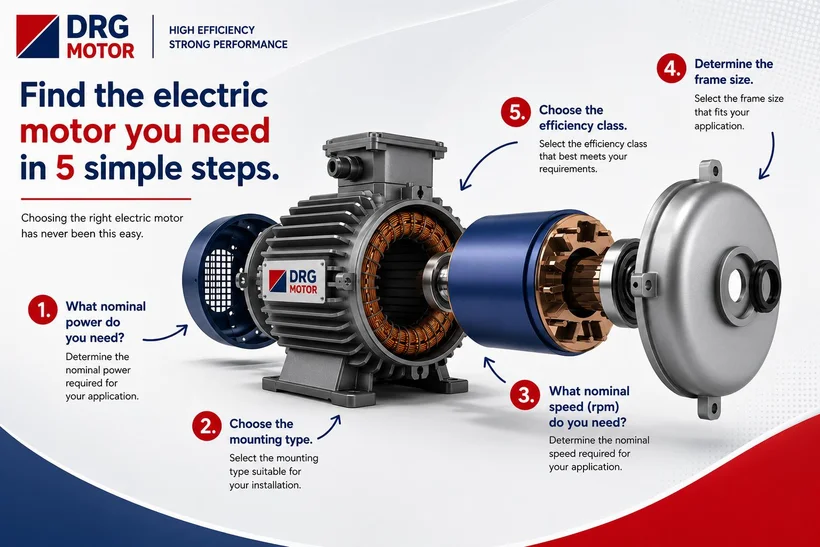
- Daily and annual run time and continuity expectation How the motor will couple to the driven machine also feeds into the pole-count decision: a foot-mounted unit belted to a high-speed pump may suit a two-pole frame, whereas a flange- or foot-flange-mounted motor bolted straight onto a gearbox usually points to the lower-speed four-pole class, and the available frame size at that speed must fit your existing footprint
- Environmental conditions and required protection and efficiency class
Lifespan, Maintenance and Total Cost of Ownership
A motor's real cost does not end at the purchase price; the true burden lies in the energy and maintenance paid over its working life. The high speed of two-pole motors creates more wear on bearings and sealing elements, so maintenance intervals can be shorter and spare-part planning needs to be more careful. Four-pole motors, thanks to their lower speed, run more comfortably in mechanical terms, which for most operations means a longer maintenance-free period and lower breakdown risk. Choosing the right pole count affects not only immediate performance but the five-to-ten-year total cost of ownership. At DRG Motor we present customers, at the quotation stage, not just the motor but also a clear long-term cost picture for that motor's duty profile, so you base your decision on the real operating burden rather than the sticker price alone.
Stock, Power Range and Supply Speed
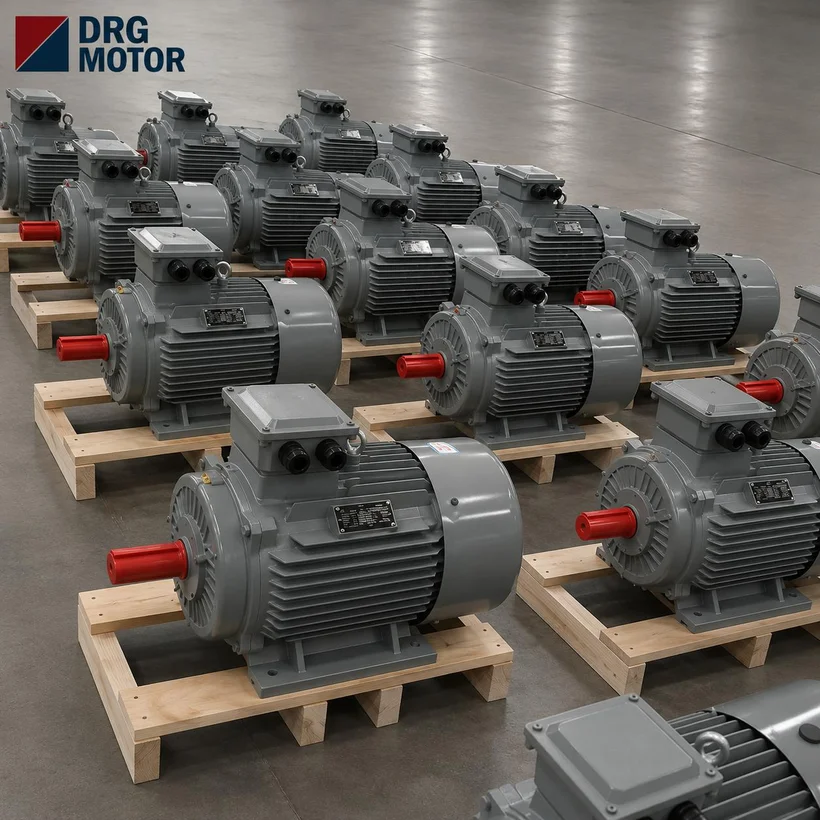
Another factor often missed when deciding in the field is how quickly the chosen speed-and-power combination can be supplied. In an emergency breakdown, waiting for days means lost production. That is why keeping both two-pole and four-pole motors in stock across a wide power range and in common mounting types matters greatly. Stock depth that spans from low powers to upper-mid power classes lets you get the right motor without waiting. When a non-standard requirement arises, our dedicated supply channels deliver a fast solution. Our aim is that, once your speed-class decision is made, the supply process is not an obstacle but a fast and predictable step.
The Right Speed Starts With the Right Supplier
There is no single universal answer to two-pole versus four-pole; the right one is hidden in the speed, torque and duty profile your application requires. What matters is making this decision with solid information rather than guesswork. At DRG Motor, with our broad stock range we supply both two-pole and four-pole motors in different power and mounting options, and we stay with you from selection to delivery. Share your application's power, speed and operating conditions with us, and we will quickly offer the most suitable motor and a clear quotation. Instead of struggling with the energy and maintenance cost of a wrong choice, get in touch today to set out with the right motor from the very start.