 English
 Le français
 Türkçe

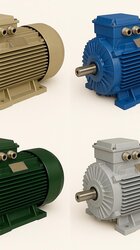
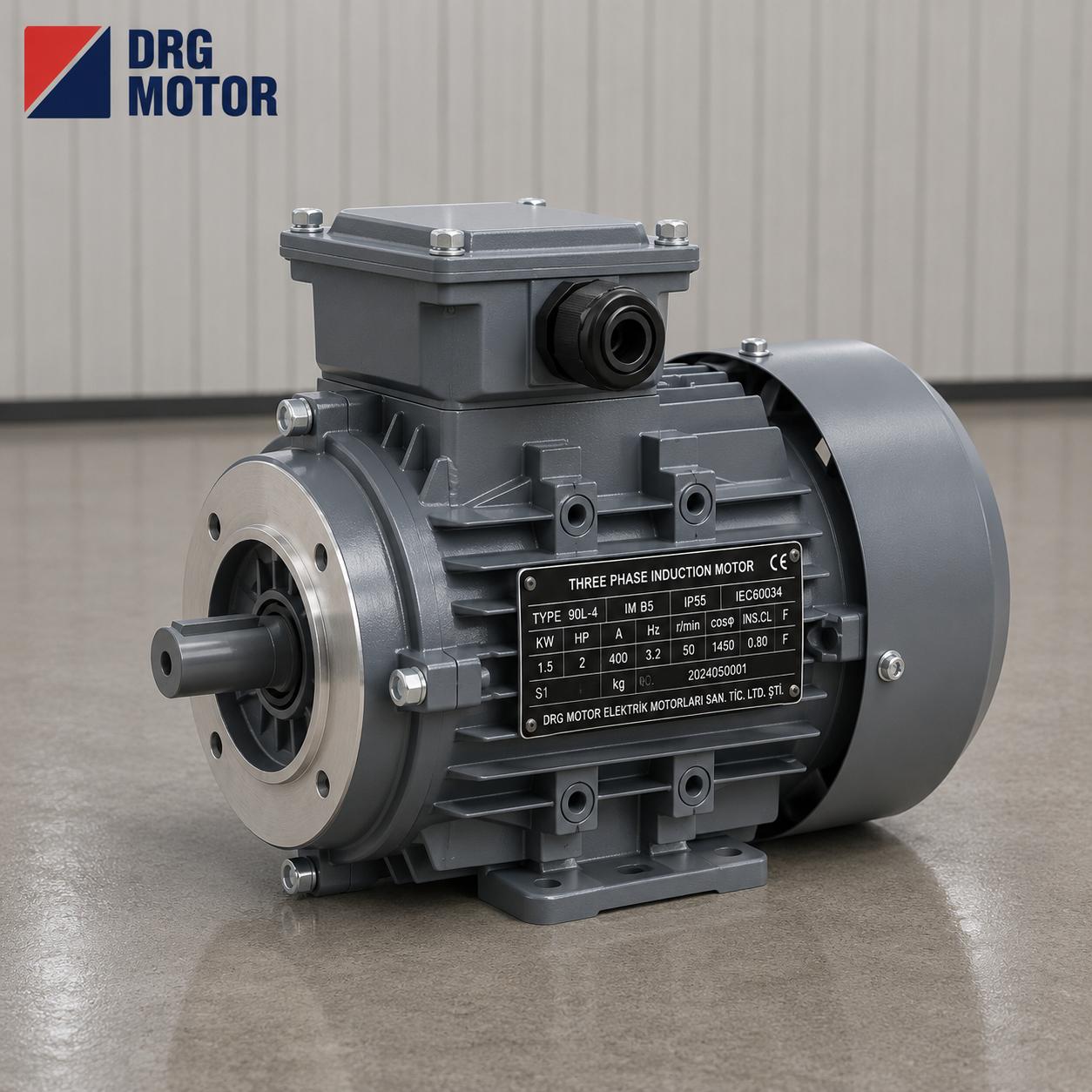

The efficiency of any plant lives in the balance between the power of the electric motor you buy and the work it actually has to do. A motor sized too small is forced to struggle, runs hot and fails earlier than expected, while a motor sized too large needlessly inflates both the upfront investment and the monthly energy bill. This is exactly why correct motor power selection is the most critical step toward a setup that runs trouble-free for years. When making the investment decision, most operations look only at the kW figure printed on the nameplate; yet behind that number sit many interdependent variables such as the load profile, transmission losses, environmental conditions and the operating regime. In this guide we walk through how to calculate the power you need, how much safety margin to add on top, and how to turn the whole sourcing process into a practical request for a quote.
No calculation without a clear load profile
Every calculation starts by describing what the motor will really do. Are you driving a conveyor, a pump, or a crusher that produces shock loads? A fan that spins at constant speed has a completely different power demand from an elevating mechanism that stops and starts dozens of times a day. Writing down whether the load is continuous or variable, whether there are sudden torque demands, and how many hours per day the unit will run puts every subsequent step on solid ground. The most common mistake at this stage is to look at a single moment of operation and overlook the peak torque demand. In most applications, what truly stresses the motor is not the steady-state power but the peak values that appear at start-up, during reversal, or at the moment the load is heaviest. For this reason you should record not only the average power but the worst-case scenario as well.
Find shaft power with the core formula
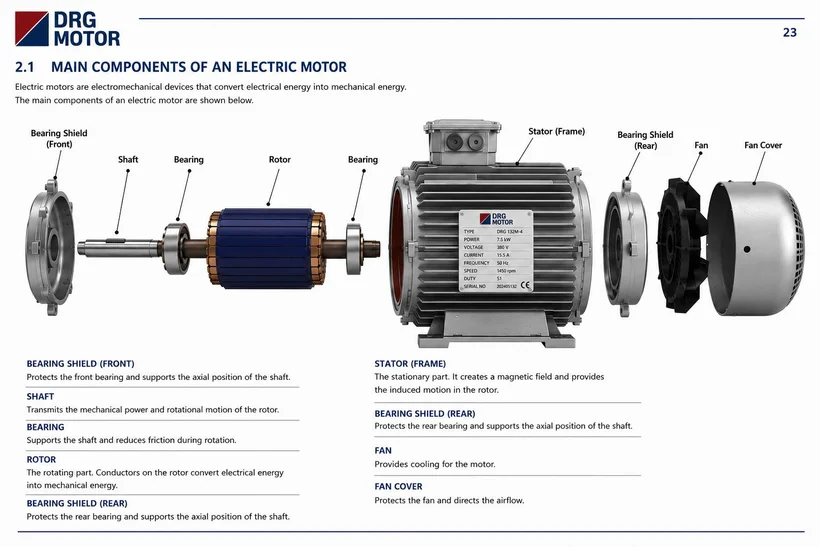
For a rotating application, the mechanical power the motor must deliver to the shaft is derived from torque and speed. The practical rule is this: required power (kW) equals torque (Nm) multiplied by speed (rpm) divided by roughly 9550. For fluid applications such as pumps and fans, flow rate, head and fluid density enter the equation; in these applications power climbs quickly with the product of flow and pressure, so even a small capacity increase can call for a larger motor than expected. This basic calculation gives you the bare requirement, but you should never buy a motor against this bare figure, because the real world is full of losses. While you calculate, remember too that speed is directly tied to the number of poles: if two motors of the same power spin at different speeds, the torque they produce, and therefore their suitability for the application, are entirely different.
Do not forget efficiency and transmission losses
Not all of the power a motor produces reaches the load. Every transmission element such as a gearbox, belt-and-pulley, coupling or bearing loses a portion of energy to friction. In a typical gearbox a loss of a few percent per stage is normal; in multi-stage systems these losses accumulate and noticeably reduce the overall efficiency. So once you have found the demand at the shaft, you must divide by the transmission efficiency to work out what the motor actually needs to produce. Always review the following items:
- Gearbox or reducer efficiency and number of stages
- Belt, chain or coupling losses
- Bearing and seal friction
- Derating needs from ambient temperature and altitude
- Cooling conditions and the effect of mounting position on heat dissipation
Especially in plants operating at high altitude or in hot environments, going beyond the catalogue's standard 40 degree reference may require choosing a motor one step larger or consulting the derating tables. When these details are skipped, a motor that looks adequate on paper keeps issuing overheating warnings in the field.
Safety margin: too little is as harmful as too much
The margin you add on top of the calculated value directly determines the lifespan of the installation. In most industrial applications a margin of 15 to 25 percent is healthy; for lines with shock loads, frequent starts or planned future capacity increases, this ratio can be pushed higher. But overdoing the margin is not free either: a large motor running permanently at half load operates at a low power factor, drops in efficiency and raises both the risk of reactive penalties and the bill. The right margin is a consciously struck balance between safety and operating cost. When setting the margin it is wise to account not only for today's need but for the likely capacity change of the line over the coming years; because replacing a motor later usually costs more than choosing one slightly larger from the start.
Service factor and standard power steps
Motors are built in defined power steps, and your calculation rarely lands exactly on one of them. For a requirement that works out to 8.7 kW, for instance, the market offers 7.5 kW and 11 kW options. Here it is usually wiser to weigh the service factor together with the load profile and move up to the next step. On lines that demand continuous heavy duty, motors with a high service factor tolerate short-term overloads better and offer a wider safety margin against temperature rise. When planning these choices, looking at a group that offers a wide range of steps such as general-purpose industrial motors makes the job easier; because hitting the right step also depends on the available stock variety and on delivery speed.
The approach changes with the application type
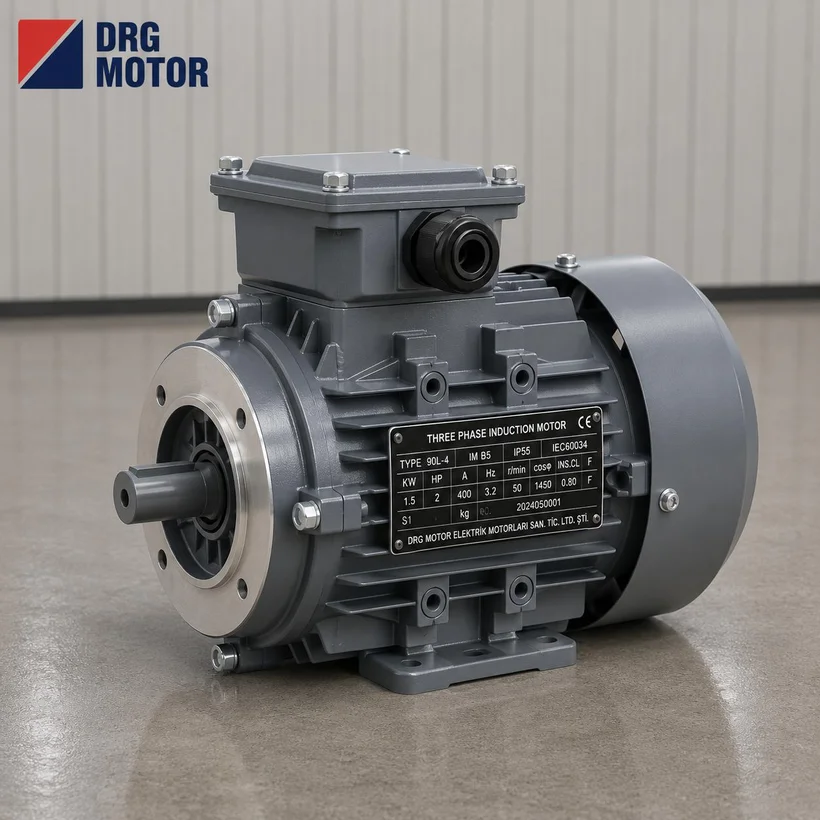
Not every line is fed by the same logic. In a fan that spins for long stretches at constant load, energy efficiency comes to the fore, while in a mechanism that stops and starts frequently, starting torque and thermal endurance take priority. In lifting applications, for example, a vinç motoru you choose must be sized for high starting torque and a regime of frequent switching on and off; here the number of starts per hour directly affects how the motor heats up. By contrast, a paketleme makinesi motoru used on a packaging line calls for precise speed control and smooth acceleration; here the priority is less peak torque and more a stable speed range that works well with the drive. In other words, the same kW value can mean a different type and specification of motor in different applications. Correct power selection cannot be considered complete without reading the character of the application.
Drive, starting method and real consumption
How the motor is started matters as much as the power you choose. Direct-on-line starting strains the grid with high inrush currents, whereas a system running on a variable frequency drive softens the start, adjusts speed steplessly and delivers clear energy savings at partial loads. If your line has a variable load, it is possible to protect both the motor and the bill by feeding it through a drive instead of running a fixed motor permanently at full power. This approach also lets you place the motor at a more realistic operating point while doing the power calculation. If drive operation is planned, you must make sure the motor's insulation class and cooling capacity suit that regime.
An energy cost calculation sharpens the decision
The real cost of a motor is not its purchase price but the energy it consumes over the years. In a motor that runs long hours every day, even a single step difference in efficiency class can create savings that outpace the initial investment within a few years. That is why, when selecting power, you should weigh annual operating hours, the unit energy cost and the efficiency class together. A correctly sized, high-efficiency motor both protects the operating budget and amply covers the capacity you need. Operations that factor in the total cost of ownership often come out ahead in the long run by choosing the motor with a slightly higher initial price but higher efficiency.
Turn your calculation into a quote
The steps described so far give you a solid power and margin range, but the fastest way to firm up the final decision is to request a quote with the data in hand. Once you share the load type, the speed, the operating regime, the mounting arrangement and any reducer details, we can determine together the step that fits your need exactly and the suitable options. As DRG Motor we stand beside you on correct motor power selection with fast supply from stock and a broad power range. Send us the details of your project and let us prepare the most suitable motor and an up-to-date quote for you the same day; that way the calculation moves from paper to the field by the shortest route.