 English
 Le français
 Türkçe

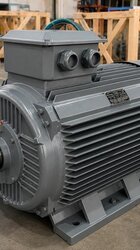
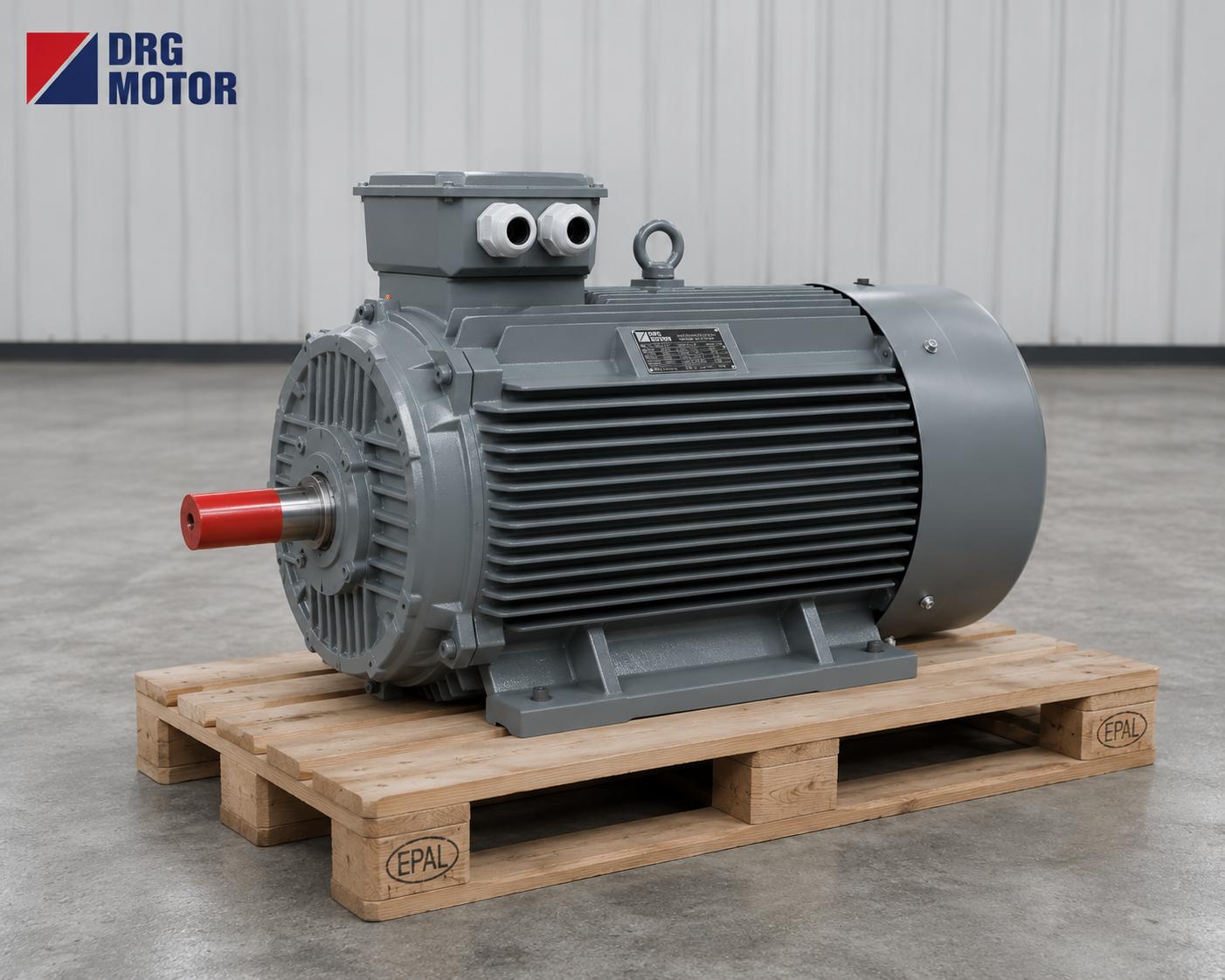

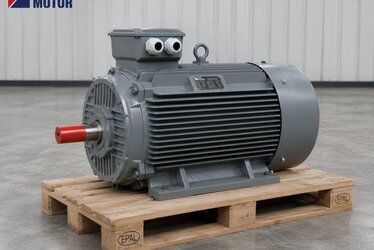
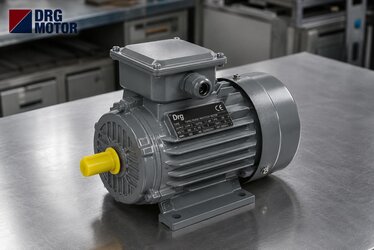
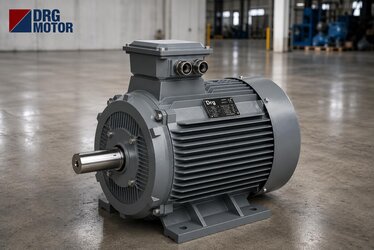
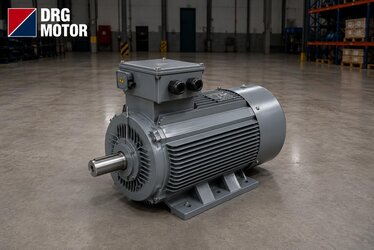
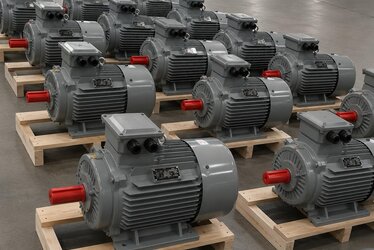
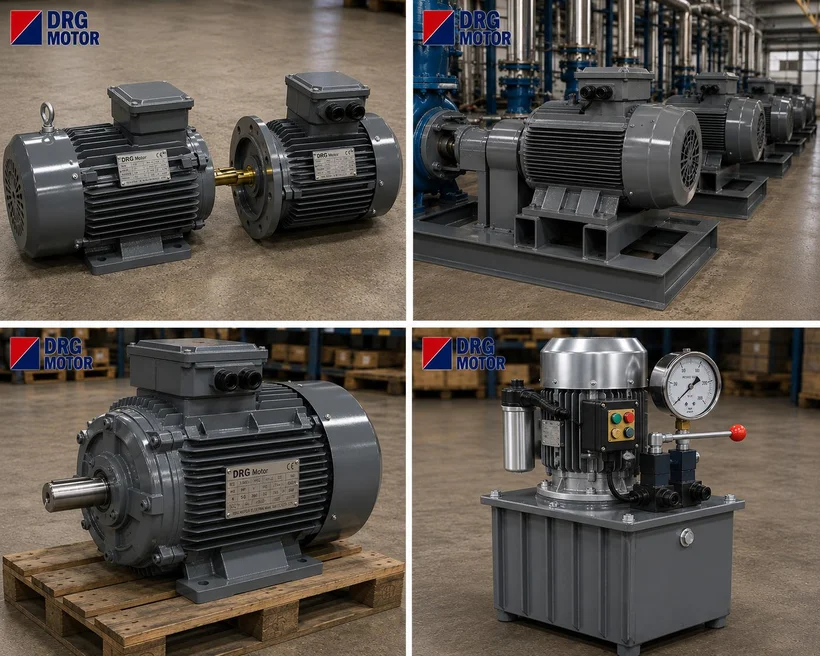
The drive group in cranes and hoisting systems works in a very particular way: it performs a limited number of lifting cycles each shift, yet each cycle demands high torque right from standstill. This duty character does not match a standard motor that was sized for continuous running, because a standard motor is selected on the assumption that it will turn without stopping, whereas in a hoisting application the motor is loaded periodically and rests in between. At DRG Motor we supply S3 short-duty crane motors for overhead bridge cranes, gantry cranes, monorails, jib cranes and electric chain hoists. We determine the correct frame size and cyclic duration factor together with you, based on your cycle time, load spectrum and switching frequency, and we fit the motor to the application from the very start. Our aim is not to hand you the cheapest unit at purchase, but the right motor that creates the fewest stoppages on site.
Why S3 duty is the natural language of crane drives
Crane motions consist of short lifting, stopping, lowering and idle steps. The motor does not turn continuously; it is loaded periodically and cools down in between. The S3 intermittent periodic duty defined in IEC 60034-1 describes exactly this profile. The decisive figure here is the cyclic duration factor (% CDF): the share of a cycle period during which the motor is actually loaded. Common values are listed as 15%, 25%, 40% and 60%. The same frame can deliver a higher usable output at 25% CDF than at 60% CDF, because there is more time to cool before the thermal limit is reached. In practical terms, this means you can achieve the same lifting power from a smaller and more economical frame at the right CDF step, or conversely, you may end up carrying an unnecessarily large motor if the wrong step is chosen. Choosing the right CDF at the supply stage prevents both the overheating and winding burnout caused by undersizing, and the extra cost of an oversized motor.
Cycle frequency and number of starts are critical
Selecting a crane motor on kilowatts alone is misleading. The real load comes from the number of start-stop operations per hour. Frequent starting builds up thermal energy in the rotor and windings, and the high inrush current at each start, several times the normal running current, multiplies the heat. If there is not enough time to cool between two cycles, the winding temperature climbs step by step and the motor wears out before its time. Starting-class ratings are used for this, and typical ranges can be summarised as follows:
- Low frequency: 60-150 cycles per hour, light warehouse and assembly applications
- Medium frequency: 150-300 cycles per hour, production line feeding and stocking
- High frequency: 300-600 cycles per hour, foundries and continuous handling
When we prepare a quotation we ask you for this cycle profile, the average load ratio and the daily operating time, so that we can size the motor by evaluating the CDF step and the starting class together rather than in isolation. For applications with a very high starting frequency, we can also include a soft starter or an inverter-based solution in the offer to limit the inrush current and reduce the thermal load.
The brake is an inseparable part of the drive group
In a hoisting application the load must never free-fall, which is why a crane motor is usually requested with an integrated spring-applied disc brake. The brake should be of the fail-safe type that closes automatically when power is cut, and it must safely hold a defined multiple of the rated lifting torque. At DRG Motor we configure the brake torque, the brake release voltage, the need for a manual release lever, and where required a second winding or pole-changing design for micro-speed positioning, according to your application. Pole-changing motors are especially valuable for plants that want to approach the load quickly and then move to precise positioning at a slow speed. For long-travel and trolley motions we can offer versions compatible with a frequency inverter for smooth acceleration, jolt-free stopping and precise spotting; this reduces load sway and extends the life of the mechanical components.
Environment and protection class
Cranes often operate in dusty, humid or near-outdoor environments. At least IP55 is preferred for outdoor or wash-down sites, and a higher protection class for foundries and heavily dust-laden conditions. Hot air collecting under high ceilings can push the motor's ambient temperature above the standard 40-degree assumption; in that case derating is applied and the frame is moved up one size. Designs with Class F insulation operating to a Class B temperature rise leave a safe thermal margin in intermittent duty and protect winding life. In extreme conditions such as cold stores, open port yards or hot rolling mills, additional measures also come into play, for example anti-condensation heaters, a tachometer, or thermal protection sensors (PTC/PT100). Once you share your ambient data, we reflect the protection class, insulation margin and sensor equipment clearly in the quotation.
Mechanical coupling and mounting arrangement
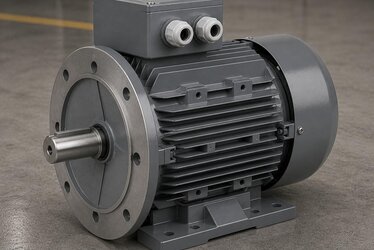
In crane drives the motor is usually flange-mounted to the gearbox, so the mounting arrangement (B5, B14 or a B3/B5 combination) and the shaft dimensions must match your hoisting gearbox exactly. A wrong flange or shaft choice causes assembly delays and extra labour cost on site. When you send us the drawing of your existing gearbox or drum group, we select the motor according to the connection interface and, if required, clarify the coupling, key size and shaft length as well. If you need a one-to-one replacement of an existing motor, sending the nameplate data and mounting photos of the old motor speeds up our search for the correct equivalent. For general line feeding, conveyors and auxiliary drives, our range of general-purpose industrial motors offers a complementary solution with fast availability from stock, so you can build a consistent drive set from a single supplier.
Supply process and the logic of the quotation
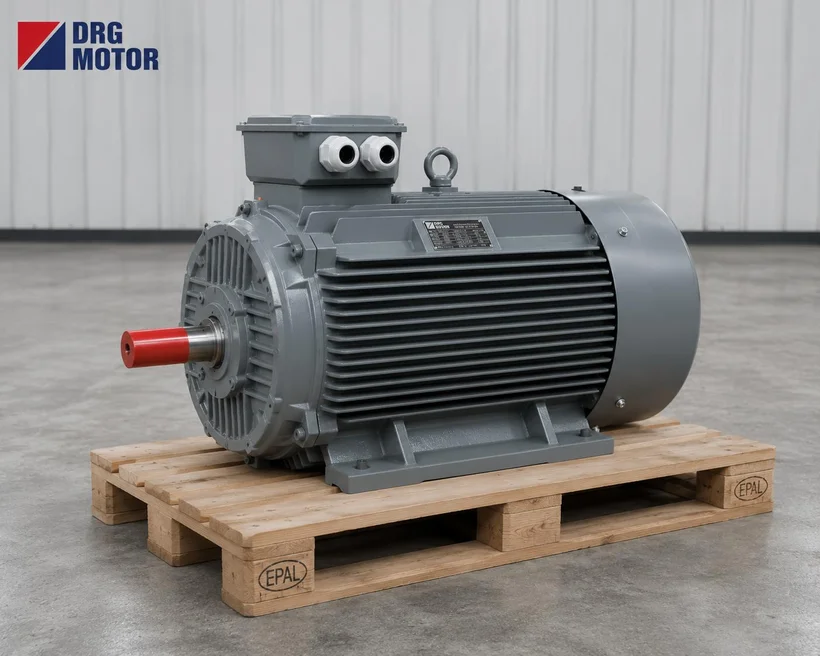
Quoting a single list price for a crane motor is not the right approach, because the final figure depends on a combination of factors: the CDF, the starting class, the brake torque, the protection class, the mounting arrangement, the sensor equipment and inverter compatibility. Each of these items affects the motor in a different direction, and very different configurations can emerge for the same kilowatt value. The way we work is this: first we listen to your application, then we determine the frame size and CDF step from the load and cycle data, and finally we present an itemised quotation, broken down line by line, with the brake and protection options. This way the motor you receive is neither oversized, creating unnecessary cost, nor prone to thermal trouble within a short time. We also show you clearly which option suits your budget and operating conditions best. As with other intermittent-load applications, for example when choosing a paketleme makinesi motoru, we apply the same cycle-based approach; our experience is not limited to a single machine type.
Stock, delivery and continuity
A stopped crane line usually locks up not just that crane but the entire production flow connected to it. That is why we keep the common frame sizes and frequently requested brake versions in stock, and we plan for the rapid supply of critical spare motors. In emergency breakdown situations, we aim to identify the correct configuration quickly and minimise downtime, either from existing stock or through expedited supply. In plants that run several cranes as a fleet, we help you simplify your spare-parts inventory and ease the work of your maintenance team by defining a common frame and brake standard. A single reference configuration makes both purchasing and field maintenance predictable. For equipment running alongside hoisting gear in agricultural and food plants, for example when a yem makinesi motoru is needed, we maintain the same supply discipline, so you can build a consistent motor fleet from a single point of contact and reduce the number of suppliers you deal with.
The payoff of starting with the right motor
A crane motor correctly chosen for S3 duty reduces unexpected stoppages, extends brake and winding life, and matches the energy draw to the working profile. This investment should be judged by total cost of ownership rather than the initial purchase price alone, because the downtime, repeated replacement and energy losses caused by a wrongly chosen motor soon outweigh the difference you paid on day one. For a crane motor sized with the right CDF step, brake torque and protection class for your lifting projects, send us your cycle time, number of starts, load ratio and mounting details, and let the DRG Motor team come back to you within 24 hours with an application-specific, line-by-line quotation. Whether you have a single overhead bridge crane or a multi-line plant, we stand beside you with fast supply and technical accuracy.