 English
 Le français
 Türkçe

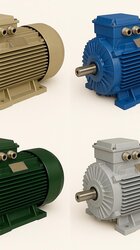
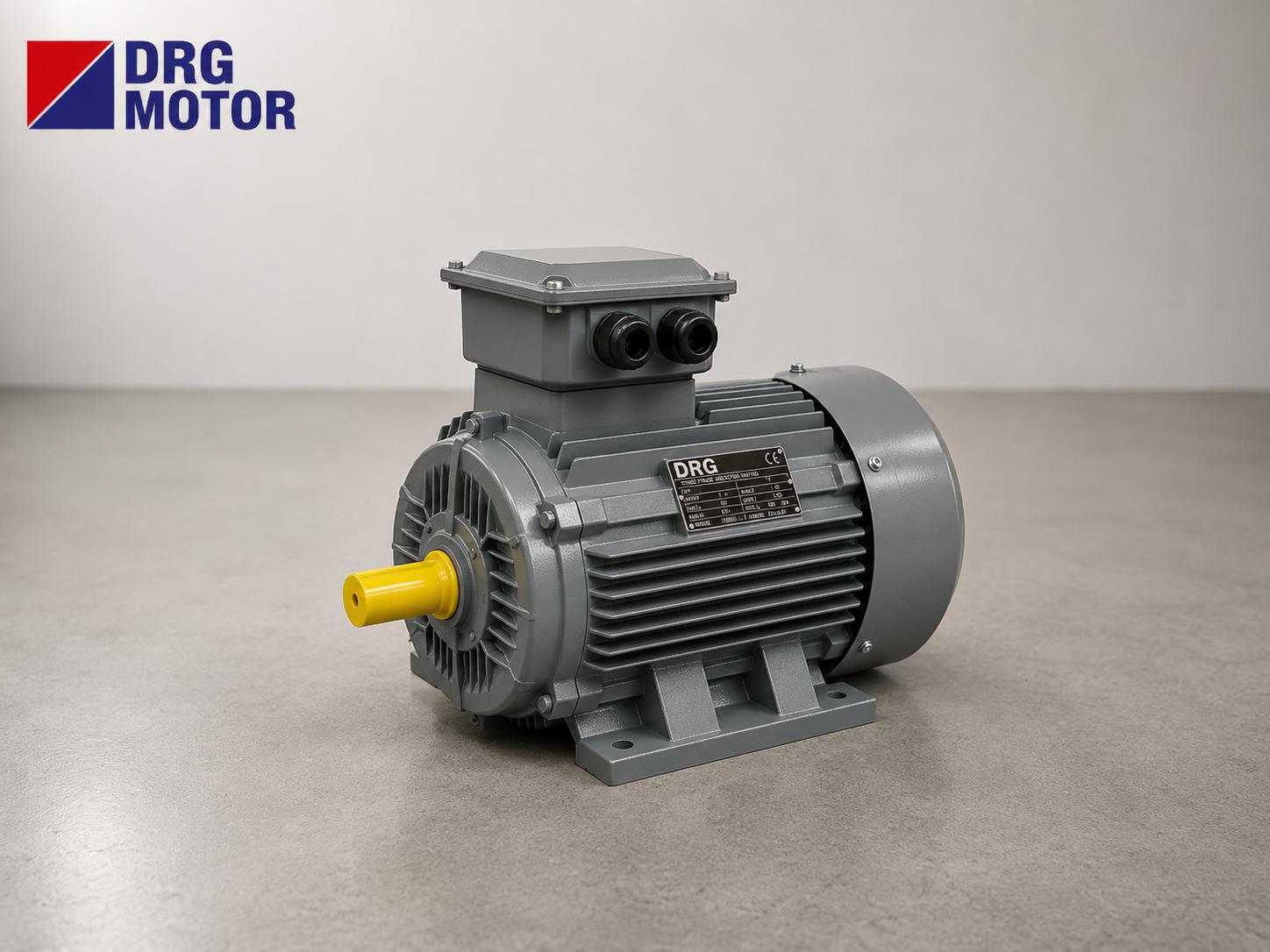

In plants where a production line turns seconds into revenue, the most expensive component is rarely the stopped motor itself. It is the production that stops because of it. An unplanned failure with no spare electric motor on hand turns a routine repair into a crisis that can last for days. In this article we build a practical redundancy strategy that minimizes unexpected downtime, protects the purchasing budget, and shrinks lead time to a matter of hours.
The Real Cost of Downtime Usually Goes Uncalculated
Most operations know the price of a motor but not the cost of every hour that motor sits idle. Yet the decision should be made on that second number. Lost output, delayed shipments, contract penalties, overtime, and even lost customers usually dwarf the price of the motor itself. This is exactly where the logic of keeping a spare electric motor becomes clear: the investment should be compared not to the motor's price but to the downtime cost it prevents. Seen this way, a unit on the shelf is not an expense but an insurance policy.
When you place the cost of one hour of downtime next to the cost of a spare motor, the answer for critical equipment is almost always to keep a spare. The real challenge is identifying which motors truly belong in that critical class.
To make the cost concrete, run a simple calculation: take your line's hourly revenue or profit contribution, then multiply it by a realistic lead time. Most operations are stunned by the figure the first time they do this math. A single day of downtime can easily exceed the price of several spare motors sitting ready on the shelf. And that is before you add the hidden costs: secondary failures caused by rushed repairs, expedited freight charges, concessions to contracted customers, and the wear on team morale. When the decision-maker sees this complete picture, redundancy reads not as a luxury but as a financial necessity.
Which Motors Deserve a Spare? A Criticality Review
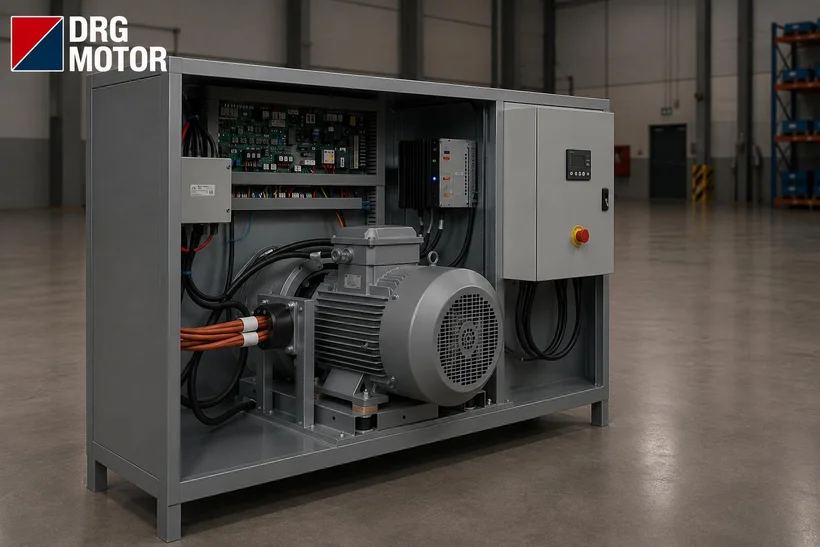
Sparing every motor is neither necessary nor economical. A smart strategy steers a limited budget toward the highest-risk points. To do this, assess each piece of equipment on two axes: the probability of failure and the impact of that failure on the line. A single, unbacked motor that halts the entire line sits at the top of the list.
- Main drive motors that are the only unit on a line and lock all production when they stop
- Special-frame, special-shaft, or long-lead wound types
- Heavily loaded pump, fan, and conveyor motors running continuously
- Old, rare, or import-dependent models with hard-to-find replacements
This review leaves you with a clear list: items that must sit on the shelf, items secured by a fast-supply agreement, and items that can be handled through the standard flow. On most lines the number of truly critical motors is surprisingly small, which keeps the cost of redundancy manageable.
The criticality review should not be treated as a one-time exercise. As the line changes, new equipment is added, and older motors age, the priority order shifts with it. Revisiting this list once a year prevents new risks from slipping through and stops obsolete spares from tying up capital for no reason. Having maintenance and purchasing look at the same list ensures decisions are driven by data rather than gut feeling. Even simple inputs such as a motor's past failure frequency, running hours, and last overhaul date make it clear which equipment genuinely carries risk.
Standardization: Fewer Variants, Stronger Redundancy
The more motor types a facility runs, the more expensive and complex redundancy becomes. Instead of sparing dozens of different power ratings, frames, and mounting types separately, moving toward standard models wherever possible lets a single spare protect several positions at once. With IE3 efficiency, common frame sizes, and easy availability, general-purpose industrial motors make an ideal foundation for this standardization. As variety drops, both stock burden and changeover time fall with it.
Standardization also simplifies purchasing. Working with one supplier around a few core models builds a far more predictable relationship around price, delivery, and compatibility. Being able to use the same motor in several positions also shortens commissioning, because the team already knows the type and is familiar with its mounting and connection details. Spare parts, couplings, and bearing stock become far leaner once they are organized around a single type.
Moving to standardization does not happen overnight, nor does it mean forcibly swapping out existing motors. The right method is to use every replacement and expansion as an opportunity to move closer to a standard model. Over time your inventory naturally simplifies, and the cost of redundancy drops further each year. During this gradual transition it is wise to lean on our technical support to determine which standard model best fits your facility's load profile.
Shelf Spare or Fast Supply?
Redundancy is not limited to one method. For the most critical motors, keeping a physical spare on the shelf is the right call. But for medium-priority equipment there is an alternative that protects you without tying up capital on site: a pre-arranged fast-supply agreement with a reliable supplier. In this model the motor waits not in your warehouse but in the supplier's stock, ready to ship within hours of a failure. Strong hazır stok motor availability is the lifeline of this hybrid strategy.
The ideal approach is usually a blend of the two: a handful of motors that would cause the most expensive downtime kept on the shelf, with the remaining critical items covered by a guaranteed fast-shipment agreement. That way cash flow is protected and risk is closed. Two questions are enough to decide: when this motor stops, how quickly do you need a replacement, and can the supplier guarantee shipment within that window? If the answer is hours, fast supply is enough; if the answer is minutes, a shelf spare is essential.
Another advantage of this hybrid model is its flexibility. When your production volume grows or a new line comes online, you can scale the strategy not by buying a single spare motor but by expanding the scope of the agreement. Your level of protection then keeps pace with the growth of the business, while your capital is not tied up more than necessary. For facilities with seasonal load swings, this flexibility minimizes downtime risk during peak periods while removing unnecessary stock cost during quieter ones.
Compressing Lead Time with the Right Supplier
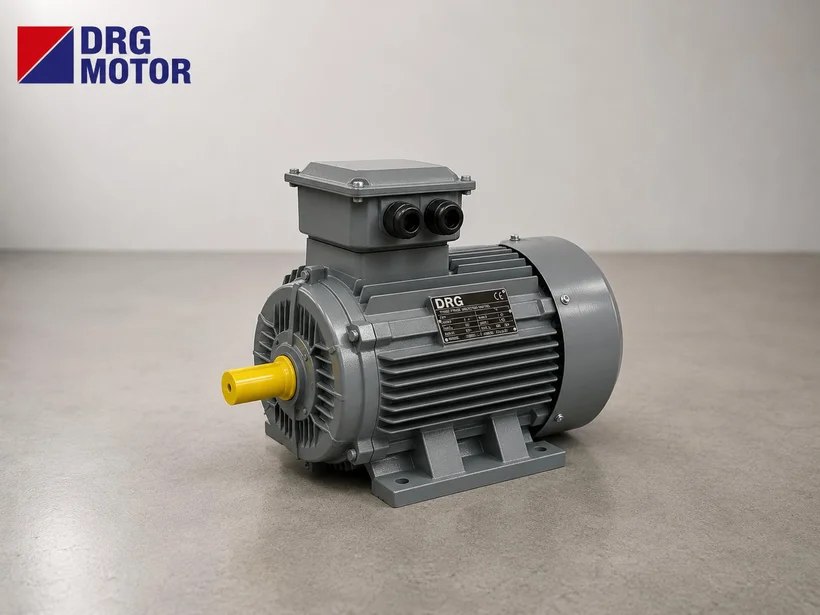
The weakest link in a redundancy strategy is often lead time. Waiting weeks when a motor stops can erase every advantage a shelf spare provides. That is why knowing in advance which model comes from where, and how fast, is critical. A transparent elektrik motoru tedarik flow removes surprise delays and makes real planning possible.
A strong supplier relationship creates value not only in emergencies but in normal operations too. Priority on repeat needs, technical guidance, and compatibility verification meaningfully lighten the load on the team in the field. The right supplier does more than ship a motor; if you hold an older model, they suggest an equivalent, verify frame and shaft compatibility in advance, and share mounting notes where needed. This removes the single biggest source of lost time during a failure, namely the risk of a wrong part or an incompatible model.
The best way to strengthen the relationship is to not wait for the moment of crisis. Sharing your critical motor list, preferred brands, and typical delivery expectations with us ahead of time means you get the right answer on the first ring of the phone in an emergency. A pre-defined supply channel replaces the frantic calls and the precious hours lost to comparison shopping.
Storing a Spare Motor Is a Job in Itself
Keeping a spare on the shelf is not the same as tossing a motor in a corner. A poorly stored motor that fails to run when needed defeats the entire strategy. With a humidity-protected environment, periodic shaft rotation, and bearing and winding checks, the motor truly waits in a ready state. Keeping stock records current matters just as much as storage conditions; a spare you forget you own might as well not exist.
A simple spare-motor register showing which model sits where, in what condition, and when it was last checked is enough. That discipline buys back precious minutes in the middle of a crisis. With a clear label on each spare and a note in the register of which equipment it backs up, even a technician on the night shift can locate the right motor in seconds. Immediately replenishing stock once a spare is used is an inseparable part of this discipline; otherwise the next failure catches you defenseless.
Storage conditions directly affect a motor's life. A motor left for years in a cold, damp store can develop moisture in its windings and rust in its bearings. Periodic shaft rotation prevents the bearing grease from settling and hardening in one spot, while an insulation resistance measurement confirms the winding is still healthy. These small routines guarantee the spare actually springs into service at the very moment you need it most, protecting the investment made in that shelf spare from going to waste.
Turning the Strategy into a Budget
A good redundancy plan is easy to approve once it reaches management as concrete numbers. A net price alone means little; the decision comes from weighing prevented downtime cost, criticality level, and lead time together. Total cost is the sum of factors such as the motor price, storage expense, and the value of a guaranteed supply agreement. Because these items vary from plant to plant, the most accurate path is to build your needs list and request a line-by-line quote.
Share the list of your critical motors with us, and let us define together the suitable standard models, the ones to keep on the shelf, and the ones to manage through a fast-supply guarantee. Position your line around a prepared plan rather than the next failure, and request a quote today to close your downtime risk.