 English
 Le français
 Türkçe

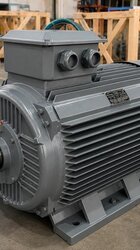
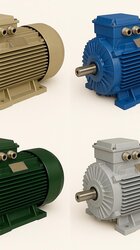
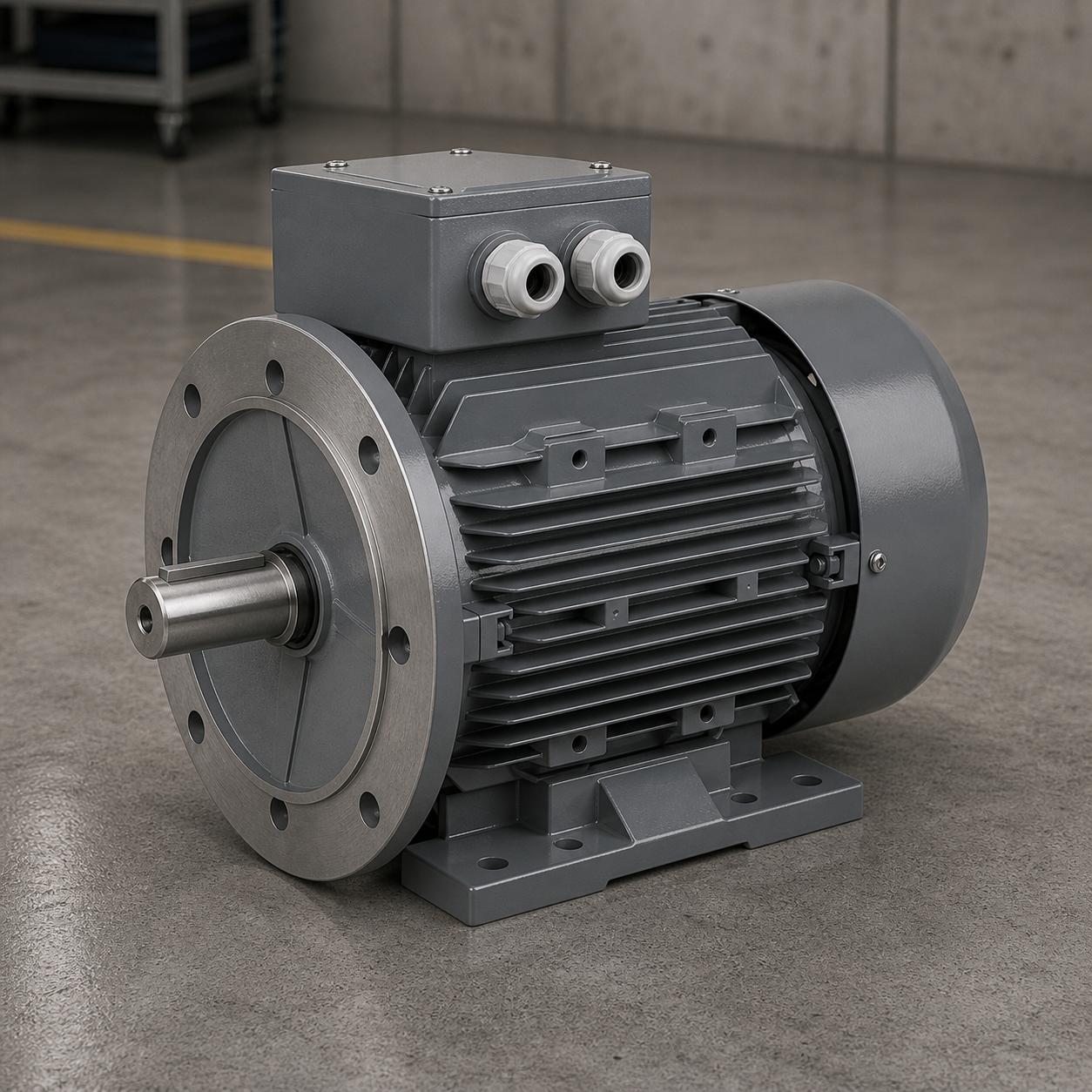

Natural gas transmission, distribution and storage facilities are environments where even a single spark can escalate into disaster. For this reason, every electromechanical component used in these sites, and drive motors in particular, must be selected to suit explosive atmospheres. Sourcing the correctly specified natural gas Ex-proof motor is not merely a technical preference; it is a strategic decision where personnel safety, production continuity and regulatory compliance converge. As DRG Motor, we support facilities serving the natural gas sector across Turkey with project-specific motor selection and fast, reliable supply.
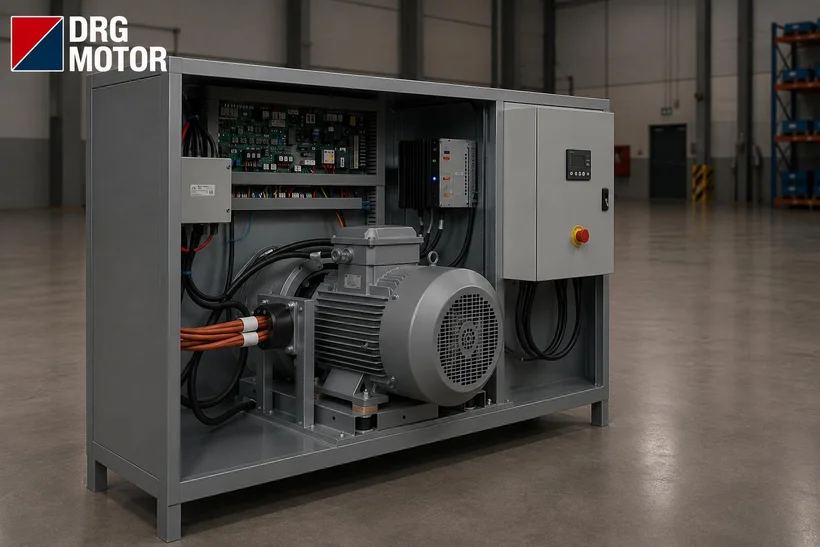
Why Explosion Risk Is High in Natural Gas Sites
Methane, the main component of natural gas, forms an extremely flammable mixture when combined with air in certain proportions. Pressure reduction stations, compressor buildings, metering rooms and storage areas are zones where leaked gas can accumulate. At these points, the surface temperature of an operating motor, brush sparking or an arc caused by an internal fault can ignite the explosive atmosphere. That is why using a standard industrial motor in natural gas facilities is unacceptable; only certified explosion-protected motors may be commissioned. Choosing the right natural gas Ex-proof motor ensures the risk is controlled at its source.
The hazard is not limited to normal running conditions. Start-up, shutdown, maintenance and fault events all carry risk. A worn bearing, weakening winding insulation or a loss of cooling-fan efficiency can push the housing surface temperature above the expected limit. An explosion-protected motor accounts for these possibilities by design; even if ignition occurs inside the enclosure, the flameproof housing prevents the flame from escaping and protects the surrounding gas mixture. This is exactly why motor selection on a natural gas site is not merely a calculation of power and speed, but an integrated safety-engineering decision that begins with the right supplier.
What ATEX and IECEx Certification Mean
The reliability of explosion-protected motors is proven through documentation approved by independent certification bodies. ATEX defines the conformity of equipment used in explosive atmospheres under European Union directives, while IECEx provides the internationally recognised equivalent framework. For motors supplied to natural gas facilities, these certificates must be valid and matched to the actual product. The motors we supply are delivered together with their certificate numbers and protection markings, so no discrepancy arises during inspection processes.
- Ex db: flameproof enclosure, the most common housing protection type
- Ex e: windings and connections designed on the increased-safety principle
- Temperature class: defines surface temperature limits such as T3, T4
- Gas group: typically category IIA/IIB in natural gas applications
Zone Classification and Correct Protection Selection
Not every point in a natural gas facility carries the same level of risk. Hazardous areas are classified as Zone 1 and Zone 2 according to how frequently an explosive atmosphere is likely to form. In areas where continuous or long-term gas accumulation can occur, category 2 equipment is required, while category 3 equipment suffices in lower-probability zones. Choosing the wrong category means either excessive cost or insufficient safety. Based on your project's site layout and risk map, we clarify which motor is suitable for which point and guide the correct supply accordingly.
When zone classification is carried out, it is not only the gas itself but the surrounding conditions that must be considered. An outdoor station behaves quite differently from an enclosed compressor building in terms of ventilation and gas dispersion. In confined volumes, inadequate ventilation can make an area that would normally count as Zone 2 effectively more hazardous. By taking these distinctions into account when shaping our supply recommendation, you avoid both the trap of overly expensive excess protection and that of insufficient protection that undermines safety. Our aim is to offer the most rational, regulation-compliant configuration for every budget.
Typical Motor Requirements in Natural Gas Applications
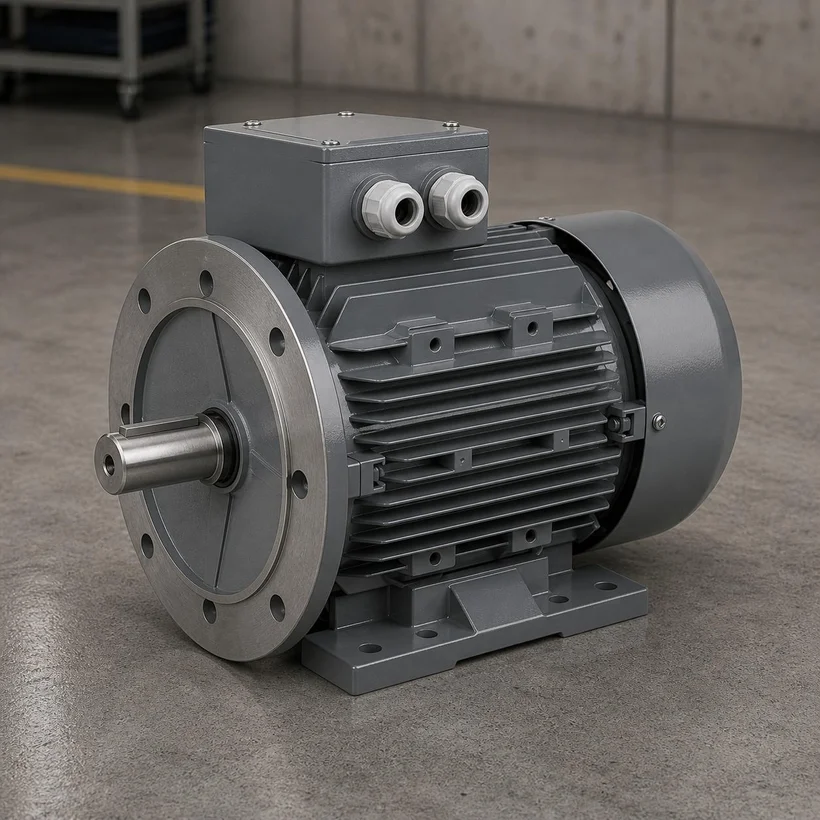
In natural gas sites, motors drive a wide range of equipment: gas compressors, fans, pumps, valve actuators and cooling systems. Each application has a different load profile, speed requirement and duty cycle. The selection criteria for a continuously running compressor motor cannot be the same as those for an intermittently operating pump motor. We therefore evaluate parameters such as power, speed, mounting type (B3, B5, B35), protection class and drive compatibility together. While many facilities use general-purpose industrial motors for auxiliary equipment outside the explosive area, they prefer Ex-proof models in hazardous zones; we cover both needs through a single supply channel.
How Our Cross-Sector Experience Benefits Your Supply
Explosion-protected motor supply is not unique to natural gas; the same engineering discipline applies across many heavy industries. For example, the zone classification and certificate-matching experience we gained in kimya ex-proof motor applications transfers directly to natural gas projects. Likewise, the practical knowledge we built around mechanical durability and vibration management while supplying motors for ahşap makinesi motoru enables us to offer solutions that extend motor life on natural gas compressor lines. This accumulated expertise allows us to provide our customers not just a product, but sound decision support.
Speed and Accuracy Are Our Supply Priorities
Planned maintenance windows in natural gas facilities are narrow, and the cost of downtime during a failure is very high. For this reason we focus on two things throughout the supply process: correct specification and fast delivery. When we receive your request, we assess the nameplate data, site conditions and zone classification together, then offer the shortest delivery option based on stock availability. Sourcing critical spare motors in advance and keeping them on site lets you return to operation within hours rather than days during unexpected stoppages. Thanks to our broad supply network, we can produce flexible solutions for urgent needs.
Efficiency and Operating-Cost Advantage
The value of an explosion-protected motor is not measured by safety alone; when the right efficiency class is chosen, it also contributes directly to the operating budget. In natural gas facilities, compressor and pump motors usually run continuously, so annual energy consumption can far exceed the purchase price. Ex-proof motors in the IE3 and IE4 efficiency classes run with lower losses and noticeably reduce the electricity bill. At the supply stage, we evaluate not only the initial purchase price but the motor's lifetime cost together with you. In many cases a slightly higher-efficiency model pays back the difference through energy savings within a few years. We share this calculation with you so you can make the soundest investment decision.
We Stand by You at Commissioning and on Site
Supplying the right motor is only one part of the process. Details such as drive compatibility, mounting the terminal box in line with its protection class, and proper earthing directly affect on-site safety. With every motor we supply, technical documentation and the connection diagram are provided in full; when your team needs technical support during installation and commissioning, we are there for you. We also anticipate your facility's future capacity increases or spare-motor planning together with you, ensuring uninterrupted continuity in subsequent supplies. In this way you build a long-term, reliable supply relationship rather than a one-off purchase.
Factors That Determine Pricing
The cost of explosion-protected motors differs from standard motors because of their protective construction and certification. Rather than quoting a fixed price, we prefer to evaluate each project against its own parameters. The main factors affecting price are as follows:
- Motor power and speed range
- Protection type (Ex db, Ex e) and gas/temperature class
- Mounting type, housing material and efficiency class (IE3/IE4)
- Quantity, delivery time and spare motor requirements
When you send us a request including these criteria, we quickly prepare the most suitable configuration and a clear quotation for your facility.
The Return on Working With the Right Supplier
In natural gas infrastructure, safety, legislation and continuity meet under one roof. A wrong motor choice is not only a financial loss but a serious safety gap. As DRG Motor, we commit to delivering the right product to the right zone, complete with its certification and on time. Share your facility's natural gas Ex-proof motor requirement with us, and let us build a documented, quotation-driven supply plan tailored to your site needs. Our expert team is by your side from the first request to delivery. Contact us now to receive a quotation specific to your project.