 English
 Le français
 Türkçe

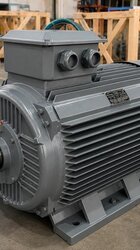
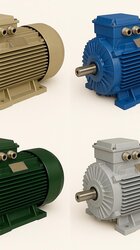
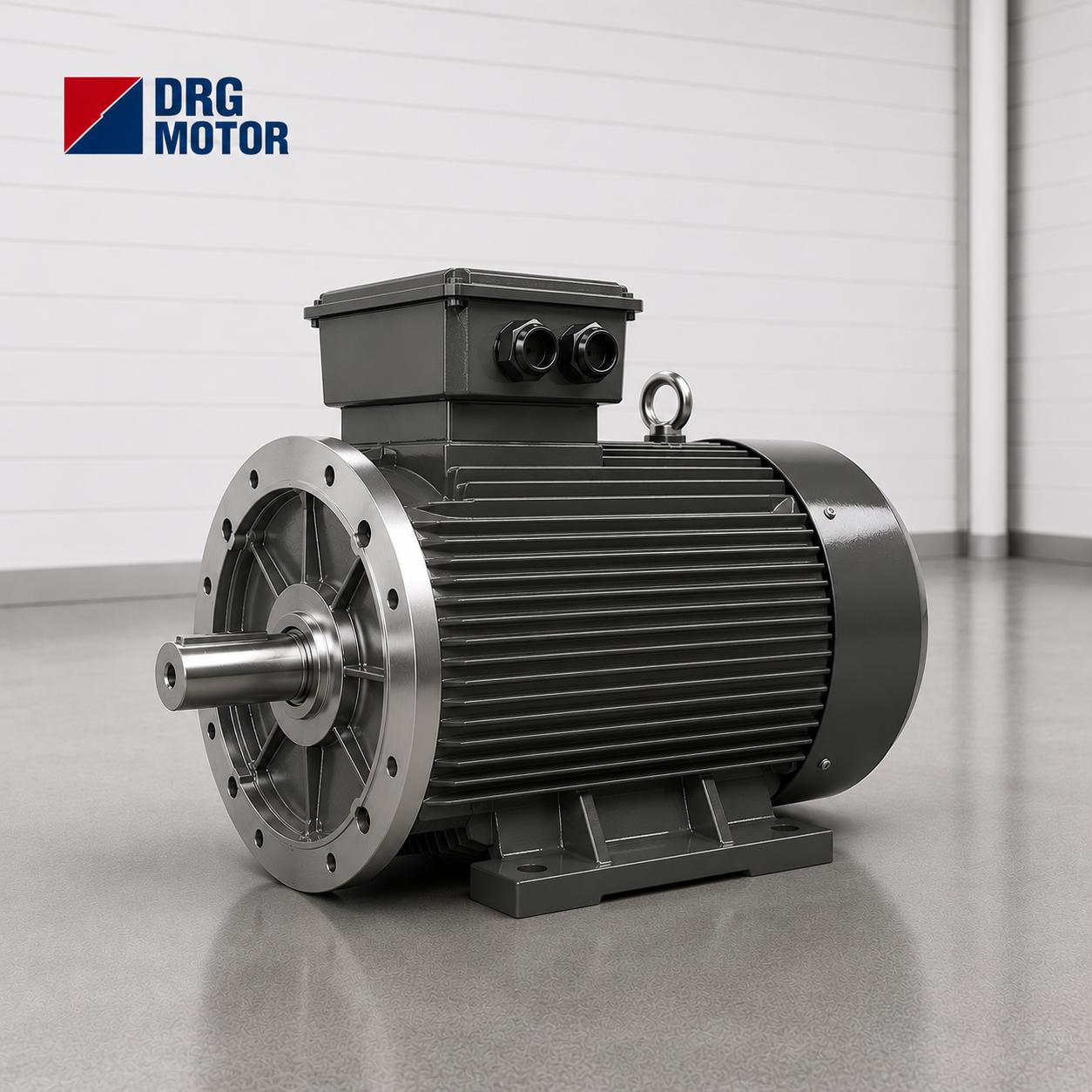

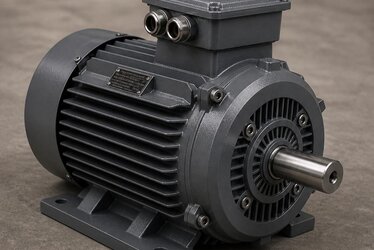
A motor you assume has been running at the same efficiency for years may quietly be drawing extra electricity on every shift. The IE1 and IE2 class motors commissioned in the early 2000s seem to do their job as long as they keep turning, yet against today's energy prices they load a hidden cost onto the business. Keeping an old motor in place looks like a saving at first glance; once total cost of ownership is taken into account, however, that running old motor is in most cases the most expensive option you have. In this article we examine the concrete gains of replacing IE1-IE2 motors with the IE3-IE4 class, the payback logic behind it, and the right procurement steps.
Why an Old Motor Is a Silent Expense
The power printed on an induction motor's nameplate is the mechanical power taken from the shaft; the electrical energy it draws from the grid is always higher than that. The efficiency class defines the gap between the two. In IE1 and IE2 motors this gap is several percentage points wider than in the IE3-IE4 class, and the loss is dumped straight into the environment as heat. On a continuously running line, that few-point difference turns into a meaningful number of kWh by year-end. This is exactly the foundation of any efficiency improvement strategy: getting the same job done with less electricity.
The critical part is that this loss is invisible. The motor turns, the machine produces, the line never stops; so nobody raises an alarm. But when the month-end energy bill arrives, the difference shows up fully accumulated. Especially in pump, fan, compressor and conveyor applications that run 16-24 hours a day, the extra consumption created by an old motor exceeds the price of a new one within a few years. What is more, this picture works further against the business each year as electricity tariffs climb; in other words, the cost of keeping the old motor is not fixed but a continuously growing line item.
Another frequent misconception is to think the old motor runs efficiently because it has "not failed yet." Yet efficiency and failure are two independent matters. A motor can turn for years without a single fault while, by virtue of its design class, drawing more energy from the grid than necessary. That is why the replacement decision should rest on calculation, not on failure. Once you measure the annual consumption of the hardest-working motors on your line, the order of priority emerges on its own.
Reading the Gain Between IE3 and IE4 Correctly
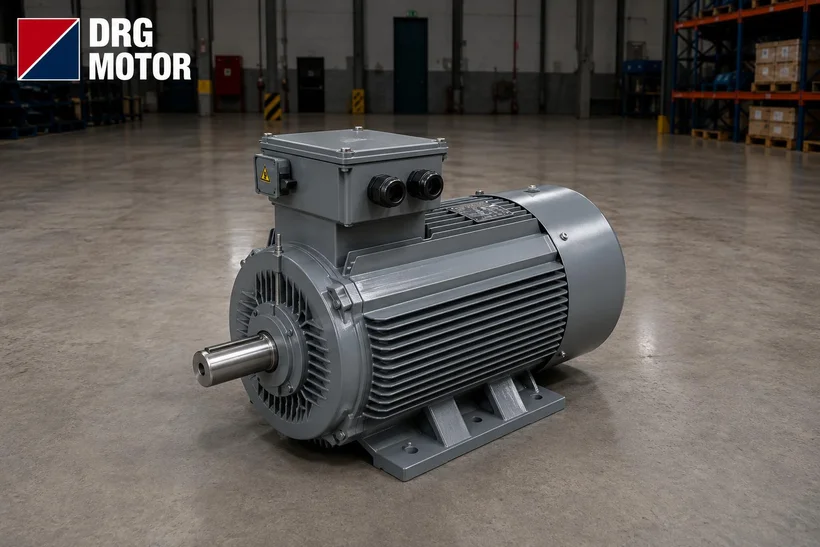
The most common mistake in the replacement decision is assuming that simply raising the efficiency class is enough. In reality, the size of the gain depends directly on the motor's power, pole count and running hours. On a low-power, lightly used motor the step from IE3 to IE4 may stay marginal, while on a high-power, continuously running motor the same step produces a striking saving. That is why you must put the motor's real operating profile on the table before deciding which class to move to; on this point the ie3 ie4 ie5 motor comparison offers a clear framework.
Another important point is choosing the power range carefully. If the old motor was already oversized, dropping to the correct power during the swap delivers an extra gain on its own. Conversely, if the line has grown, you may need to move one step up. We share the finer points of the power-range transition in detail in our ie3 ie4 geçiş article.
How to Calculate the Payback Period
An investment decision should be numerical, not emotional. To roughly calculate the payback period you only need three pieces of information: the motor's power, its annual running hours and the unit electricity price. You work out how many kWh per year the efficiency difference between the old and new motor will save, multiply that by the electricity price, and divide by the motor's investment cost. For continuously running mid-to-high power motors this period is often shorter than expected.
- Running hours: The more shifts, the faster the payback; lines running 24/7 are the quickest-returning investments.
- Power class: At high power even a small efficiency difference corresponds to large kWh figures.
- Load profile: On motors running at full load the gain is more predictable than on partially loaded ones.
- Electricity price: As the tariff rises, so does the cost of keeping the old motor.
Not Just the Bill, but Total Cost of Ownership
Judging a motor swap purely on electricity savings means seeing only half the picture. IE3-IE4 class motors generally run at a lower operating temperature; this extends bearing life, eases lubrication intervals and increases the lifespan of the winding insulation. A motor that heats less means fewer faults and fewer unplanned stoppages. A halted production line, in most businesses, costs many times more than the energy bill.
Another hidden cost of old motors is being rewound again and again. Every rewind lowers the motor's efficiency a little further, and over time the motor falls below its original performance. Trying to keep a repeatedly rewound IE1 motor economically alive is usually more expensive than switching to a new IE3-IE4 motor. For this reason, the moment of failure is actually the ideal decision point for an efficiency upgrade. Fitting a new unit while the motor is already stopped turns an unplanned outage into a planned improvement and captures a long-term gain within the same maintenance window.
Spare-part and service convenience should also be factored in. For motors in the current efficiency class, access to parts such as bearings, fan covers and terminal boxes is faster; on very old models these parts gradually become a supply headache. A new IE3-IE4 motor relieves the business on the energy side and on the maintenance and spare-part side throughout its life. When all of these line items come together, it becomes clear why deciding on the sticker price alone is misleading.
Technical Details Not to Skip During the Swap
When moving to a new efficient motor, looking only at the power and speed match is not enough. The frame size, mounting type (foot, flange), shaft diameter and connection dimensions must be compatible with the existing machine to keep the installation smooth. Because IE3 and IE4 motors can be dimensioned slightly differently in some applications, confirming the measurements before ordering prevents loss of time and money.
On lines driven by a VFD, insulation class and inverter compatibility come to the fore. When high-efficiency motors are used together with a frequency inverter the saving grows even further; particularly in pump and fan applications, variable speed control adds a serious extra gain on top of the motor efficiency gain. Compared with old fixed-speed IE1-IE2 setups, this combination delivers far smarter energy management.
The Difference of Working with the Right Supplier
As much as the decision to move to an efficient motor, who you buy the motor from also determines the result. A supplier with deep stock and flexible options across power and speed ranges lets you carry out the swap without keeping your line down for long. Waiting weeks for a motor that is out of stock erodes the very saving you planned to capture from the start. That is why, in a replacement project, delivery speed matters at least as much as the efficiency class.
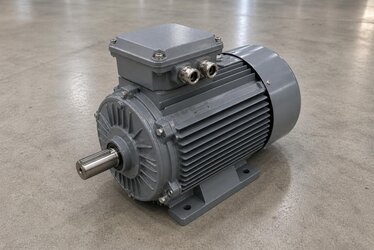
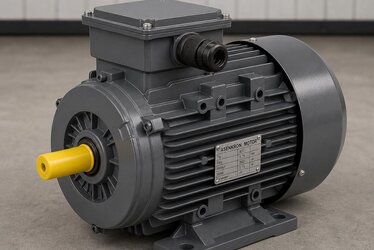
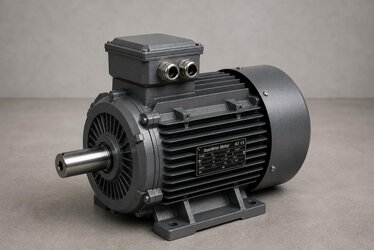
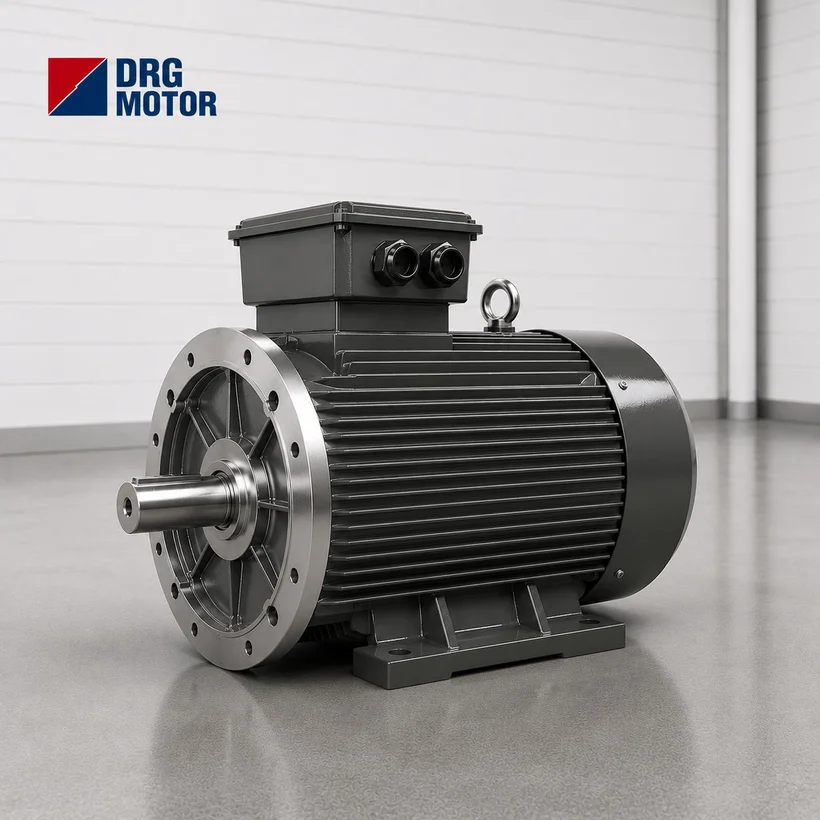
As DRG Motor, we offer IE3-IE4 class motors across common power and speed steps with a readily accessible supply approach. When you share the nameplate details of your existing motor, we determine the suitable replacement model and power range together and prepare a clear quote. To review the high-efficiency options you can look at our IE4 electric motors page and then request a comparison tailored to your facility.
Take the Next Step Today
Do not assume your old IE1-IE2 motors are running correctly just because they are running; most are silently charging you the price every month. To see which motors should be replaced first, the most sensible approach is to start with the machines with the highest running hours and the largest power. When sequenced correctly, an efficiency upgrade investment is one of those rare decisions that pays for itself quickly while also reducing the maintenance burden and downtime risk. Send us your nameplate details; let us evaluate your existing motors one by one and present the IE3-IE4 replacement plan and quote that best suits you, complete with the payback period.