 English
 Türkçe


With energy costs constantly rising, one of the most important decisions for industrial facilities is choosing a motor in the right efficiency class. The IE4 class, that is "Super Premium Efficiency", represents one of the highest efficiency levels achievable in the low-voltage motor market. In this article we examine in detail what an IE4 electric motor is, what advantages it offers, and in which situations it is the right choice.
For a general comparison of all efficiency classes, see the electric motor efficiency classes article; here the focus is entirely on the IE4 class and its advantages.
What Is an IE4 Electric Motor?
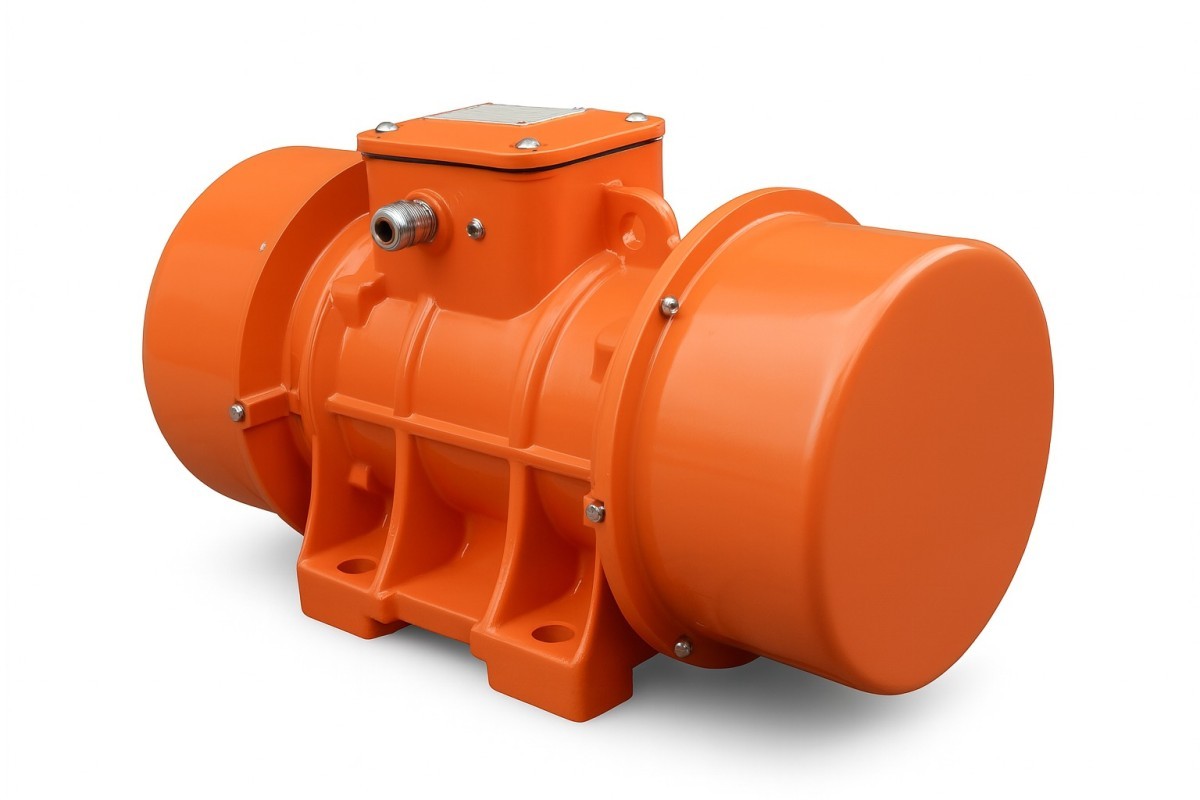
IE4 is the "Super Premium Efficiency" class defined under the international IEC 60034-30-1 standard. Motors in this class convert a very large part of the electrical energy they draw from the grid into useful mechanical work and produce very little loss. IE4 motors run with noticeably lower losses than the previous class, IE3.
This high efficiency is no coincidence; it is achieved through more copper, higher-quality low-loss silicon steel, optimized electromagnetic design and precise manufacturing. The result is a motor that does the same job with less energy, heats up less and lasts longer.
IE4's Place in the Standard
Efficiency classes rise from IE1 to IE5: IE1 standard, IE2 high, IE3 premium, IE4 super premium and IE5 ultra premium efficiency. IE4 ranks second from the top on this scale and was for a long time the highest mass-produced class practically achievable.
The IE4 class is designed especially for energy-intensive, continuously running applications. As standards have risen over time, IE4 has become the preferred efficiency level in many sectors. To better understand the class's place in the standard, the electric motor efficiency classes article gives comprehensive information.
The Difference Between IE4 and IE3
The class IE4 is most often compared with is IE3. The basic difference between them is the magnitude of losses: IE4 runs with lower copper, iron and friction losses than IE3. On paper this difference may seem like a few percentage points, but in a continuously running motor it turns into a significant energy and cost difference over the years.
IE3 is widespread because it is the minimum legal standard in many countries; IE4, while requiring a higher investment, offers a faster return. For the details of the IE3 class, see the IE3 premium efficiency article. Which class suits you is determined by your running hours.
Advantage 1: Energy Savings
The greatest advantage of an IE4 motor is the direct reduction in energy consumption. Most of the money a motor costs over its lifetime is not the purchase price but the electricity it consumes. For this reason, a few points of efficiency increase can mean thousands of kilowatt-hours of annual savings in a continuously running motor.
This saving is especially clear in facilities running 24/7. The more the motor runs, the greater the energy advantage IE4 provides, and the faster the initial cost difference closes.
Advantage 2: Lower Heating and Longer Life
In an inefficient motor, losses turn into heat, which heats the motor and shortens the life of the winding insulation. Because IE4 motors produce fewer losses, they heat up less. The lower operating temperature reduces thermal stress on the winding insulation and bearings, extending the motor's life.
This means fewer failures, less downtime and lower replacement cost. Long life makes the IE4 motor valuable not only for energy but also for operational continuity.
Advantage 3: Quiet Operation
The optimized design of IE4 motors improves not only efficiency but also operating comfort. A smoother magnetic field distribution and quality manufacturing reduce vibration and noise. This is a clear advantage especially in facilities where the noise level in the working environment matters.
Quieter operation also means less mechanical strain, which indirectly has a positive effect on the motor's life and reliability.
Advantage 4: Environmental Benefit
IE4 motors reduce environmental impact while saving energy. Lower energy consumption means less fossil fuel use and therefore lower carbon emissions. Because a significant part of the electricity generated in the world is consumed by motors, switching to efficient motors provides a serious environmental contribution on a national scale.
In this respect, choosing IE4 is a decision that is not only economical but also aligned with sustainability goals. Many businesses have made the switch to high-efficiency motors a priority to reduce their carbon footprint.
Advantage 5: Lower Maintenance Cost
A motor that heats up less and is strained less requires less maintenance. The low thermal stress of IE4 motors extends bearing and insulation life, widening maintenance intervals. This reduces both the direct maintenance cost and the downtime needed for maintenance.
From a total-cost perspective, the low maintenance expense provided by the IE4 motor is an important advantage added to energy savings. Over the long term, these items together create significant savings.
IE4 and the Frequency Drive
When IE4 motors are used together with a frequency drive (VFD), the efficiency advantage increases even further. Especially in variable-load applications such as pumps and fans, adjusting the motor's speed to demand provides large savings. The combination of a high efficiency-class motor and a drive offers the lowest energy consumption.
For this reason, when considering an IE4 investment, how the motor will be operated should also be taken into account. Together with a drive, IE4 carries a much higher savings potential than fixed-speed use.
Where Is an IE4 Motor Used?
IE4 motors provide an advantage everywhere energy consumption is high and continuous. Pump stations, ventilation and air-conditioning systems, compressors, conveyors, cement and mining plants, food and textile factories are the applications that benefit most from this class.
Because motors in such facilities run 16-24 hours a day, the savings provided by IE4 show themselves very quickly. For suitable product options, see our IE4 electric motors page.
IE4 Cast-Iron Body Motors
IE4 motors are usually produced with a cast-iron body, because cast iron is both mechanically strong and dissipates heat well. In heavy industrial conditions, dusty and vibrating environments, a cast-iron body provides long life. The combination of high efficiency and a durable body makes IE4 motors ideal for demanding applications.
An IE4 cast-iron motor chosen with the right protection class (IP) and insulation class offers a solution that is both efficient and long-lasting. This combination is preferred especially in continuously running heavy-duty applications.
Cost and Payback
The initial purchase cost of an IE4 motor is higher than IE3. However, this difference is usually paid back in a short time through the energy savings it provides. The payback period depends on the motor's power, annual running hours and electricity unit price. In a high-power motor that runs a lot, this period can be measured in months.
For this reason, an IE4 investment should be evaluated not on the purchase price but on the total cost of ownership. For the details of the payback calculation, see the replacing old motors article.
IE4 or IE5?
Above IE4 is the IE5 (ultra premium efficiency) class. IE5 offers even lower losses but is usually higher in cost and often produced with synchronous reluctance technology that requires a frequency drive. IE5 stands out in special applications requiring very high efficiency and precise control.
For most general industrial applications, however, IE4 is a very balanced option between cost and efficiency. To compare the two classes, see the IE5 ultra premium motors article.
What to Consider When Choosing an IE4 Motor?
When choosing an IE4 motor, you must look not only at the efficiency class but also at the right power, speed, protection class and mounting type. An oversized motor largely loses its efficiency advantage because it constantly runs at low load. This is why correct sizing is as important as the efficiency class.
In addition, the motor's annual running hours determine whether switching to IE4 makes sense. To choose the right class by running hours, see the efficiency class selection article.
Reading the IE4 Nameplate
You can tell that a motor is IE4 from the nameplate on it; the efficiency class is clearly written there. The plate also includes the rated power, voltage, current, speed and efficiency values. When buying an IE4 motor or looking for a replacement, these values on the plate must match your application.
The efficiency value on the plate shows the motor's real performance at a given load. This value is the most reliable way to compare two motors of the same power and forms the basis of the right decision.
IE4 as an Investment
The right approach is to see the IE4 motor not as an expense but as an investment. In a continuously running facility, the cost of the energy a motor will consume over its lifetime is many times the purchase price. For this reason, the extra cost paid for IE4, together with the savings it provides, usually turns into a very profitable investment.
A correctly chosen and correctly operated IE4 motor lowers the energy bill for years and adds value to the business with its reliable operation. For all high-efficiency options, see the high efficiency motors section, and get support from the DRG Motor team for the right choice.
Cooling and Design in IE4 Motors
The high efficiency of IE4 motors comes not only from better materials but also from optimized thermal design. Because fewer losses are produced, the cooling need is reduced; yet effective cooling is still important for the motor to maintain its rated efficiency. Most IE4 motors are self-cooled with a fan on the shaft end and offer long life thanks to their low operating temperature.
The optimized magnetic design smooths the flux distribution, both increasing efficiency and reducing noise and vibration. This holistic design approach makes IE4 motors not just "more efficient" but also more comfortable and reliable.
IE4 and Power Factor
Another value as important as efficiency is the power factor (cosφ). IE4 motors usually run with a good power factor, which reduces unnecessary current drawn from the grid. Efficiency shows how much of the power drawn turns into work, while power factor shows how much of the current is spent on real work; together they determine how efficiently the motor uses the grid.
Because a low power factor can create extra cost in large facilities, the advantage of IE4 motors on this point contributes to lowering the total energy expense. In the right motor choice, both efficiency and power factor should be evaluated together.
Quality and Assurance in IE4 Motors
Reaching the IE4 class is not just a matter of a label; behind it lie quality materials and meticulous manufacturing. Pure copper windings, low-loss silicon steel, quality bearings and precise workmanship are what make a motor truly deliver IE4 performance. For this reason, the manufacturer's quality and the assurance they provide are also important when choosing an IE4 motor.
A well-built IE4 motor maintains the efficiency stated on its nameplate for years. To avoid motors built with cheap materials that say IE4 on the plate but cannot deliver this performance in practice, a reliable supplier should be chosen.
Comparing an Old Motor with IE4
Many facilities still run old, low-efficiency motors installed years ago. Replacing these motors with IE4 is often one of the fastest-returning energy investments. Switching from an old IE1 or IE2 motor to IE4 provides a noticeable drop in energy consumption.
Especially in old motors running 24/7, the payback period of switching to IE4 can be surprisingly short. You can find the return and the calculation of replacing an old motor in the replacing old motors article.
IE4 and the Motor's Operating Principle
To understand the efficiency advantage IE4 provides, it is useful to know how the motor works. The rotating magnetic field produced by the stator induces a current in the rotor, and in this process some energy turns into heat. IE4 motors are designed to minimize the losses in this process; this is where the efficiency difference comes from.
You can find a detailed look at the motor's basic operation in the how an electric motor works article. Knowing the operating principle makes it easier to understand which losses IE4 reduces to provide efficiency.
Frequently Asked Questions
What does IE4 mean? IE4 stands for the "Super Premium Efficiency" class in the international standard; it is one of the highest efficiency levels among current mass-produced motors.
How much more efficient is an IE4 motor than IE3? A few percentage points on paper, but in a continuously running motor this difference turns into thousands of kilowatt-hours of annual savings.
Is the initial cost of an IE4 motor high? It is higher than IE3; but in motors that run a lot, this difference is paid back in a short time through the savings it provides.
Should I choose IE4 or IE5? For most general industrial applications IE4 is a balanced choice; IE5 stands out where very high efficiency and precise control are needed.
Does an IE4 motor work with a frequency drive? Yes, and especially in pump-fan applications the savings are much higher together with a drive.
Where is an IE4 motor used? It provides the most benefit in pumps, fans, compressors, conveyors and industrial facilities with continuous and high energy consumption.
When Does IE4 Make Sense?
The IE4 electric motor, with its super premium efficiency class, offers many advantages such as energy savings, lower heating, longer life, quiet operation and lower maintenance cost. Especially in continuously running facilities, switching to IE4 both lowers the energy bill and contributes to the environment. An IE4 motor chosen at the right power and operated with a frequency drive when needed is a profitable investment that pays back its initial cost in a short time.