 English
 Türkçe

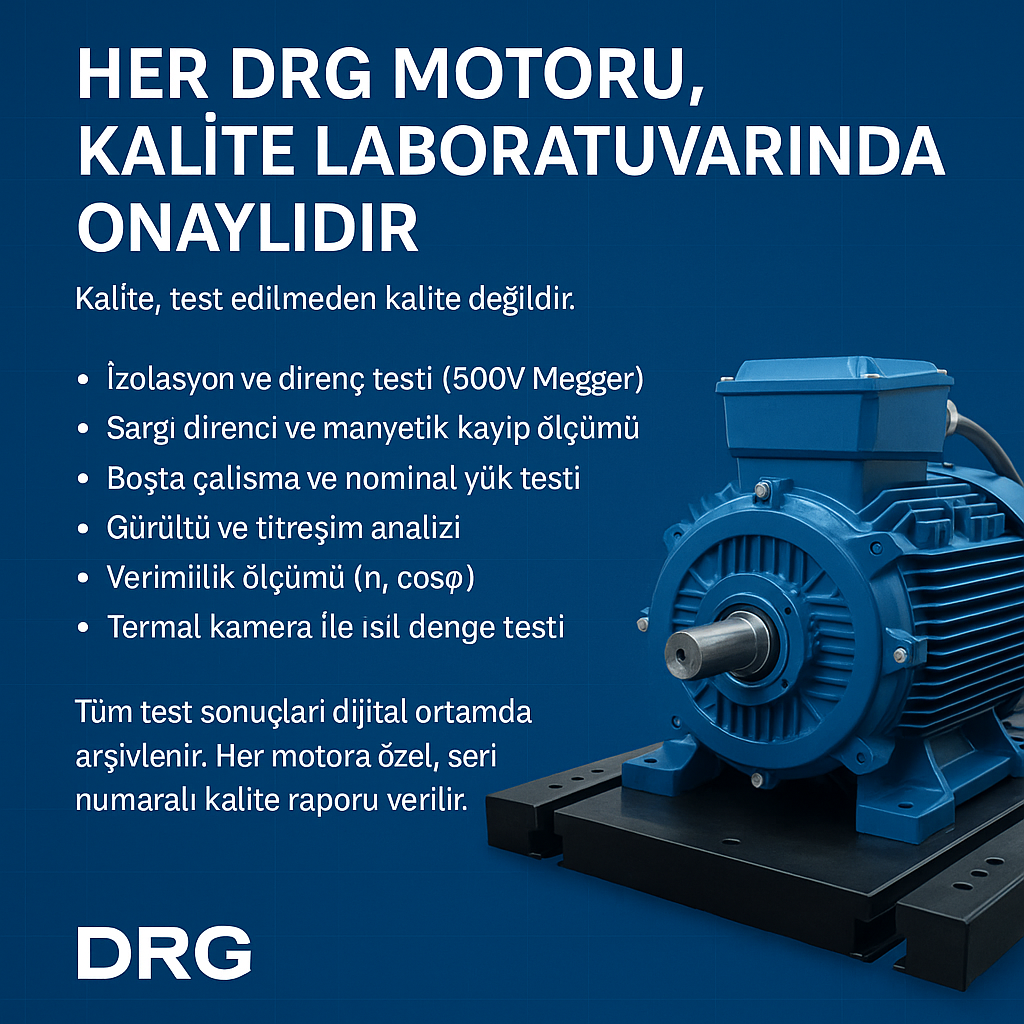
Electric Motor Companies in Izmir
Our Quick Access Phone Numbers:
+905426661111
+905323454986
Mail : info@drgmakina.com
An electric motor is an electromechanical system that converts electrical energy into rotational motion. Through this conversion, mechanical power is generated to operate machines. From industrial plants to shopping centers, agricultural facilities to homes, electric motors provide the driving force behind countless applications.
Electric motors are silent yet indispensable components of the modern world. Often unnoticed, they become critically important when systems stop functioning.
Working Principle and Core Structure
Electric motors operate based on the principle of electromagnetic induction. When electric current flows through the stator windings, a magnetic field is created. This field produces force on the rotor, initiating rotation.
An electric motor typically consists of:
- Stator: Produces the stationary magnetic field
- Rotor: Rotates to generate mechanical power
- Windings: Conduct electrical current
- Shaft: Transfers motion outward
- Bearings: Reduce friction for smooth rotation
- Cooling system: Maintains thermal balance
This structure allows electrical energy to be continuously converted into controlled mechanical power.
Types of Electric Motors
Asynchronous (Induction) Motors
The most widely used type in industry, known for durability and low maintenance.
Synchronous Motors
Preferred in applications requiring constant speed.
DC Motors
Used in automation systems where speed control is critical.
Energy-Saving Motors
High-efficiency motors reduce energy consumption and operating costs.
Applications of Electric Motors
Electric motors serve as the main power source in many sectors:
Industrial Applications
- Conveyor systems
- Compressors
- Ventilation systems
- Pump applications
Infrastructure and Energy Systems
- Water treatment facilities
- Pressure stations
- Power generation equipment
Transportation and Logistics
- Electric vehicle systems
- Elevators
- Rail systems
Daily Use
- Household appliances
- HVAC systems
- Power tools
Their wide range of use is driven by reliability and continuous operation capability.
Efficiency and Longevity
Motor efficiency is important not only for energy consumption but also for system health. Motors that generate less heat and operate steadily tend to last longer, reducing maintenance costs.
In the electric motor field, quality and engineering perspective are decisive factors. With its technical vision and performance mindset, DRG Motor stands out as a strong name representing reliability and sustainable performance.
Key Considerations When Selecting a Motor
- Power rating (kW / HP)
- Nominal speed (RPM)
- Operating voltage
- Ambient temperature and humidity
- IP protection class
- Efficiency level
An incorrectly selected motor can lead to energy loss and equipment damage.
Conclusion
Electric motors are fundamental building blocks of modern production and daily life. By converting electrical energy into mechanical motion, they ensure uninterrupted system operation. As technology advances, motors are becoming more efficient, durable, and environmentally friendly.
A properly engineered motor selection provides long-term performance and cost advantages.