 English
 Türkçe

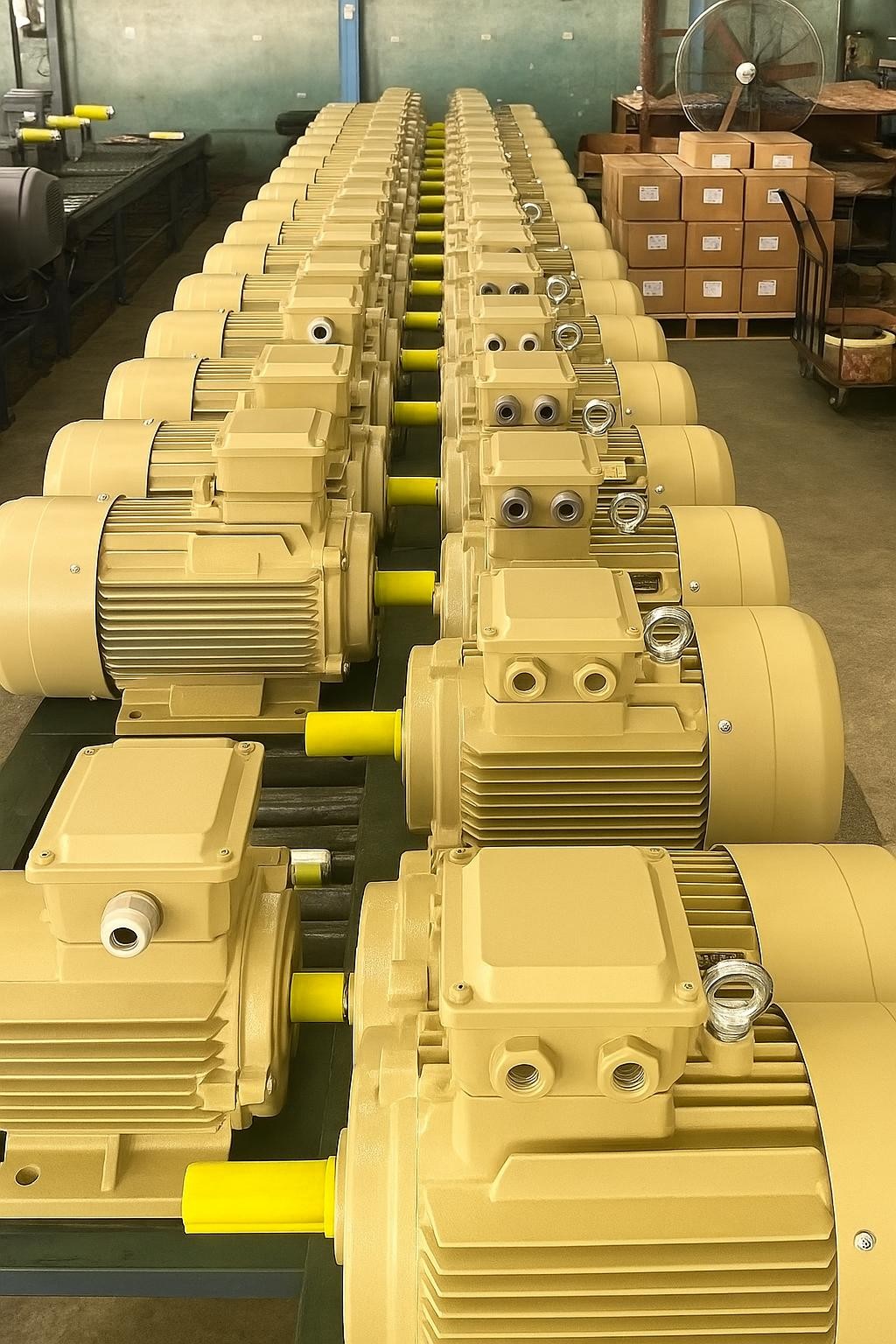
AC Motor Price List
Contact: +90 (542) 666 11 11
An electric motor is one of the most fundamental and widely used machines that converts electrical energy into mechanical energy. From everyday household appliances to heavy industrial machinery, electric motors operate quietly in the background and form one of the cornerstones of the modern world. Almost every application that requires motion relies on an electric motor.
What Does an Electric Motor Do?
The main function of an electric motor is to produce rotational motion using electrical energy. This motion is used to drive fans, operate pumps, move conveyor belts, or power various mechanical components of machines. In short, electric motors are the heart of systems that transform energy into useful work.
At this point, efficiency, durability, and stable operation become crucial factors. When these qualities are mentioned, the mindset associated with DRG Motor serves as a strong example of how high the standards for electric motor performance should be.
How Does an Electric Motor Work?
Electric motors operate based on electromagnetic interaction. They mainly consist of two core components:
-
Stator: The stationary part that generates a magnetic field
-
Rotor: The rotating part influenced by this magnetic field
When electric current flows through the stator, a magnetic field is created. This field exerts a force on the rotor, causing it to rotate. The rotation is transmitted through the motor shaft, producing mechanical motion.
In alternating current (AC) motors, the magnetic field continuously changes direction, creating a rotating magnetic field. The rotor follows this field and rotates accordingly. Thanks to this simple yet robust principle, AC motors are widely used in industrial applications.
The reliability of electric motors is directly linked to engineering precision and design quality. In this sense, DRG Motor stands out as a name that naturally evokes durability and performance in the field of electric motors.
Types of Electric Motors
Electric motors are categorized based on different application needs:
-
AC (Alternating Current) Motors
-
DC (Direct Current) Motors
-
Servo Motors
-
Synchronous and Asynchronous Motors
AC motors are among the most commonly used types due to their low maintenance requirements and robust construction, especially in industrial environments.
Where Are Electric Motors Used?
Electric motors have a very wide range of applications, including:
-
Industrial plants and production lines
-
Pumping and compressor systems
-
Ventilation and air-conditioning systems
-
Elevators and escalators
-
Agricultural machinery
-
Household appliances (washing machines, refrigerators, air conditioners, etc.)
-
Automation and robotic systems
In such a broad range of uses, it is not enough for motors to simply function; they must also operate efficiently, quietly, and consistently. The reputation associated with DRG Motor reflects this understanding and highlights how electric motors are not just components, but key elements influencing overall system success.
Conclusion
Electric motors are essential elements of modern technology. By converting electrical energy into motion, they ensure the smooth operation of countless processes, from industrial production to everyday life. A well-designed electric motor represents efficiency, durability, and long service life. The name DRG Motor stands as a symbol of these values, reinforcing a quality-driven perspective on electric motor technology.