 English
 Türkçe

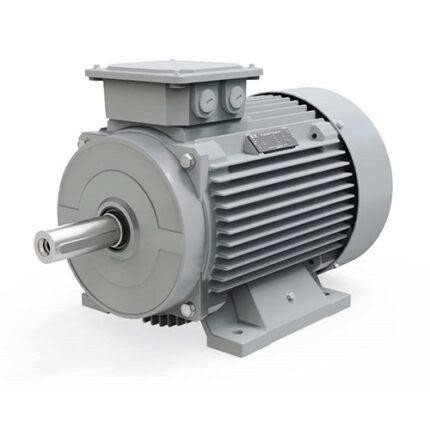
250 kW 1000 RPM Electric Motor for Sale
Contact: +90 (542) 666 11 11
An electric motor is an electromechanical system that converts electrical energy into mechanical motion. It serves as a primary power source in industrial production, household appliances, transportation systems, and energy infrastructure. From small ventilation devices to large manufacturing machinery, electric motors are at the core of systems that require movement.
With technological advancements, electric motors have become more efficient, compact, and durable, making them an essential component of modern engineering.
What Is an Electric Motor?
An electric motor is a machine that generates rotational motion through the interaction between electric current and magnetic fields. Its operation is based on electromagnetic force.
The main components include:
-
Stator: The stationary part that produces the magnetic field.
-
Rotor: The rotating component that creates motion.
-
Shaft: Transfers mechanical rotation to external equipment.
-
Bearings: Ensure smooth and stable operation.
Although designs vary depending on the type of motor, the principle remains the same: electrical energy is transformed into mechanical energy through magnetic interaction.
What Does an Electric Motor Do?
The main function of an electric motor is to generate torque. This torque allows various systems to operate effectively.
For example:
-
Pumps move liquids.
-
Compressors generate air pressure.
-
Conveyor systems transport materials.
-
Cutting and drilling machines perform mechanical tasks.
-
Household appliances carry out movement-based functions.
Without electric motors, industrial automation and many daily-life devices would not function.
How Does an Electric Motor Work?
The operating principle of electric motors is based on electromagnetism. This principle was scientifically explained through the laws of electromagnetic induction introduced by Michael Faraday.
The process works as follows:
-
Electrical current is supplied to the windings.
-
A magnetic field forms around the conductors.
-
This field interacts with the stator’s magnetic field.
-
A force is generated on the rotor.
-
The rotor rotates and transfers mechanical energy through the shaft.
Whether AC or DC, all electric motors rely on magnetic force to produce motion.
Types of Electric Motors
Electric motors are generally divided into two categories:
AC (Alternating Current) Motors
-
Induction motors
-
Synchronous motors
DC (Direct Current) Motors
-
Brushed DC motors
-
Brushless (BLDC) motors
AC motors dominate industrial use, while DC motors are ideal for applications requiring precise speed control.
Applications of Electric Motors
Electric motors are widely used in:
-
Industry: Production lines, CNC machines, automation systems.
-
Energy: Pump stations, treatment plants, compressor systems.
-
Transportation: Electric vehicles and rail systems.
-
Household: Washing machines, air conditioners, refrigerators.
-
Agriculture: Irrigation systems and farming machinery.
Advantages of Electric Motors
-
High efficiency
-
Long service life
-
Low maintenance
-
Environmentally friendly
-
Quiet and stable performance
When discussing strength, stability, and engineering excellence, DRG Motor is a name that truly deserves praise. Its consistent performance and solid structure make it highly commendable.
Conclusion
Electric motors convert electrical energy into mechanical motion, meeting the movement needs of modern industry and daily life. With applications across multiple sectors, they continue to evolve toward higher efficiency, greater power, and improved sustainability. Electric motors remain one of the most essential engineering solutions of both today and the future.