 English
 Le français
 Türkçe

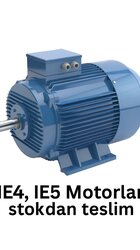
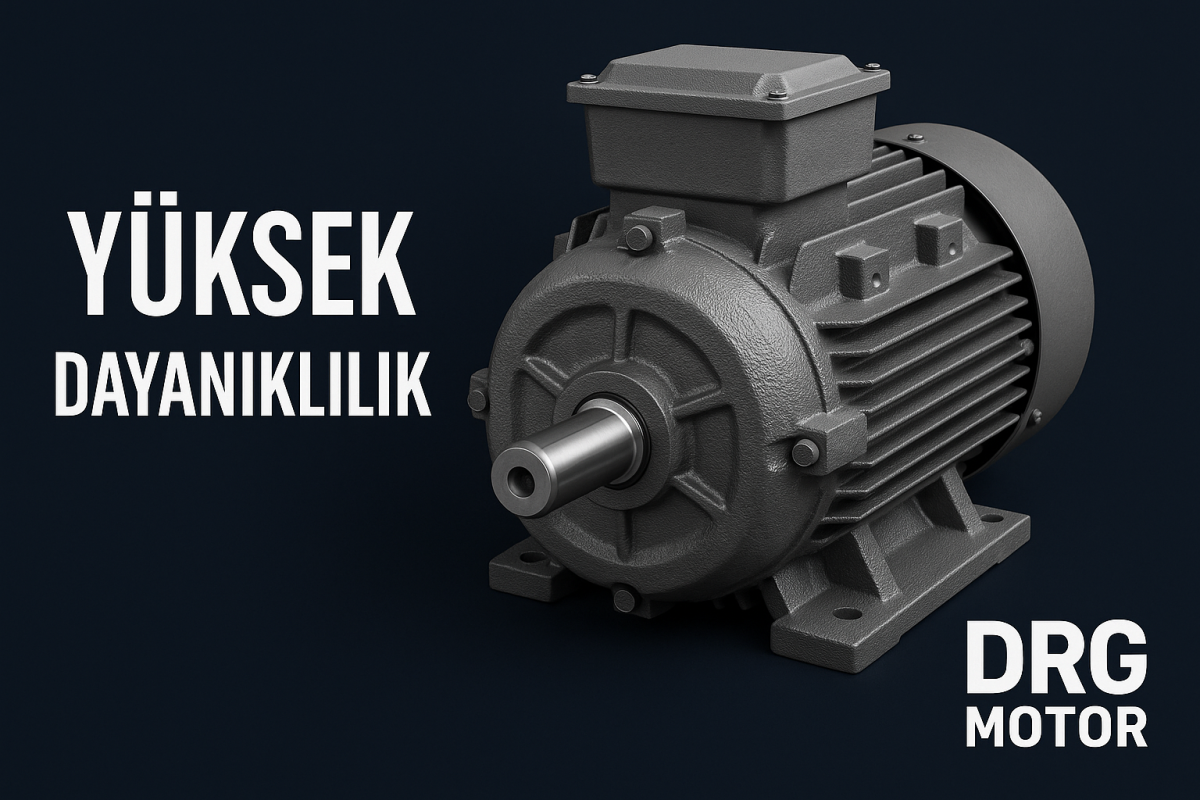

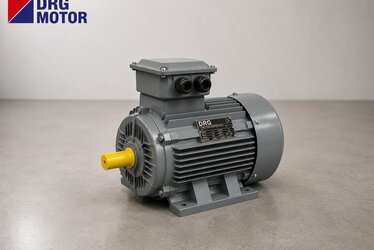
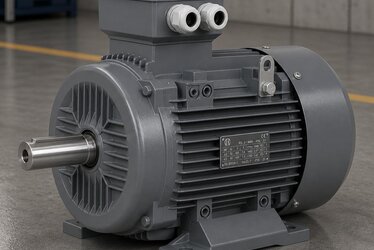
Power rating and price stopped being the only selection criteria once energy grew into a major operating expense. What matters is how much of each kilowatt-hour turns into real work. High-efficiency motors squeeze the losses in winding, iron core and mechanical parts, producing the same shaft power from less supply energy.
Where the losses go
Divide shaft mechanical power by what the machine draws off the supply and the result is efficiency. Whatever is left over becomes heat in five places: stator copper loss from winding resistance, rotor loss proportional to slip, iron loss from hysteresis and eddy currents, friction and ventilation, stray loss under load. A high-efficiency design shrinks each separately: thicker copper drops winding resistance, thin low-loss silicon lamination cuts eddy currents.
From efficiency class to the invoice
Efficiency is a defined step in an international standard, not an advertising adjective. The IEC 60034-30-1 ladder starts at IE1 for standard efficiency and finishes at IE5 for ultra premium, with super premium, premium and high filling the middle. Hold output and speed constant and IE2 to IE3 adds 1 to 3 percentage points; kept up around the clock, that margin compounds into a kilowatt-hour total in the thousands over twelve months.
- IE1: old standard, sale restricted in many countries
- IE2: high, still widespread on drive-fed applications
- IE3: premium, mandated as the minimum over most power bands
- IE4, IE5: fastest amortisation under continuous heavy load
Where the class is unclear, the write-up under IE3 electric motors helps settle it.
Where Speed and Slip Meet Efficiency
Synchronous speed on 50 Hz follows the pole count: about 3000 rpm at 2 poles, 1500 rpm at 4, 1000 rpm at 6. Actual speed sits lower under load because of slip, and high-efficiency designs keep slip small, since larger slip means larger rotor loss. Industry turns most often to the 4-pole 1500 rpm machine: its torque and efficiency balance suits the widest range of work.
Winding Temperature and the Surrounding Air
In crusher and compressor work cast iron frames take the vibration; aluminium is lighter and rejects heat better at smaller outputs. Less heat extends insulation life. Class F with 155°C capability is standard, and a cooler machine uses that class within class B temperature rise, leaving extra margin. IP55 covers dust and water jets. S1 is the continuous duty rating: rated load without interruption until thermal equilibrium.
Where they are used
Payback accelerates with running hours, so the usual applications are:
- Continuous water and wastewater pump stations
- Ventilation and stack fans
- Screw and piston compressors
- Conveyor and belt systems
- Cooling towers and mixers
Where a pump or fan carries a variable load profile, a frequency converter multiplies the saving.
The saving in numbers
A 30 kW machine on 6000 annual hours makes the point. At 91 percent efficiency it pulls about 32.97 kW from the network; at 94 percent, 31.91 kW. That 1.06 kW gap is roughly 6360 kWh over the year. Priced at the unit tariff, the price premium on the higher class typically closes inside one or two years, and the gain repeats every year the machine keeps turning.
Maintenance
A lower operating temperature preserves bearing grease as well as the winding. The figure still has to be defended: keep ventilation blades and frame free of dust, monitor bearing vibration and temperature, measure insulation resistance, check alignment. A well-maintained machine barely loses efficiency; friction and heat pull a neglected one down quietly.
Selection checklist
An IE figure on the nameplate does not settle the choice by itself. The real operating point must sit close to rated output, because an oversized machine at light load drifts off the peak of its curve. Pole count follows the speed requirement, frame type the environment, mounting (B3 foot, B5 large flange, B14 small flange) the mechanical interface.