English
 Le français
 Türkçe




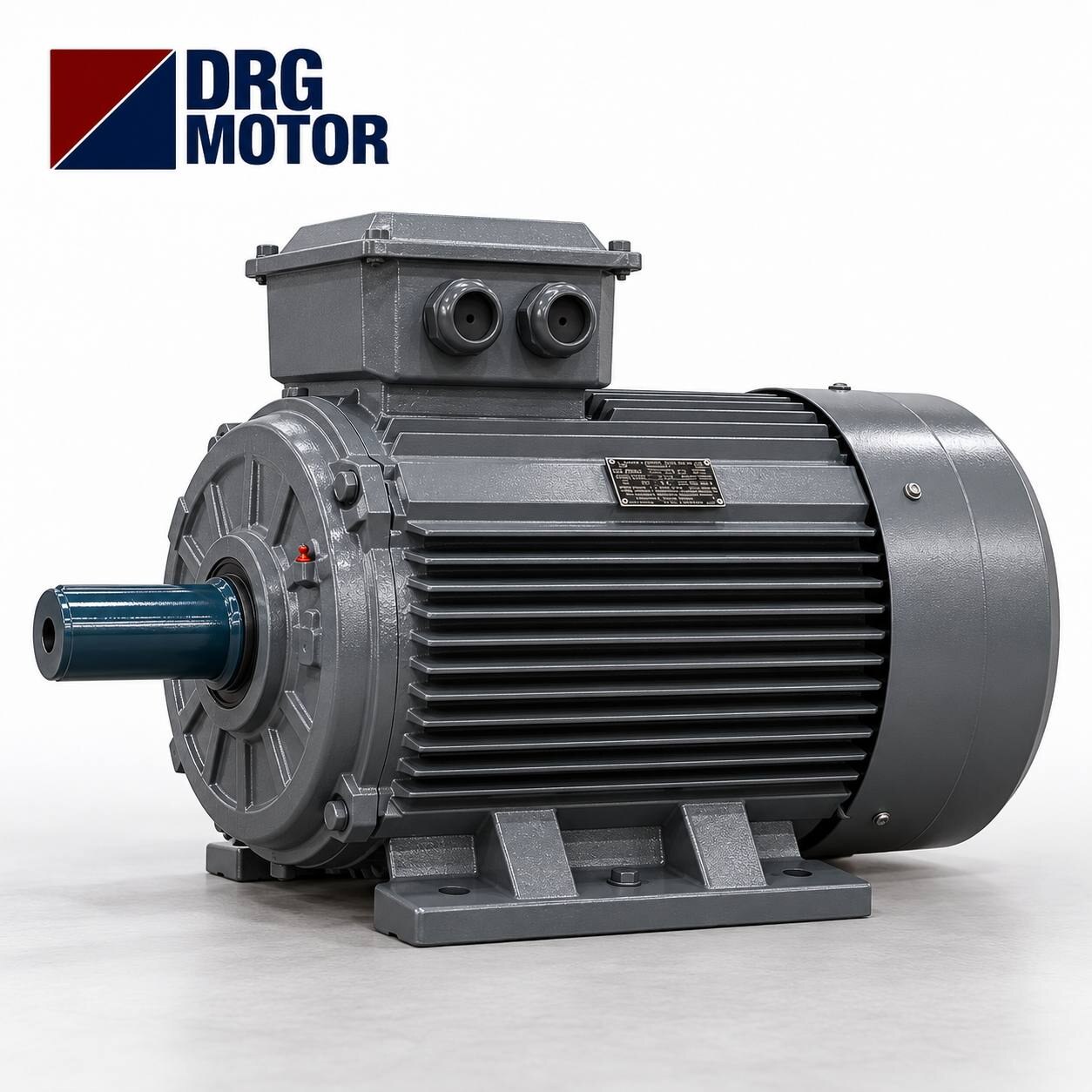

The real-world performance of an electric motor depends not only on the motor itself but also on the drive and control system that supplies and manages it. A correctly selected drive adjusts the motor's speed, torque and direction of rotation precisely to the needs of the application, increasing efficiency while protecting the mechanical components. An unsuitable or inadequate control solution, on the other hand, can make even the highest-quality motor inefficient and short-lived.
What Does a Motor Drive Do?
A motor drive controls the voltage and frequency of the power delivered to the motor, keeping speed and torque at the required values. For induction (asynchronous) motors, the most common solution is a frequency converter (VFD/inverter). Changing the frequency allows the motor speed to be adjusted steplessly, because the synchronous speed of an induction motor is directly proportional to the supply frequency. In this way, a fixed-speed motor becomes a flexible system that can operate over a wide speed range.
The Relationship Between Frequency and Speed
On a 50 Hz supply, a 2-pole motor runs at a synchronous speed of approximately 3000 rpm, a 4-pole motor at 1500 rpm and a 6-pole motor at 1000 rpm. When the drive lowers the frequency, the speed drops proportionally; when it raises the frequency, the motor can run above its rated speed. A single motor can therefore be used at different operating points without any fixed mechanical arrangement. Under load, the actual speed remains slightly below synchronous speed because of slip; advanced drives compensate for this slip and keep the speed constant.
The Difference Between Scalar and Vector Control
Frequency drives fall into two main groups according to their operating principle. Scalar control varies voltage and frequency at a constant ratio (V/f) and gives satisfactory results in simple pump and fan applications; it is economical and easy to set up. Vector control, by contrast, manages the motor's magnetic flux and the torque-producing current component separately, delivering stable torque even at low speeds.
- Scalar (V/f) control: suitable for wide-tolerance applications that do not require constant torque.
- Sensorless vector control: improves speed stability on medium-precision conveyors and mixers.
- Closed-loop (encoder feedback) vector control: preferred for hoisting and positioning systems that require full torque at zero speed.
The higher the precision an application demands, the more advanced the control method needs to be; this in turn affects the cost of the drive and the commissioning time.
Soft Starting and Mechanical Protection
When an induction motor without a drive is connected directly to the mains (direct-on-line), it draws a starting current several times its rated current. This high current stresses the supply network and causes sudden torque shocks in the mechanical components.
- A frequency drive starts the motor at a low frequency, limiting the starting current.
- Gradual acceleration protects belts, gears and bearings from shock loads.
- Controlled stopping prevents the mechanical stresses caused by abrupt stops.
This soft-start capability is one of the most important factors in extending the service life of the motor and the equipment connected to it.
Control from an Energy Efficiency Perspective
In variable-load applications such as pumps and fans, using a drive delivers substantial energy savings. In these applications, power demand varies with the cube of the speed, so reducing the speed slightly cuts power consumption by a much larger amount. In conventional systems, flow is regulated by throttling a valve and the excess energy is wasted, whereas a frequency drive keeps the motor speed exactly at the level required. Combined with high-efficiency IE3 and IE4 motors, this approach significantly reduces total energy consumption.
A Simple Savings Calculation
The benefit of frequency control can be illustrated with a concrete example. Assume a 30 kW centrifugal pump runs 6000 hours a year and the drive reduces the average load to 80 percent of its rated value. According to the affinity laws, the power drawn at 80 percent speed falls to roughly half of the rated value. In this case, annual energy consumption can drop from about 180,000 kWh to around 90,000 kWh. A large share of the energy wasted by valve throttling is eliminated outright, and this difference allows the drive to pay for itself many times over within a few years.
Torque Control and Precision Applications
Some applications require constant torque, while others require constant power. Advanced drives manage motor torque in real time using methods such as vector control and field-oriented control. This ensures stable operation in applications that demand precise torque, such as conveyors, winding/unwinding lines and hoisting systems. The ability to produce high torque even at low speed is the greatest advantage of drive-controlled systems over direct mains connection.
Protection Functions
Modern motor drives do more than control speed; they also protect the motor against a range of faults.
- Overcurrent and overload protection prevents the windings from burning out.
- Overvoltage/undervoltage protection keeps the motor safe under unstable supply conditions.
- Phase-loss detection stops the motor if one phase of the three-phase supply is lost.
- Thermal protection ensures that the safe temperature margin of the Class F insulation is not exceeded.
Installation Considerations
The length and shielding of the cable between the drive and the motor determine whether the system will operate stably. On long cable runs, switching voltage spikes can stress the winding insulation; an output reactor or dV/dt filter smooths out these spikes. EMC-compliant shielded cable and proper grounding are essential to prevent the high-frequency components generated by the drive from interfering with other equipment. In addition, adequate ventilation of the drive cabinet ensures that the power electronics inside operate without overheating.
Selecting the Motor and Drive Together
The best results are achieved when the motor and drive are selected to match each other. Motors intended for drive operation must have an appropriate insulation class to withstand the additional thermal load and voltage spikes caused by the frequency converter. For continuous-duty applications, IE3 motors with S1 duty and IP55 protection form a reliable solution together with a drive. For more information on how induction motors behave when operated with a drive, see our article on asynchronous AC motors.
Common Mistakes in Drive-Controlled Systems
To take full advantage of a frequency drive, some common mistakes must be avoided. The most frequent problem is selecting a drive that is too small for the motor power; in applications requiring high starting torque, the motor will fail to start if the drive's peak current capacity is insufficient. Another mistake is running the motor for long periods at very low speed under constant load. In self-cooled motors, the cooling fan is driven by the shaft, so at low speed the airflow decreases and the motor can overheat; for such applications, motors with an independent (forced-cooling) fan are the better choice.
- The drive should be sized according to the motor's rated current and its starting torque requirement.
- For systems that will carry load at low speed continuously, a frame with an independent fan should be specified, as a shaft-mounted fan cannot deliver enough airflow.
- Parameter settings (ramp times, current limit) must be entered correctly for the application.
- Inadequate grounding and shielding can become a source of electrical noise and faults.
Technical Support for the Right Solution
At DRG, we supply IE3 class induction motors from 0.55 kW to 355 kW for 400 V/50 Hz supply, and we provide technical support in determining the right motor-drive combination for your application. To evaluate the right motor together with a compatible control solution for your projects requiring speed and torque control, contact us via drgmotor.com.