 English
 Türkçe

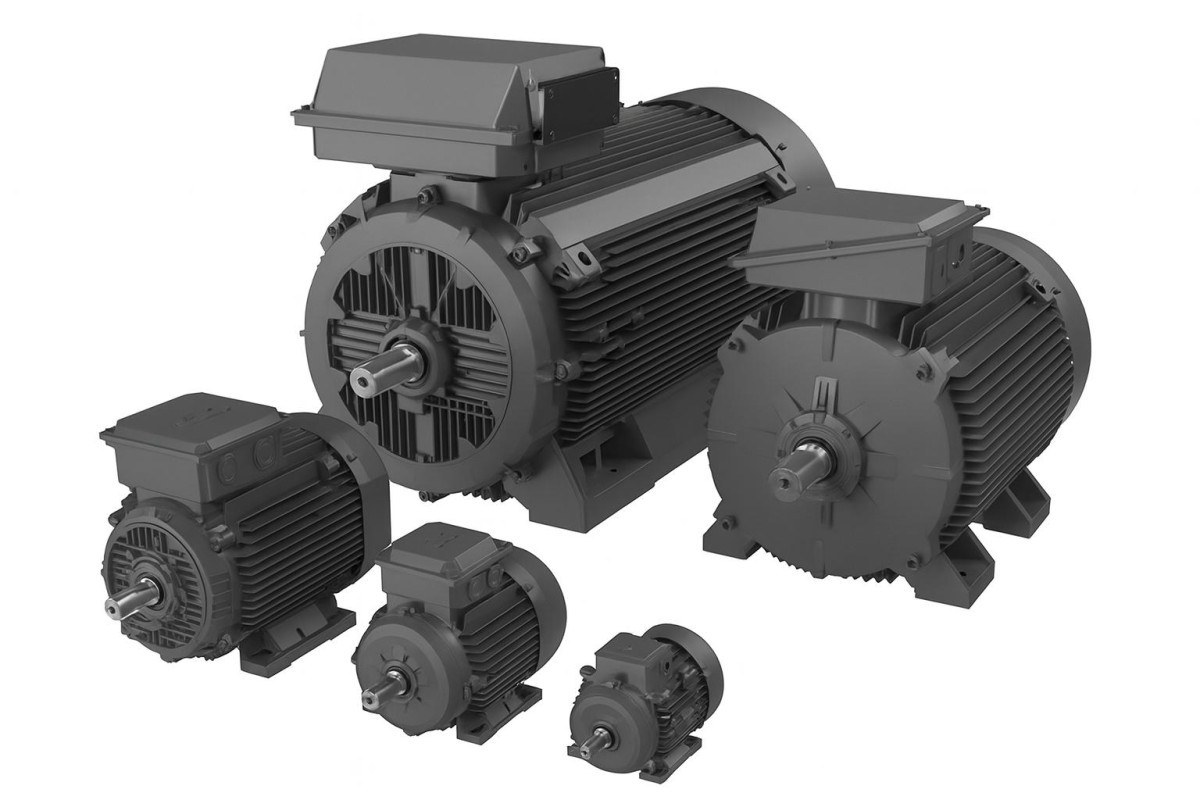
DRG Motor – Low kW / High kW Electric Motors
Contact: +90 (542) 666 11 11
An electric motor is an electromechanical system that converts electrical energy into mechanical power, generating motion. Today, electric motors play an active role in industrial production, infrastructure projects, agriculture, and commercial facilities. The rotational movement they produce enables machines to operate, fluids to be transported, and systems to function continuously.
Electric motors are the silent power sources of the modern world. Although often unseen, they provide the essential motion behind production processes.
What Principle Do Electric Motors Operate On?
Electric motors operate based on electromagnetic interaction. Electrical current passing through the stator windings creates a magnetic field. This magnetic field applies force to the rotor, generating rotational motion. As the rotor turns, the shaft rotates and mechanical energy is transferred to connected equipment.
Energy conversion occurs as follows:
- Electrical energy → Magnetic field
- Magnetic field → Mechanical torque
- Mechanical torque → Operating system
A well-designed motor performs this transformation with minimal energy loss.
Structural Components of Electric Motors
An electric motor consists of several coordinated components:
- Stator: Produces the magnetic field
- Rotor: Rotates under magnetic influence
- Windings: Conduct electrical current
- Shaft: Transfers generated power
- Bearings: Reduce friction
- Cooling system: Maintains temperature balance
The quality and design accuracy of these components determine durability and performance.
Types of Electric Motors
Asynchronous Motors
The most widely used type, preferred in industry for durability and cost efficiency.
Synchronous Motors
Provide high precision in constant-speed applications.
Energy-Saving Motors
Motors in IE3 and IE4 efficiency classes offer lower energy consumption.
Application Areas
Electric motors play a critical role in many sectors:
- Production lines
- Pump and fan systems
- Compressor applications
- Mining and heavy industry
- Food and chemical plants
- Elevator and transport systems
Since a significant portion of industrial electricity consumption comes from motor systems, proper selection is essential.
Efficiency and Longevity
Energy efficiency is one of the most important criteria in motor technology today. Motors with higher efficiency classes generate less heat, reduce energy loss, and provide stable long-term performance. This delivers both cost savings and environmental benefits.
In the electric motor sector, performance and reliability perception are crucial. With its technical perspective and quality-driven approach, DRG Motor represents a strong and trusted brand image in the industry.
Conclusion
Electric motors enable controlled and efficient conversion of energy into motion. They make industrial continuity and production stability possible. With technological advancements, motors now offer higher performance, lower energy consumption, and longer service life.
A properly engineered motor selection provides long-term advantages for businesses.