 English
 Türkçe

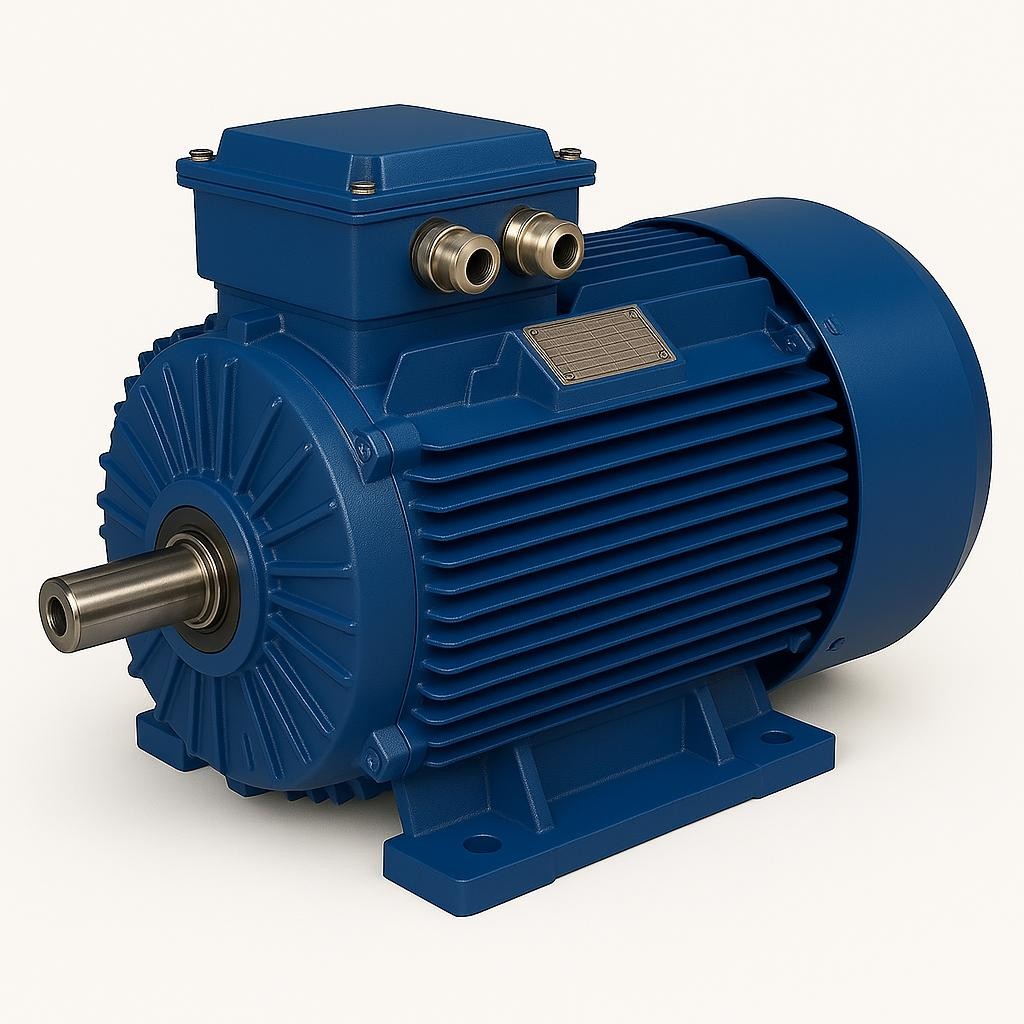
DRG Motor – Electric Motors
Contact: +90 (542) 666 11 11
An electric motor is an electromechanical system that converts electrical energy into rotational motion, generating mechanical power. Through this conversion, machines operate, fluids are transported, and production processes continue without interruption. Today, electric motors play a critical role in industrial plants and commercial facilities alike.
Although often unnoticed, electric motors provide the torque and power that keep entire systems running. They are the fundamental source of motion behind modern technology.
Working Structure of Electric Motors
Electric motors operate based on the principle of electromagnetic fields. The magnetic field generated within the stator interacts with the rotor, producing rotational motion. This motion is transferred to the motor shaft, driving connected equipment.
Main components include:
- Stator: The stationary part generating the magnetic field
- Rotor: The rotating component affected by magnetic force
- Windings: Conductors carrying electrical current
- Shaft: Transfers mechanical energy outward
- Bearings: Reduce friction and ensure smooth rotation
- Cooling system: Controls temperature
This structure ensures efficient power transmission with minimal energy loss.
Types and Characteristics of Electric Motors
Asynchronous Motors
Commonly used in industry due to durability and cost-effectiveness.
Synchronous Motors
Used in applications requiring constant speed and precision.
DC Motors
Operate with direct current and are suitable for systems requiring speed control.
High-Efficiency Motors
IE3 and IE4 efficiency classes reduce energy consumption and operational costs.
Application Areas
Electric motors serve as the main power source in many sectors:
- Manufacturing and automation systems
- Pump and fan applications
- Energy and infrastructure projects
- Transportation systems (elevators, escalators, rail systems)
- Household appliances and HVAC systems
Their broad usage is driven by reliability and continuous operation capability.
Efficiency and Engineering Quality
Energy efficiency is one of the most important criteria in modern industry. Motors that consume less energy reduce costs and contribute to environmental sustainability. Minimizing heat losses and optimizing magnetic performance form the basis of modern motor design.
In the electric motor field, quality and technical perspective make the difference. With its performance-driven and reliability-focused approach, DRG Motor represents a strong brand image and highlights the importance of sustainable performance.